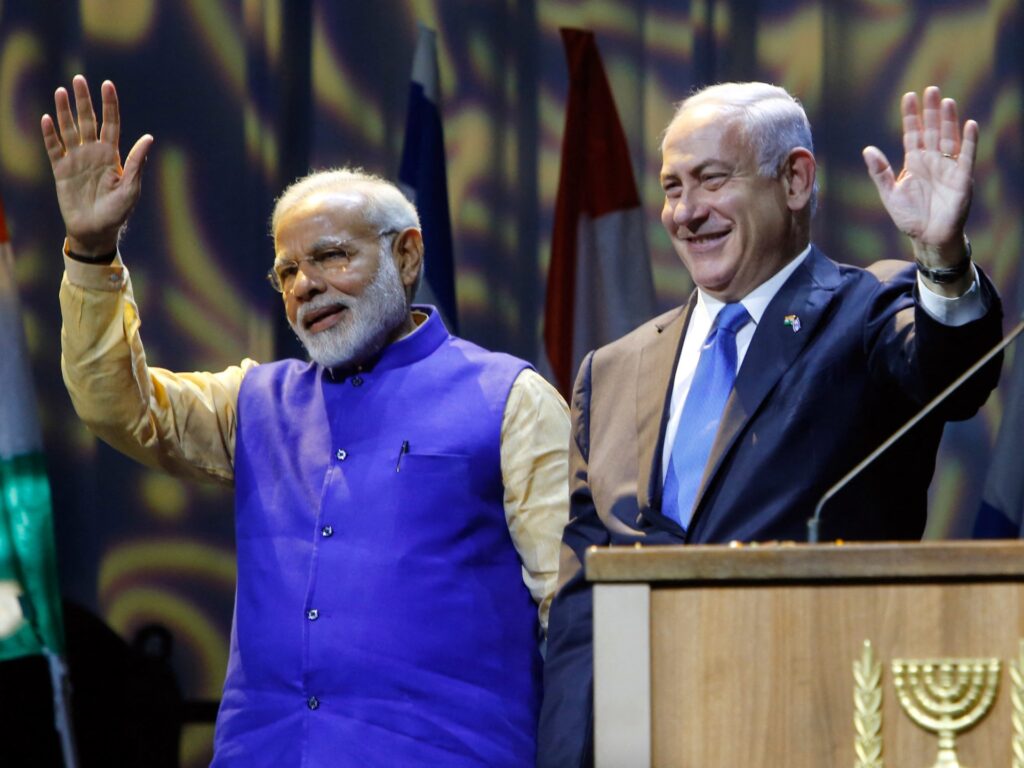
The recent Gaza war has marked a significant turning point in the international alignments of various countries, with India emerging as a strong ally of Israel under Prime Minister Narendra Modi. While some of Israel’s traditional allies have chosen to distance themselves from Israeli Prime Minister Benjamin Netanyahu’s government amid the conflict, Modi’s India has intensified its embrace of Israel, indicating a strategic and diplomatic realignment that is poised to have long-term implications for regional and global geopolitics.
Historically, India maintained a more cautious and sometimes critical stance towards Israel, especially given India’s large Muslim population and its support for Palestinian statehood in international forums. However, over the last two decades, and particularly under Narendra Modi’s leadership since 2014, India has steadily shifted towards a closer partnership with Israel. The Gaza war has accelerated this trend, revealing the depth and breadth of India’s evolving foreign policy priorities.
Modi’s government has openly expressed its support for Israel’s right to defend itself against hostile attacks. This stance contrasts with the more measured or critical positions adopted by some Western countries and traditional allies of Israel, who have called for restraint and a peaceful resolution to the conflict. India’s unwavering support for Israel in international platforms and bilateral engagements stems from various strategic considerations.
One of the key drivers of this shift is the intensification of defense and security cooperation between India and Israel. Over the years, Israel has become one of India’s top arms suppliers, providing critical technology in surveillance, missile defense, and counter-terrorism. In the context of the Gaza conflict, India recognizes Israel’s security concerns and views this partnership as essential to addressing its own national security challenges.
Furthermore, India’s vote against the United Nations resolution condemning Israel’s actions during the Gaza war has underscored its evolving position, aligning with Israel despite global pressure to take a more neutral stance. This decision reflects India’s broader aim to assert an independent foreign policy identity that prioritizes strategic partnerships over traditional alignments.
Economic and technological collaboration has also flourished. Israel’s expertise in agriculture, water management, and innovation complements India’s development agenda, further cementing bilateral ties. Modi’s vision of a technologically advanced and secure India finds a natural partner in Israel’s innovative ecosystem.
The domestic political context also plays a role. Modi’s Bharatiya Janata Party (BJP) has cultivated a pro-Israel constituency within India, leveraging the historic ties between Jewish and Hindu civilizations and the shared concerns about Islamic extremism. This domestic factor amplifies the government’s proactive stance towards Israel.
Internationally, India’s stronger support for Israel amid the Gaza war positions it as a reliable partner in the Middle East, opening avenues for cooperation not just with Israel but also with other regional players seeking stability and security.
While India’s embrace of Israel under Modi in the context of the Gaza war reflects pragmatic and strategic imperatives, it also signals a departure from its previous foreign policy stance centered on non-alignment and balance. This shift has garnered mixed reactions globally, with some applauding India’s assertive diplomacy and others warning of potential repercussions for India’s relationships with Arab nations and the broader Muslim world.
In conclusion, the Gaza war has significantly accelerated India’s pivot towards Israel under Prime Minister Narendra Modi, solidifying a partnership that is driven by mutual strategic interests, security concerns, and technological collaboration. As the conflict continues to evolve, India’s position will remain critical in shaping the geopolitical dynamics of the wider Middle East region and beyond.