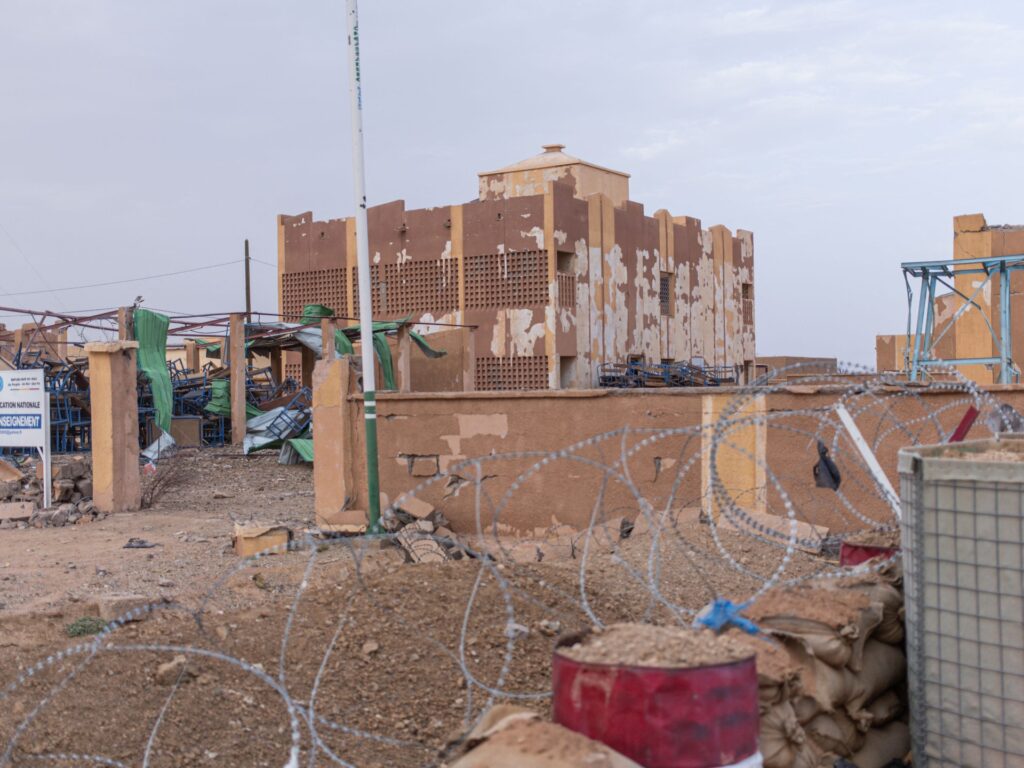
In a significant development in the ongoing conflict in northern Mali, the Tuareg rebels of the Azawad Liberation Front have announced their withdrawal from the strategic town of Kidal. This decision comes after intense and sustained air strikes launched by Malian government forces, supported by Russian allies.
Kidal has long been a focal point in the complex and often volatile conflict involving Tuareg separatists seeking autonomy for the Azawad region. The town’s strategic importance lies in its geographical location and symbolic value to the separatist cause.
According to sources close to the Azawad Liberation Front, the continuous air attacks created a military environment that made it difficult for the rebels to maintain their positions, ultimately compelling them to retreat tactically. This withdrawal marks a notable shift in the dynamics of the conflict, potentially opening the way for government forces to reassert control over the area.
The intervention of Russian allies in backing Malian troops signifies a growing international dimension to the conflict, reflecting broader geopolitical interests in the Sahel region. Russian air support has reportedly included advanced aerial reconnaissance and precision strike capabilities that have enhanced the effectiveness of the Malian military operations.
Despite the withdrawal and the pressure from air strikes, the Azawad Liberation Front has indicated that this is a tactical move rather than a complete capitulation. They stress that their political and military objectives remain unchanged and that they are regrouping to sustain their campaign for greater autonomy.
The situation in northern Mali remains fragile, with the potential for renewed clashes as the government forces seek to consolidate their gains. The civilian population in Kidal and surrounding areas continues to endure hardships amid the ongoing conflict, including displacement and disruption of basic services.
International observers have called for renewed dialogue and efforts to achieve a lasting political solution to the conflict. The support from foreign powers, while crucial in shaping the immediate military outcome, underscores the complexity of the situation and the need for comprehensive peace efforts.
The withdrawal of the Tuareg rebels from Kidal represents a crucial juncture in the northern Mali conflict. It highlights both the effectiveness of the current military strategy employed by Malian troops and their allies and the resilience of the separatist movement, which remains committed to its cause despite setbacks.
As events continue to unfold, the international community watches closely, recognizing that stability in northern Mali is essential for broader regional security and the prevention of further humanitarian crises. The path ahead will require balancing military actions with diplomatic initiatives to address the root causes of the rebellion and support the return to peace and stability in the region.