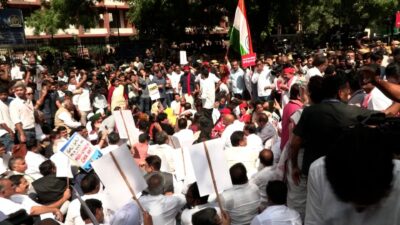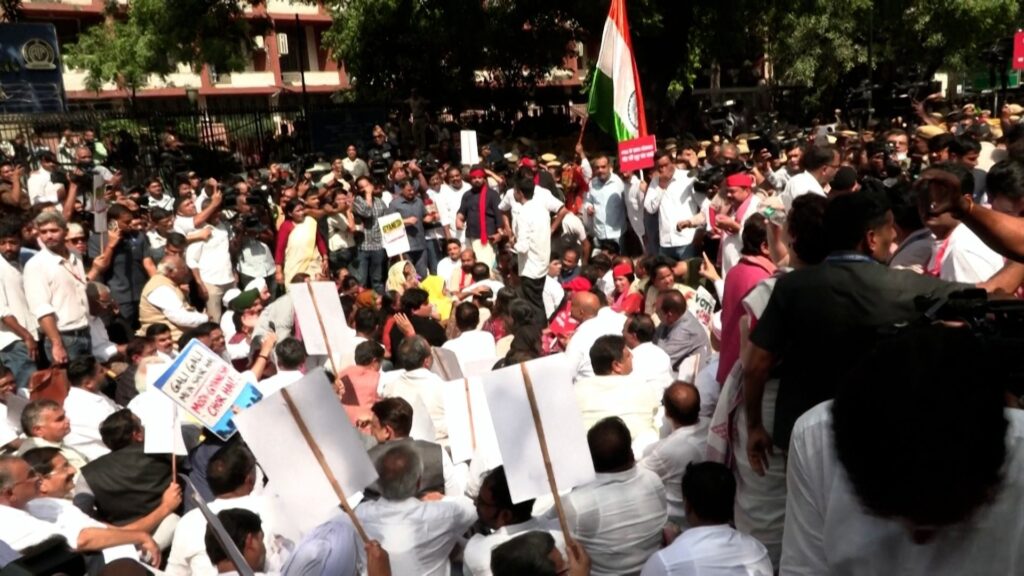
In a significant political development, several Indian opposition leaders were detained by police during a protest outside the Election Commission office in New Delhi. The protest was organized to demand transparency and raise concerns regarding the voter lists ahead of upcoming elections. Lawmakers gathered at the venue to express their dissatisfaction and demand immediate action to address alleged discrepancies and challenges related to the electoral rolls.
The opposition leaders accused the Election Commission of failing to maintain accurate voter lists, which they claimed could undermine the democratic process. They stressed the importance of ensuring that all eligible voters are correctly registered and that no eligible citizen is disenfranchised. The protest highlighted issues like exclusion of names, incorrect entries, and delays in updating the electoral rolls.
The police intervention occurred as the protest escalated, with demonstrators attempting to gain entry into the Election Commission premises to meet officials responsible for the electoral process. Authorities detained several prominent opposition figures to maintain order and prevent any potential disruption to the Commission’s functioning.
The Election Commission, tasked with overseeing free and fair elections across the country, has been under scrutiny amid allegations from various political entities regarding voter list management. While the Commission has maintained that its processes adhere to the highest standards, opposition parties remain skeptical and continue to press their demands.
This recent protest is part of a broader series of political actions by opposition groups seeking electoral reforms and transparency ahead of critical state and national elections. The detentions have sparked debates about the right to protest and the government’s approach to dissenting voices during politically sensitive times.
Analysts observe that voter list controversies are not uncommon in India’s complex electoral landscape, where maintaining accurate and updated records is a challenging task given the country’s vast population and mobility. The opposition’s insistence on rectifying these issues underscores the critical role of electoral integrity in sustaining democratic governance.
Observers suggest that resolving the current standoff will require dialogue between the Election Commission, government authorities, and opposition parties to build trust and ensure confidence in the electoral process. The outcome of these protests and negotiations could significantly impact public perception of electoral fairness and the legitimacy of forthcoming elections.
The political climate remains tense as the nation watches closely how these developments unfold, with implications not only for election administration but also for wider democratic practices in India. The situation underscores the ongoing struggle for electoral transparency and the protection of democratic rights in one of the world’s largest democracies.