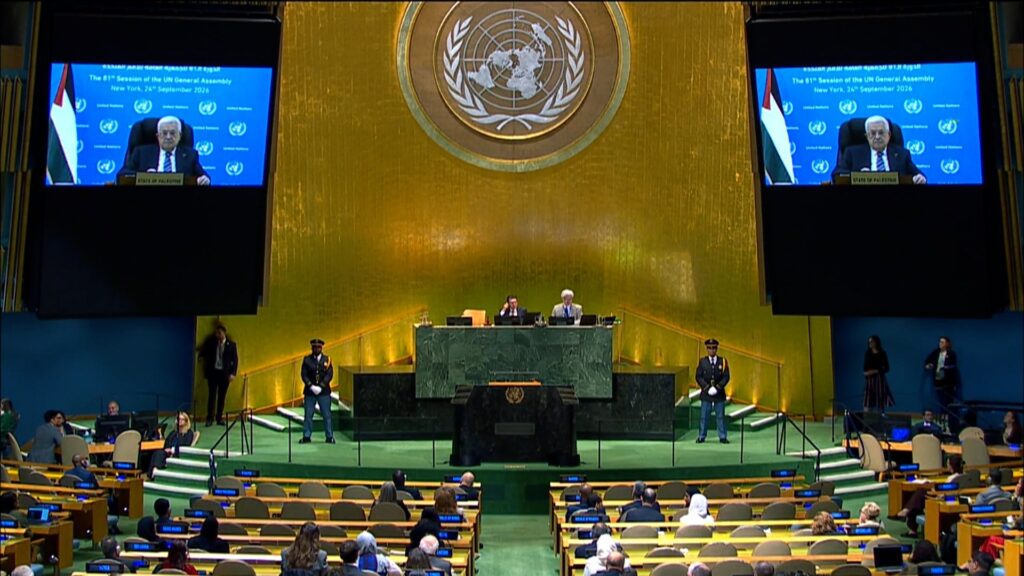
The 2023 United Nations General Assembly witnessed a striking display of contrasting international attitudes toward Israel and Palestine. At the heart of this was the presence of Israel’s Prime Minister, who addressed the assembly in person despite facing an arrest warrant issued by the International Criminal Court (ICC). This situation highlighted the complex and often controversial dynamics of international diplomacy and justice.
Israel’s Prime Minister’s attendance at the UN General Assembly was notable not only for the issues discussed but also for the legal and political implications it carried. The ICC’s warrant, which calls for the Prime Minister’s arrest, stems from allegations related to conflicts involving Israel. However, the Israeli leader’s ability to travel freely and address the assembly underscored the significant support Israel retains within the UN framework and among powerful member states.
In contrast, representatives of Palestine have often faced hurdles in gaining similar recognition and treatment on the global stage. Palestine’s quest for statehood and equal footing at the UN has been met with various political obstacles, reflecting broader geopolitical divisions. Palestinian leaders frequently highlight their lack of full membership status and limited diplomatic recognition, which affects their influence at the General Assembly and other international forums.
The contrasting treatment also extends to how the international community addresses alleged violations of human rights and international law. While Israel faces scrutiny and legal actions, its leadership continues to engage openly with the UN, whereas Palestinian leadership struggles with recognition and equal diplomatic engagement.
This dichotomy raises important questions about fairness, accountability, and the enforcement of international norms. It reflects the deep-seated challenges in resolving the Israeli-Palestinian conflict and the broader issues within the international system concerning power, justice, and diplomacy.
Calls for a balanced and fair approach continue from various quarters, urging the international community to ensure that both Israelis and Palestinians receive equitable treatment under international law and at global forums such as the United Nations. The spotlight on this issue at the UN General Assembly serves as a reminder of the ongoing complexities and the need for constructive dialogue toward peace and justice in the region.