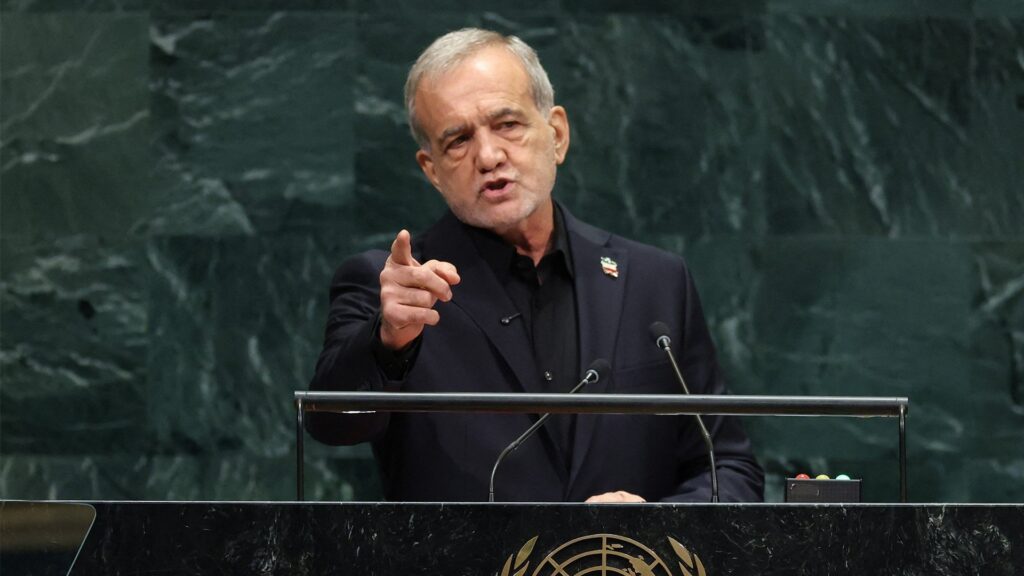
In a compelling speech at the United Nations, Iranian official Pezeshkian sharply criticized the United States, labeling it a ‘terrorist’ actor due to its ongoing blockade against Iran in the strategic Strait of Hormuz. This critical waterway, vital for global oil transit, has been a focal point of escalating tensions between Iran and the U.S.
Pezeshkian’s address was a blend of confrontation and cautious optimism. While vocally condemning U.S. actions, he simultaneously emphasized the importance of diplomacy and kept the door open for potential negotiations. This dual approach highlights Iran’s complex stance amid mounting international pressure and regional instability.
The Iranian blockade has been a contentious issue, with significant implications for global energy markets and international maritime security. Pezeshkian condemned the blockade as unjust and harmful, accusing the United States of exacerbating regional tensions and undermining international norms.
Despite his strong rhetoric, Pezeshkian’s acknowledgment of diplomacy suggests a willingness to engage in dialogue to resolve conflicts. He urged the international community to support peaceful negotiations and condemned any acts that could lead to further escalation or conflict.
His speech also touched on broader issues concerning international relations and regional security. Pezeshkian called for respect for Iran’s sovereignty and voiced opposition to what he described as foreign interference and aggressive policies that threaten stability in the Middle East.
The mixture of sharp criticism and diplomatic openness reflects Iran’s strategic communication aiming to rally regional and global support, while also signaling readiness for negotiations under certain conditions. This nuanced approach underlines Tehran’s desire to manage its international relations carefully amidst sanctions and diplomatic isolation.
Pezeshkian’s remarks come at a time when tensions in the Strait of Hormuz remain high, with several recent incidents involving maritime security and military posturing. The U.S. blockade and Iranian responses have contributed to a precarious environment that risks disrupting the flow of oil and trade.
In closing, Pezeshkian reiterated Iran’s call for dialogue but insisted on the removal of blockades as a precondition for meaningful negotiations. His speech was a stark reminder of the ongoing geopolitical complexities facing the Middle East, where diplomacy and conflict coexist in a delicate balance.
International observers will be watching closely to see if Pezeshkian’s overtures open a new chapter in U.S.-Iran relations or if tensions continue to escalate amidst persistent geopolitical rivalries. The UN platform served as a crucial stage for Iran to project its narrative and test the waters for potential diplomatic engagements amid a turbulent regional backdrop.