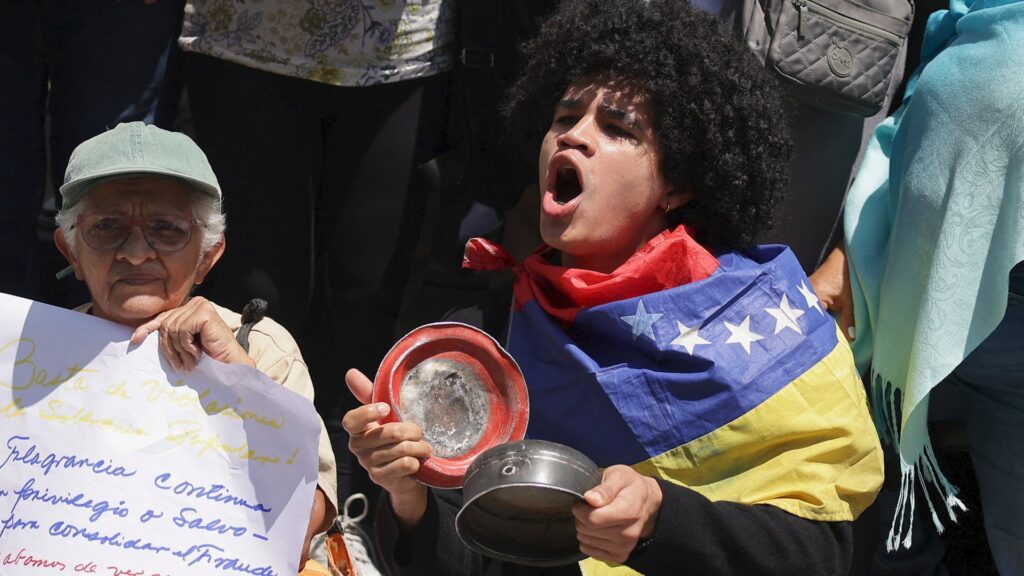
A significant protest erupted in New York as Venezuelans voiced their opposition to the presence of interim President Delcy Rodriguez at the United Nations General Assembly. The gathering highlighted the deep political divisions within Venezuela and the contentious status of Rodriguez’s leadership, which many Venezuelans and international observers view as lacking legitimacy.
The protest took place outside the headquarters of the United Nations, a symbolic venue where global diplomatic decisions and discussions occur. The demonstrators carried banners and chanted slogans denouncing Rodriguez’s participation at the summit, asserting that she does not represent the true will of the Venezuelan people.
Delcy Rodriguez assumed the role of interim president amid ongoing political turmoil following questions over the legitimacy of the country’s previous administration. Her attendance at the UN General Assembly was seen by critics as an attempt to gain international recognition and legitimize her government on the world stage.
The Venezuelan community in New York, including exiled politicians, activists, and ordinary citizens, organized the protest to show solidarity against Rodriguez’s presence. They argue that her leadership is associated with repression and economic mismanagement, which have led to widespread hardship in Venezuela, including hyperinflation, shortages of basic goods, and mass migration.
The United Nations General Assembly session is a critical event where leaders discuss pressing global issues such as human rights, economic development, and international security. The presence of Delcy Rodriguez sparked debates among member states about the recognition of legitimate authority in Venezuela.
Some countries expressed support for Rodriguez, emphasizing the importance of engaging with the existing government structures to foster dialogue and seek solutions to Venezuela’s crises. Conversely, a substantial number of nations and international organizations continue to support opposition factions or call for free and fair elections as a pathway to restoring democracy.
The protest also brought attention to the broader Venezuelan diaspora and their ongoing efforts to influence international opinion and policy regarding Venezuela’s future. Many Venezuelans living abroad remain deeply invested in the political developments at home, often advocating for international intervention or support for democratic transition.
Security measures at the UN headquarters were heightened in anticipation of the protests, ensuring that demonstrations remained peaceful while safeguarding the delegates and international representatives attending the assembly.
In response to the protests, Delcy Rodriguez’s office released a statement reaffirming her government’s commitment to dialogue and cooperation with the international community. She highlighted her intention to address the Venezuelan crisis and seek constructive engagement with all parties.
Despite the protests, Delcy Rodriguez spoke at the UN General Assembly, emphasizing issues such as sovereignty, non-interference, and economic recovery. However, the visible dissent outside the General Assembly hall underscored the contentious nature of her leadership and the ongoing divisions that Venezuela faces.
The protests in New York reflect the wider geopolitical struggle over Venezuela’s future and the international community’s divided positions on how best to support stability and democratic governance in the country. As the situation continues to evolve, the role of the United Nations and its member states remains crucial in facilitating dialogue and peaceful resolution.
This event is a stark reminder of the complex challenges facing Venezuela, including political legitimacy, human rights concerns, and economic instability. The growing mobilization of Venezuelans abroad shows the persistent hope for a democratic and prosperous future for their homeland.
In the coming months, attention will likely remain focused on Venezuela as international diplomacy attempts to address the multifaceted crisis, with potential implications for regional security and international relations.
The protest outside the UN headquarters serves as a powerful symbol of resistance and the enduring demand for democratic representation and justice by the Venezuelan people worldwide.