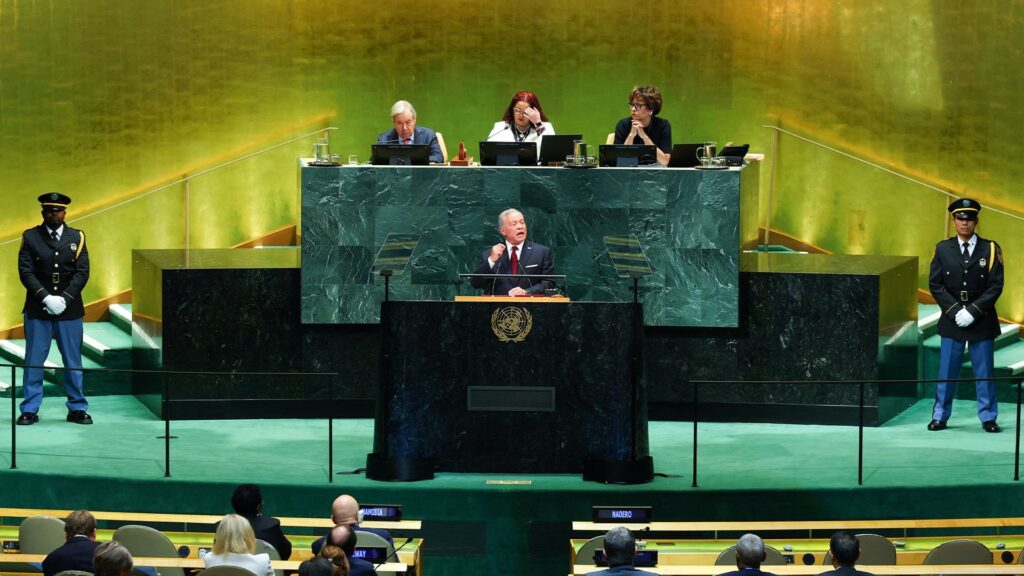
Jordan’s King Abdullah II has publicly criticized the Israeli government’s ongoing expansion of settlements in the occupied West Bank, describing the actions as a strategy of “forced displacement” that amounts to a war crime. In a strong denunciation, the King expressed deep concern over the impact these settlements have on the Palestinian population, highlighting the humanitarian and political consequences of Israel’s policies in the region.
The West Bank, a territory captured by Israel in the 1967 Six-Day War, has seen a steady increase in settlement construction, which is widely regarded by the international community as illegal under international law. However, Israel disputes this and continues to expand settlements, which are communities inhabited by Israeli citizens on land sought by Palestinians for a future state.
King Abdullah II’s remarks underscore Jordan’s historical and geopolitical ties to the West Bank, as well as its role in advocating for Palestinian rights. Jordan annexed the West Bank following the 1948 Arab-Israeli War but lost it to Israel in 1967. Despite this, Jordan maintains a special responsibility and manages the Islamic holy sites in East Jerusalem under a peace treaty with Israel.
In his statement, the King referred to the settlements as a deliberate policy aimed at altering the demographic composition of the area, thereby hindering the possibility of a viable and contiguous Palestinian state. He warned that such measures not only exacerbate tensions but could also ignite further conflict in an already volatile region.
The international community, including the United Nations, has repeatedly called on Israel to halt settlement expansion and resume peace talks. Critics argue that settlement growth undermines efforts to achieve a two-state solution to the Israeli-Palestinian conflict.
Jordan’s position reflects a broader Arab consensus that views Israeli settlements as a major obstacle to peace. King Abdullah II has consistently advocated for a negotiated settlement that ensures the rights and dignity of the Palestinian people, while respecting Israel’s security concerns.
The King’s condemnation aligns with various United Nations resolutions that deem the settlements illegal and call for respecting the rights of Palestinians to self-determination and sovereignty.
This latest statement from King Abdullah II comes amid rising tensions in the West Bank, where clashes between Israeli forces and Palestinian residents have increased. The construction and expansion of settlements continue to be a flashpoint in the conflict, drawing international attention and criticism.
Jordan’s vocal opposition to settlement expansion underscores the delicate balance in the Middle East peace process. As a key regional player and custodian of Islamic sites, Jordan’s support for Palestinians carries significant diplomatic weight.
The Israeli government has faced mounting pressure both domestically and internationally to reconsider its settlement policies, which many argue exacerbate instability and fuel resentment.
King Abdullah II’s strong language in condemning the settlements as a “war crime” reflects the urgency with which Jordan views the situation and the potential consequences for regional peace and security.
As international calls for renewed negotiations grow louder, the role of Jordan as a mediator and advocate for peace remains crucial in efforts to resolve the decades-long Israeli-Palestinian conflict.
In conclusion, King Abdullah II’s denunciation of Israeli West Bank settlement expansions as forced displacement and war crimes highlights the ongoing challenges and stakes involved in the pursuit of peace in the Middle East. The international community’s response and Israel’s future actions will significantly influence the region’s stability and the prospects for a just and lasting resolution.