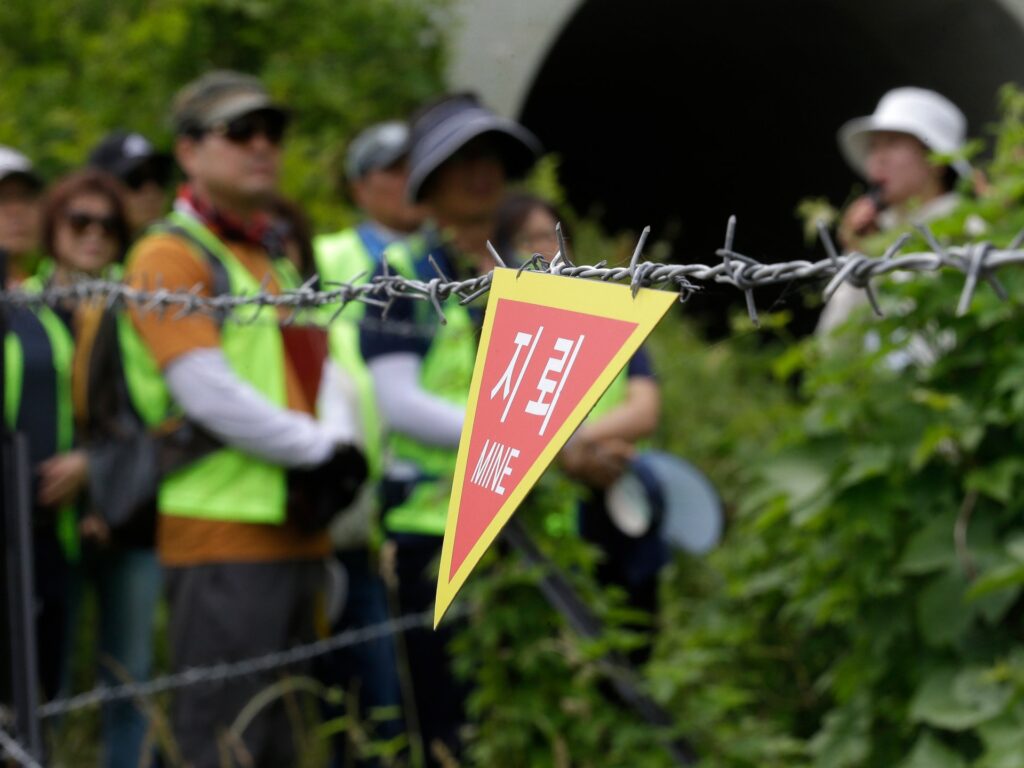
An explosion near the heavily fortified border between North and South Korea, known as the Demilitarized Zone (DMZ), resulted in injuries to three South Korean military officers. Local media reports indicate that the explosion was likely caused by a landmine, a remnant danger that continues to pose risks in the tense and heavily monitored region. The officers sustained wounds in the incident, though specific details about their conditions have not yet been fully disclosed by authorities.
The DMZ, spanning approximately 250 kilometers across the Korean Peninsula, is one of the most militarized borders in the world. It serves as a buffer zone between the two nations, which remain technically at war since the Korean War armistice in 1953. Landmines and unexploded ordnance from past conflicts have long posed hazards to military personnel and civilians alike.
According to reports, the injured officers were performing routine duties when the explosion occurred. Emergency medical teams were dispatched promptly, and the officers were evacuated to nearby medical facilities for treatment. The South Korean military has launched an investigation to determine the precise cause of the blast and to prevent further incidents.
This event underscores the ongoing security challenges faced along the DMZ, where sporadic violence and accidental detonations can still happen despite peacekeeping efforts. The South Korean government and military maintain strict patrols and surveillance to monitor and secure the border area.
In response to the incident, military officials have emphasized the importance of heightened caution and adherence to safety protocols to protect personnel operating in the high-risk border zone. The incident also raises concern about the potential presence of unexploded landmines and other hazards that remain a threat in the region.
Both South and North Korea continue to engage in periodic dialogue aimed at reducing tensions, but challenges remain. The latest explosion is a reminder of the delicate and volatile nature of the border area and the ongoing need for vigilance among military forces stationed there.
Families of the wounded officers have expressed concern but remain hopeful for their recovery. The South Korean Defense Ministry has promised to provide support for the injured personnel and their families during the recuperation process.
The incident has drawn attention domestically and internationally, highlighting the precarious security situation on the Korean Peninsula. Analysts note that while such explosions may be accidental, they can have significant repercussions for military relations and stability in the region.
Efforts continue to clear landmines and unexploded ordnance in the DMZ, but such operations are complex and dangerous. The incident serves as a stark reminder of the enduring legacy of conflict and the need for ongoing vigilance and cooperation to prevent further casualties.
As investigations continue, authorities are reviewing security measures and examining equipment and protocols used by troops operating near the border. The incident is likely to prompt renewed discussions on improving safety and preventing future accidents in the demilitarized zone.
The South Korean government reiterated its commitment to maintaining stability and security along the border while seeking peaceful solutions to the longstanding tensions with North Korea. Meanwhile, the international community continues to monitor developments closely, recognizing the critical importance of peace and security in the region.