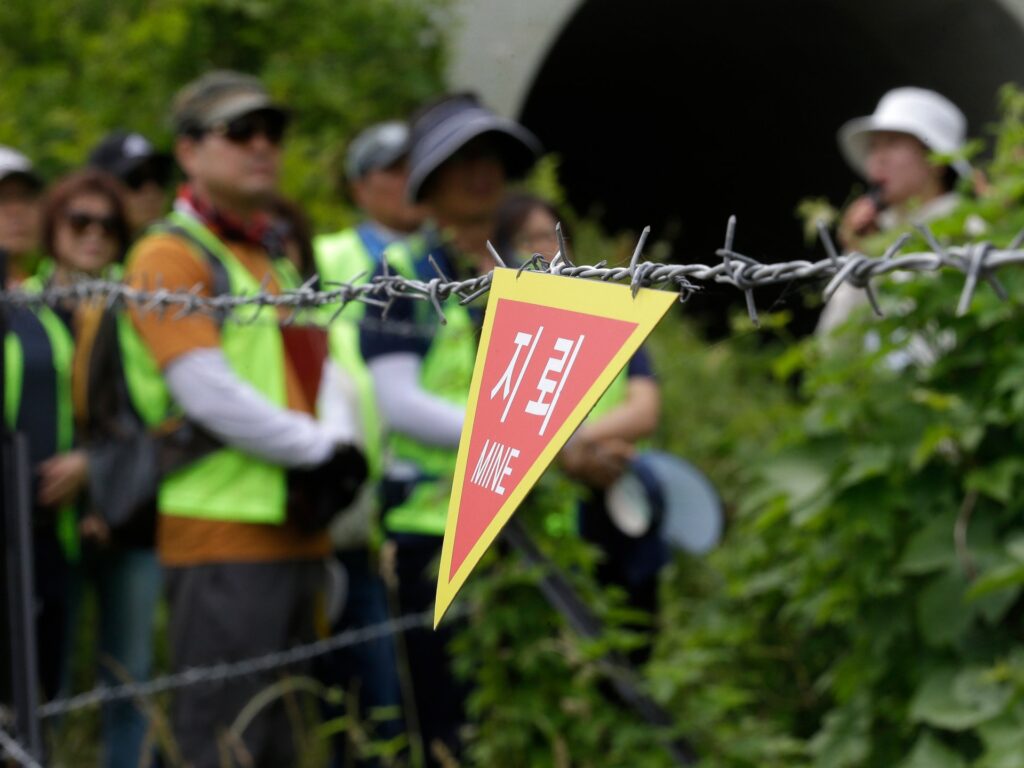
In a concerning incident near the heavily militarized border between North and South Korea, three South Korean officers sustained injuries following an explosion. The explosion occurred in the Demilitarized Zone (DMZ), a highly sensitive area that serves as a buffer zone between the two countries. Local media reports suggest that the cause of the blast was likely a landmine, though official investigations are ongoing to ascertain the exact nature of the incident.
The three officers, whose identities have not been disclosed, were conducting routine patrols near the border when the explosion took place. Immediate medical response teams were dispatched to the site, and the wounded officers were quickly evacuated to nearby medical facilities for treatment. Their condition has been described as serious but stable.
This event marks a significant escalation in the already tense atmosphere of the Korean Peninsula, where military incidents along the border have the potential to trigger larger conflicts. The DMZ is one of the most fortified borders in the world, and any explosion in this region typically prompts a heightened state of alert among South Korean and allied forces.
South Korean military officials have confirmed the incident and are collaborating with intelligence agencies to investigate the source of the explosion. Early assessments indicate that the landmine could have been part of unexploded ordnance left from previous conflicts or might have been newly placed, raising concerns about security breaches along the border.
The South Korean government has expressed strong condemnation of the incident and called for a thorough investigation. Officials have urged North Korea to maintain peace and stability, emphasizing the importance of avoiding provocations that could escalate tensions further.
Internationally, the incident has drawn attention from governments and organizations invested in maintaining peace on the Korean Peninsula. The ongoing volatility underscores the fragile nature of relations between North and South Korea, where decades of unresolved conflict continue to produce periodic flare-ups.
Military analysts have highlighted the risks posed by landmines and unexploded ordinance in conflict zones, pointing out that such weapons remain a hazard long after active hostilities cease. Efforts to clear these dangerous devices have been complicated by political and logistical challenges, particularly in areas like the DMZ.
The wounded officers’ families have been notified, and support services are being provided. South Korean authorities have promised a transparent inquiry and have reassured the public about measures being taken to enhance border security and prevent future incidents.
This incident reinforces the critical need for ongoing diplomatic efforts and peacebuilding initiatives aimed at reducing tensions on the Korean Peninsula. The prospect of further violence, even from such isolated incidents, continues to cast a shadow over regional stability.
As investigations proceed, the international community watches closely, hoping for a de-escalation of tensions and a return to dialogue between the two Koreas. The safety of those serving on the frontlines of this long-standing division remains a paramount concern for South Korea and its allies.
In summary, the explosion near the DMZ injuring three South Korean officers is a stark reminder of the precarious security environment along the border. The incident has sparked urgent calls for vigilance, investigation, and renewed efforts to ensure peace and stability in one of the world’s most sensitive regions.