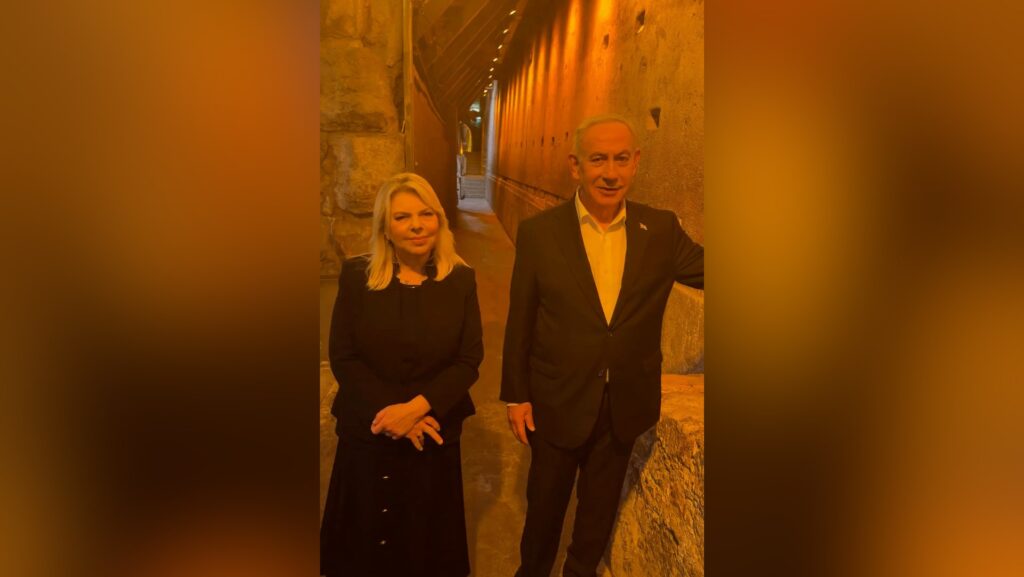
Israeli Prime Minister Benjamin Netanyahu and his wife, Sara Netanyahu, recently undertook a significant visit through tunnels located beneath the Al-Aqsa Mosque compound. This mosque, situated in Jerusalem’s Old City, is one of the holiest sites in Islam and holds deep religious, historical, and political significance. The tunnels beneath the compound are known to be ancient and have been a focal point in the longstanding tensions between Israelis and Palestinians.
Netanyahu’s tour of these tunnels is seen as a provocative and symbolic move that often sparks intense reactions from the Palestinian community, Muslim worshippers, and the broader international community. These subterranean paths run underneath the Al-Aqsa Mosque and are part of a complex network historically significant for archaeological and strategic reasons.
The Prime Minister’s visit drew immediate attention as it intersects with the highly sensitive issue of sovereignty and control over the site, a central dispute in the Israeli-Palestinian conflict. The Al-Aqsa Mosque compound is administered by the Islamic Waqf under Jordanian custodianship, while Israel maintains security control.
The tunnels themselves have been the subject of controversy, with some accusing Israel of attempting to change the status quo or assert greater influence over the holy site. Netanyahu’s inspection of the tunnels was likely aimed at reinforcing Israeli claims and demonstrating a degree of governmental authority over these areas.
Officials and analysts suggest that Netanyahu’s move also serves a domestic political purpose, catering to nationalist elements within Israel who view the site as a fundamental part of Jewish heritage. However, this action risks inflaming tensions in an already volatile region, where any perceived encroachment on religious sites often triggers widespread protests and violence.
The visit has elicited mixed reactions globally. Some Israeli supporters view the tour as a justified assertion of heritage and security interests, while Palestinians and many in the Muslim world see it as a provocative encroachment on Islamic holy ground.
In the aftermath of the visit, calls for calm and restraint have been issued by international leaders to prevent any escalation. The issue underscores the fragile and complex nature of Jerusalem’s holy sites, which constitute a core obstacle in the efforts to achieve peace in the Israeli-Palestinian conflict.
Historically, the area encompassing Al-Aqsa has been a flashpoint for conflict and a symbol of religious identity. Visits by political leaders to such sensitive locations are closely watched and often impact diplomatic relations and regional stability.
Netanyahu’s tour of the tunnels beneath the Al-Aqsa Mosque compound marks yet another chapter in the ongoing saga surrounding access, control, and political symbolism embedded in one of the world’s most contested sacred sites.