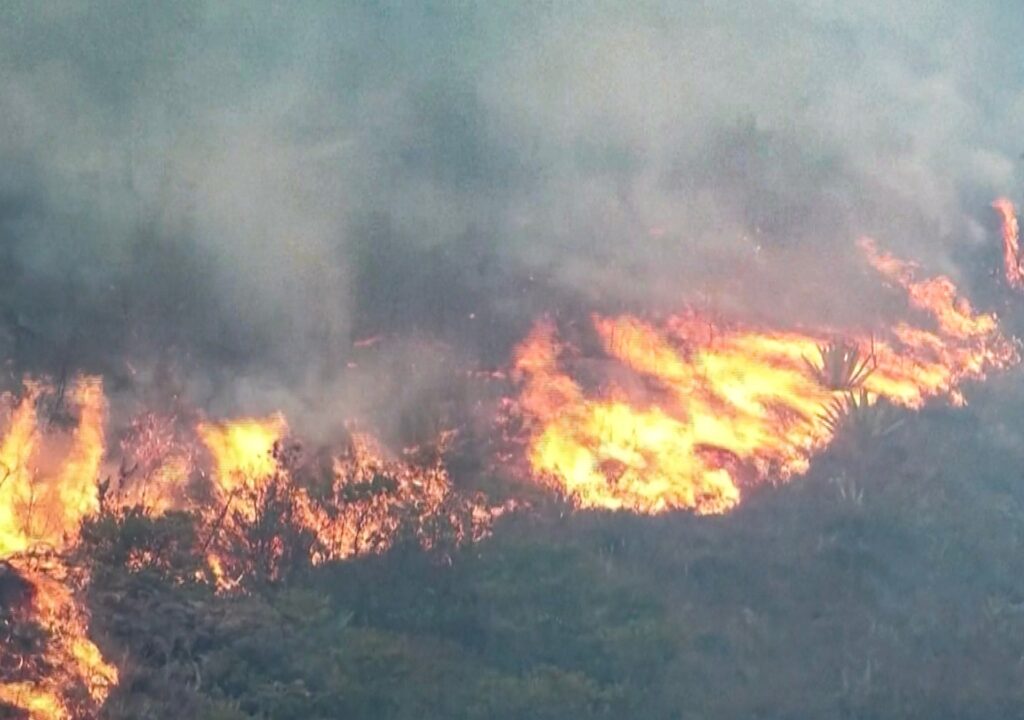
Central Colombia is currently grappling with a severe forest fire that poses a significant threat to the renowned tourist town of Villa de Leyva. The blaze has escalated rapidly, fueled by unusually high temperatures that have shattered historical records in the region. Experts attribute this extreme heat to the El Niño weather phenomenon combined with prolonged drought conditions, creating an environment conducive to the outbreak and spread of wildfires.
Villa de Leyva, known for its colonial architecture and cobblestone streets, draws thousands of visitors annually. However, the ongoing forest fire has raised concerns about the safety of both residents and tourists, as well as potential damage to the area’s natural beauty and cultural heritage.
Firefighters and emergency services are working tirelessly to contain the flames, which have already consumed large swaths of forestland in central Colombia. The government has deployed additional resources, including aerial firefighting units, to battle the fire and protect critical infrastructure.
The situation underscores the broader challenges faced by Colombia and many parts of the world as climate change contributes to increasingly severe weather events. Analysts warn that rising global temperatures are expected to lead to more frequent and intense wildfires in vulnerable regions.
Authorities have issued evacuation advisories for nearby communities and are urging residents and tourists to stay alert and follow safety instructions. The tourism sector is closely monitoring the situation, concerned about the economic impact if the fire continues to spread or causes prolonged disruptions.
This fire is part of a troubling pattern seen across the country, where multiple wildfires have broken out simultaneously, straining firefighting resources and complicating mitigation efforts. The combination of El Niño, drought, and elevated temperatures not only worsens fire risks but also threatens water supplies and agricultural productivity.
Environmental groups have called for increased investment in fire prevention strategies and climate adaptation measures to reduce vulnerability and enhance resilience. They emphasize the importance of sustainable land management practices and the protection of forests as natural firebreaks.
Residents of Villa de Leyva remain hopeful as teams work around the clock to bring the situation under control. Meanwhile, the incident serves as a stark reminder of the urgent need for coordinated action to address climate-related disasters and their impact on communities and economies worldwide.