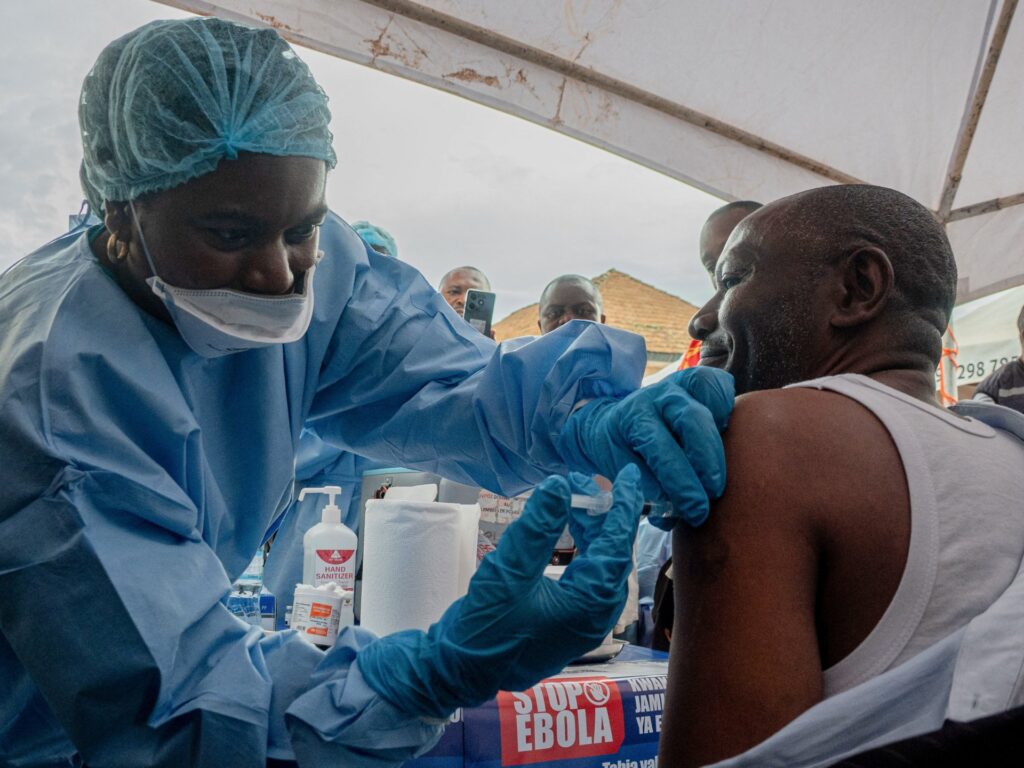
The World Health Organization (WHO) has officially approved trials for two new vaccines designed to combat the Bundibugyo strain of the Ebola virus. This strain has been responsible for a devastating outbreak in the Democratic Republic of Congo (DR Congo), leading to more than 5,300 deaths. The approval marks a critical step forward in efforts to curb the spread of one of the world’s most lethal diseases.
The Bundibugyo virus, a variant of the Ebola virus, emerged as a significant threat in the DR Congo due to its high fatality rate and rapid transmission within affected communities. Since its identification, the virus has posed a formidable challenge to public health officials in the region and beyond.
The newly developed vaccines aim to provide effective immunity against this specific strain, which has been a persistent cause of outbreaks. The approval for clinical trials follows extensive research and preclinical testing, which demonstrated promising safety profiles and the potential for robust immune responses.
WHO’s decision underscores the urgent need for enhanced preventative measures in regions vulnerable to Ebola outbreaks. The organization will oversee the clinical trials to ensure compliance with international safety standards and ethical guidelines. These trials will involve volunteers in areas at risk, assessing both the vaccines’ efficacy and safety over a comprehensive time frame.
Health experts globally are optimistic about these advances, hoping the vaccines could significantly reduce mortality and control the outbreak more effectively than existing interventions. Historical efforts to combat Ebola have faced challenges due to the virus’s complexity and mutation rates, making vaccine development a critical component of outbreak management.
The success of these vaccines could also pave the way for broader immunization programs against other Ebola virus strains. It would represent a monumental achievement in infectious disease control, showcasing the power of scientific innovation and international cooperation.
In addition to vaccination, WHO continues to emphasize the importance of community engagement, early detection, and supportive care to manage and contain Ebola outbreaks. The integration of vaccines into these strategies is expected to strengthen the overall response efficacy.
The trials’ outcomes will be closely monitored, and data will be shared transparently to inform downstream decisions on vaccine distribution and public health policies. Should the vaccines prove effective, large-scale manufacturing and deployment will be prioritized to protect at-risk populations.
This development has been welcomed by health authorities in the DR Congo and the global health community, who view it as a beacon of hope amidst ongoing efforts to eradicate the scourge of Ebola. The collaboration between researchers, governments, and WHO exemplifies the concerted action necessary to tackle such global health threats.
As these trials commence, the international community remains vigilant, prepared to support the rollout and monitor the impact of these new vaccines on the trajectory of Ebola outbreaks. This promising progress brings renewed optimism to millions living under the threat of the Bundibugyo virus and other deadly pathogens worldwide.