Saudi Arabia, the world’s second-largest crude oil exporter, is adopting new strategies to reroute its oil shipments amidst increasing global scrutiny and market dynamics. Traditionally reliant on key waterways for transportation, recent developments reveal the kingdom is now utilizing alternative routes involving dark shipments and ship-to-ship transfers off the coast of Oman.
Dark shipments refer to oil cargoes transported without broadcasting the vessel’s location, a tactic often used to obscure the origin or final destination of crude. This method allows for greater flexibility and confidentiality in oil trade, particularly in politically sensitive contexts or where sanctions might apply.
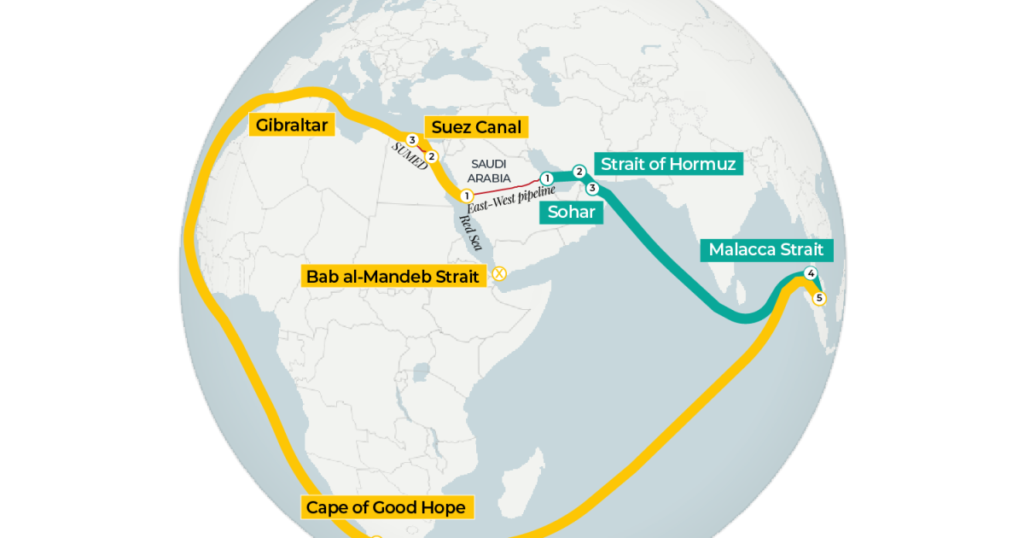
The new route involves ships departing from Yanbu, a major Red Sea port in Saudi Arabia, and navigating towards Sohar, an important Omani port on the Gulf of Oman. From Sohar, crude is transferred to other vessels via ship-to-ship operations, a process that facilitates rerouting without docking. This network allows Saudi Arabia to circumvent traditional choke points and possible restrictions in crucial maritime zones like the Strait of Hormuz.
By leveraging these less conspicuous shipping modes, Saudi Arabia aims to maintain steady oil exports while minimizing geopolitical risks. The Gulf region, long a hotspot for energy transportation, has experienced increasing tensions which could threaten conventional shipping lanes.
Additionally, diverting some exports through Oman adds a layer of strategic depth. Oman’s ports are geographically positioned outside the most volatile parts of the Gulf, offering a safer harbor for logistical operations. Moreover, the emerging routes support Saudi Arabia’s broader economic diversification plans, providing resilience to its oil supply chain in an uncertain world.
This shift in export logistics comes amid global oil market fluctuations and increased demand from various international partners. Saudi authorities are keen on safeguarding their market share and responding dynamically to sanctions, tariffs, or conflicts that could disrupt supply.
Experts suggest this approach might encourage other Gulf exporters to explore similar techniques, potentially transforming oil shipment patterns worldwide. Such adjustments underscore the evolving geopolitical landscape in energy trade, where shipping strategies become crucial to maintaining supply stability.
However, these methods also pose challenges, including regulatory scrutiny from international watch groups concerned about transparency and illicit trade. The use of dark shipments and ship-to-ship transfers requires careful navigation of legal frameworks and diplomatic relations.
In conclusion, Saudi Arabia’s innovative routing through Yanbu to Sohar, incorporating dark shipments and offshore transfers, represents a significant adaptation to contemporary oil export challenges. This strategy exemplifies how major energy players recalibrate logistics to protect critical supply chains amidst geopolitical complexities, ensuring continued energy flow to global markets.