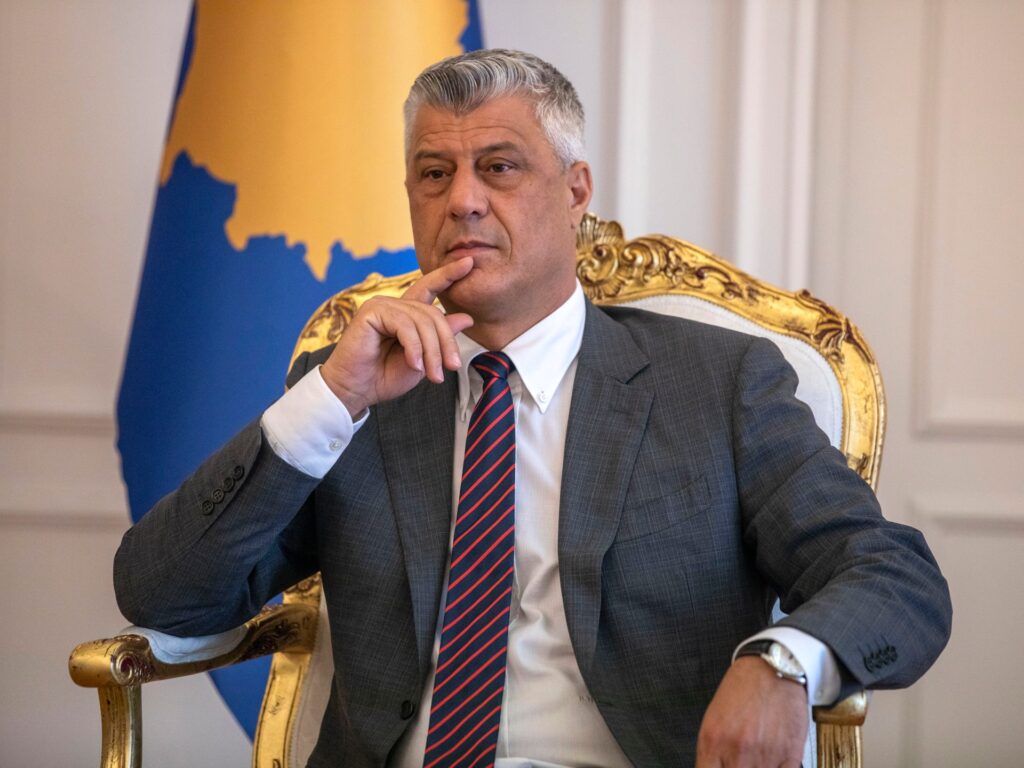
Hashim Thaci, the former President of Kosovo, has been sentenced to 25 years in prison on charges of war crimes. The 58-year-old leader was found guilty of a range of serious offenses, including murder, torture, and illegal detention, committed during the Kosovo conflict.
Thaci’s trial was closely watched internationally, given his significant role in Kosovo’s political landscape and the region’s turbulent history. The charges stemmed from actions taken during the late 1990s, when Kosovo sought independence from Serbia amidst violent conflict.
The accusations detailed multiple instances where Thaci, as a commander of the Kosovo Liberation Army, was implicated in ordering or overseeing unlawful detentions and brutal treatment of prisoners. The court heard testimonies and gathered evidence that linked him directly to orchestrating acts of terror against civilians and combatants alike.
His sentencing marks a pivotal moment in Kosovo’s post-war reconciliation efforts and the broader pursuit of justice in the Balkans. The verdict underscores the commitment of international judicial authorities to hold even the highest-ranking officials accountable for violations of human rights and humanitarian law.
Reactions from Kosovo’s political class were mixed, with some expressing relief that justice has been served, while others lamented the implications for Kosovo’s political future. International communities, including the United Nations and European Union, have welcomed the ruling as a step towards strengthening the rule of law in the region.
Thaci’s conviction is seen as a warning that political power does not provide immunity from prosecution for wartime atrocities. It also reinforces the importance of legal mechanisms in addressing past conflicts and helping societies heal.
Throughout the legal proceedings, Thaci maintained his innocence, denying any knowledge or involvement in the crimes attributed to him. His defense argued that the charges were politically motivated and aimed at destabilizing Kosovo.
The case has rekindled conversations about accountability, transitional justice, and the complex legacy of the Kosovo war, during which thousands lost their lives and many were displaced.
Moving forward, the ruling is expected to influence how war crimes are prosecuted in the region and potentially impact ongoing efforts to foster ethnic reconciliation and cooperation.
The global community continues to monitor developments, emphasizing the need for transparent judicial processes and respect for human rights as cornerstones of lasting peace in Kosovo and the Balkans.