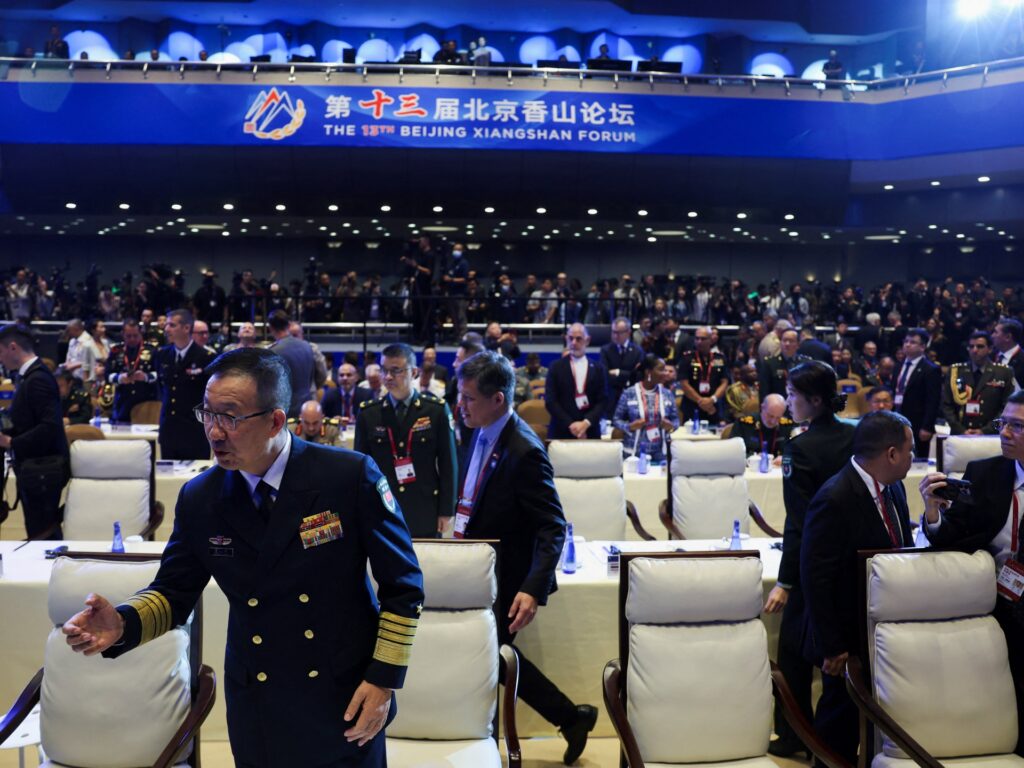
China’s Defence Minister, Dong Jun, recently delivered a significant message on the international military stage focusing on the principles of shared security governance and military cooperation. In his address, Dong Jun issued a clear warning against coercion in international relations, highlighting the importance of peaceful coexistence and mutual respect among nations. Notably, he avoided direct mention of specific countries like the US and Japan, underscoring a diplomatic approach that favors constructive dialogue over confrontation.
Dong Jun’s remarks come at a time when regional security dynamics are particularly sensitive, with various powers engaging in complex strategic posturing. By advocating for shared security governance, the Chinese defence chief promoted a vision where countries collaboratively manage security challenges, rather than acting unilaterally or through coercive means. This idea aligns with China’s broader diplomatic strategy to foster stability while expanding its influence through partnerships and multilateral frameworks.
The emphasis on military cooperation indicates China’s openness to engage with other nations in joint efforts to address common threats, including terrorism, piracy, and regional conflicts. Such cooperation could enhance transparency, build trust, and reduce risks of misunderstandings or accidental escalations.
During his speech, Dong Jun acknowledged the evolving nature of global security threats and called for mechanisms that support dialogue and peaceful resolution of disputes. He emphasized respect for national sovereignty and territorial integrity as foundational to international relations, subtly reaffirming China’s stance on its own regional issues without direct confrontation.
Observers note that the omission of explicit references to the US or Japan may reflect a strategic choice aimed at lowering tensions and promoting an inclusive security environment. This approach can be seen as China’s attempt to balance assertiveness with diplomacy, presenting itself as a responsible stakeholder in international security.
Furthermore, Dong’s call for shared governance could encourage joint initiatives such as combined military exercises, intelligence sharing, and coordinated maritime security operations. These initiatives could serve as confidence-building measures and platforms for dialogue.
The defence chief’s stance reflects an awareness of the interconnectedness of security challenges and the limitations of confronting them through coercion or force alone. Instead, the focus is on cooperative solutions that acknowledge the interests and concerns of all parties involved.
In conclusion, China’s defence chief Dong Jun has sent a nuanced message emphasizing cooperation and shared responsibility in global security, warning against coercion without singling out any nation. This balanced rhetoric may contribute to easing regional tensions and fostering a more inclusive and stable security architecture in the future.