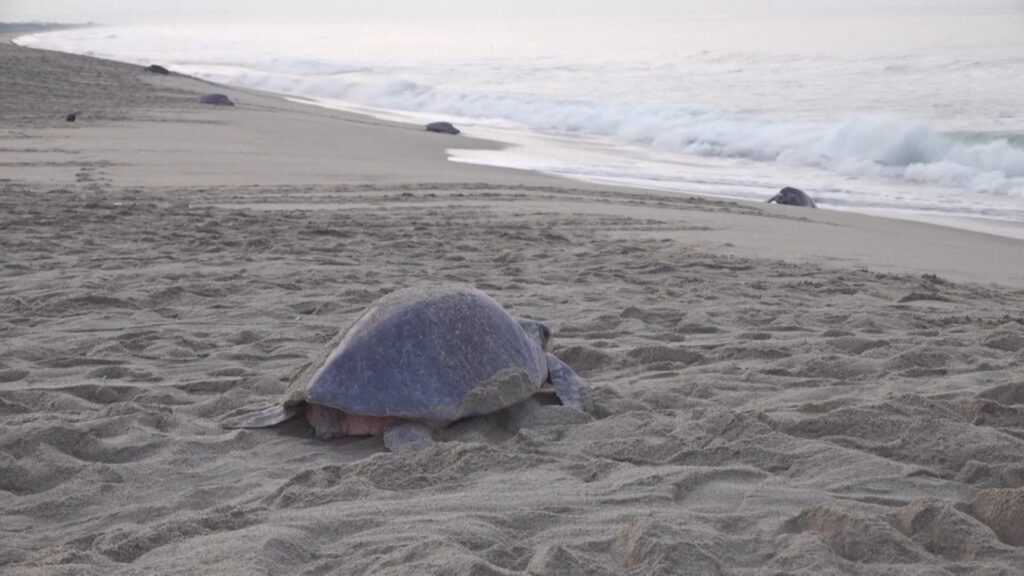
In an awe-inspiring natural spectacle, more than 300,000 olive ridley turtles have converged on a beach in southern Mexico for a mass nesting event. This extraordinary gathering, known as an arribada, is one of nature’s most remarkable phenomena, where thousands of turtles simultaneously come ashore to lay their eggs.
The olive ridley turtle, scientifically known as Lepidochelys olivacea, is famous for this unique breeding behavior. It is one of the smallest sea turtles, but its synchronized nesting numbers are among the largest witnessed in the reptile world. This year’s arribada in southern Mexico represents a significant occurrence, drawing attention from conservationists, researchers, and wildlife enthusiasts alike.
Southern Mexico, particularly the coasts of Oaxaca and Guerrero, provides the perfect environment for these turtles to nest. The sandy beaches offer a safe haven for the turtles to lay their eggs, which will incubate under the warm sand until the hatchlings emerge weeks later.
The mass nesting is critical for the survival of the species, as laying thousands of eggs increases the chance that some hatchlings will evade predators and reach the ocean. These events also highlight the importance of protecting nesting beaches from human disturbance and environmental threats such as pollution and climate change.
Local communities have played an essential role in safeguarding the turtles and their nesting grounds. Conservation programs coordinate patrols to monitor the beaches during nesting seasons, ensuring the turtles’ safety and reducing the risk of poaching.
The arrival of such a vast number of turtles is a hopeful sign for the species, which has faced challenges including habitat loss and illegal trade. Efforts to preserve their habitats and to raise global awareness have contributed to the olive ridley population’s gradual recovery.
Experts emphasize that continued protection and sustainable tourism practices are vital for maintaining this natural event. Visitors are encouraged to observe from a distance to avoid disturbing the turtles.
This mass nesting event serves not only as a vital biological process but also as a powerful reminder of nature’s resilience and the importance of conservation efforts to protect vulnerable species. The spectacular sight of hundreds of thousands of olive ridley turtles returning to the same beach showcases the extraordinary cycles of wildlife that sustain our planet’s biodiversity.