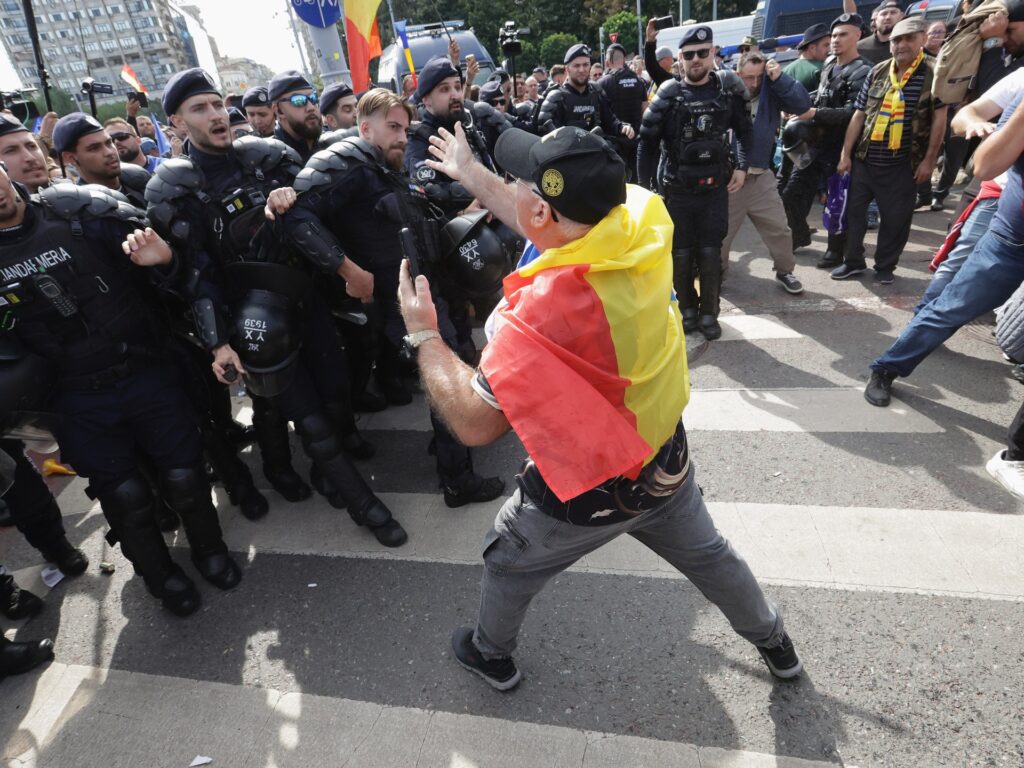
In a recent and intense confrontation, Romanian shepherds and farmers clashed with police forces amid protests against the government’s decision to extend a livestock export ban. Approximately 2,000 farmers, supported by far-right groups, gathered to express their deep dissatisfaction and frustration over the policy that they claim threatens their livelihoods.
The protest turned violent, resulting in dozens of injuries among both demonstrators and law enforcement officers. The farmers argue that the extended ban on livestock exports could severely impact their income, lead to economic instability in rural areas, and increase financial hardships for those who depend on the livestock industry.
For years, the Romanian agricultural community has faced challenges related to market access, fluctuating animal prices, and strict government regulations. The recent extension of the export ban was intended by authorities to protect domestic markets and maintain animal health standards. However, many farmers feel left out of the decision-making process and believe their concerns have been ignored.
The presence of far-right groups at the protest has added a political dimension to the unrest. These groups have capitalized on the farmers’ economic grievances, amplifying nationalist rhetoric and criticizing the government’s policies as disconnected from grassroots needs. The blend of economic distress and political mobilization has increased the volatility of the demonstration.
Authorities initially tried to manage the protests through dialogue, but as tensions escalated, police used crowd-control measures that included tear gas and physical restraints. The violence led to injuries and the arrest of several protesters. Medical teams were dispatched to treat the wounded, highlighting the severity of the confrontations.
This conflict underscores the broader challenges facing Romania’s agricultural sector, which remains a critical part of the national economy and cultural heritage. Livestock farming is particularly significant in rural communities where it supports families and local traditions.
Experts suggest that a resolution requires open communication channels between the government and farming representatives to create policies that balance economic interests, animal welfare, and public health. Without such cooperation, protests and clashes may continue, further destabilizing rural livelihoods.
In the aftermath, political leaders have called for calm and urged a peaceful dialogue to resolve the standoff. They emphasize the need for reforms that consider the welfare of farmers while protecting national interests.
This episode highlights the deep-rooted tensions in Romania’s agricultural policies and the urgent need for sustainable solutions to ensure the prosperity and stability of rural populations. The outcome of these protests will likely influence future policy decisions and the relationship between government and agricultural communities.