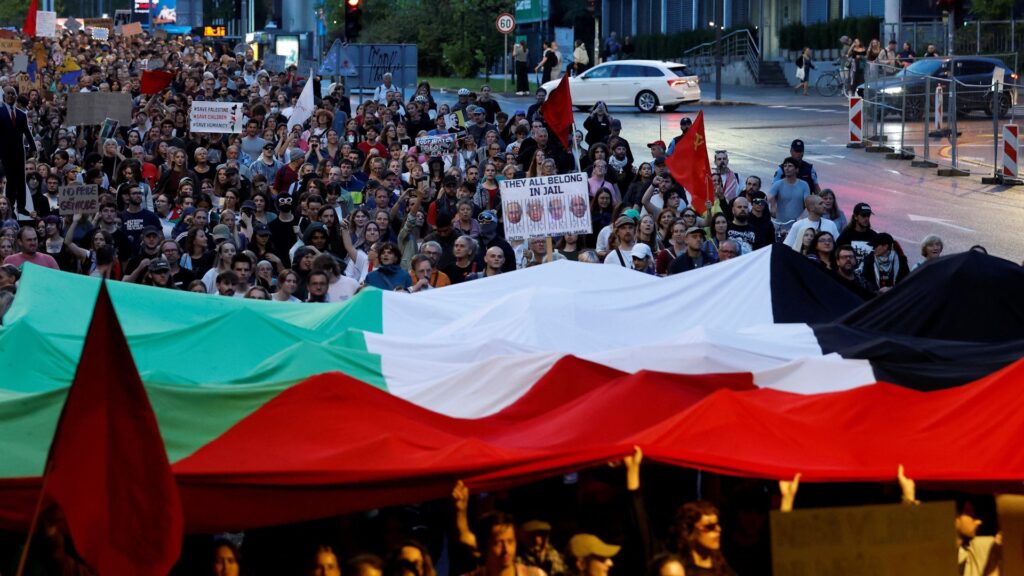
In the capital city of Slovenia, Ljubljana, a significant protest has unfolded as pro-Palestinian demonstrators rallied against the inauguration of Israel’s first resident embassy in the country. This event marks an important diplomatic step by Israel, symbolizing the strengthening of ties with Slovenia. However, the opening has sparked considerable controversy and public dissent.
The protesters gathered near the embassy site, voicing their opposition to the move. They expressed concerns over the ongoing Israeli-Palestinian conflict, emphasizing solidarity with Palestinian people and calling for international attention to the plight they face. The demonstrators’ banners and chants highlighted their resistance against what they perceive as the normalization of contentious policies.
Slovenia’s decision to host an Israeli embassy reflects broader geopolitical dynamics within Europe and the Middle East. The establishment of a permanent diplomatic mission signifies a commitment to bilateral relations, focusing on political, economic, and cultural cooperation. Yet, the issue remains deeply divisive among various communities and political groups within Slovenia.
The protest underscores the global sensitivity surrounding the Israeli-Palestinian conflict, a situation that continues to evoke strong reactions worldwide. Activists argue that diplomatic gestures such as embassy openings must not ignore the humanitarian and political dimensions that fuel the conflict.
Security measures were heightened around the area to maintain order as protesters voiced their concerns peacefully. Authorities monitored the situation closely to prevent any escalation, ensuring that the right to demonstrate could be exercised without violence.
This demonstration is part of a broader pattern of activism seen in many countries where pro-Palestinian advocates push for greater international pressure on Israel regarding settlement policies, human rights, and peace negotiations. The embassy’s presence in Slovenia is seen by some as a symbol of recognition that contrasts sharply with the continued struggles faced by Palestinians.
Amid the protest activities, Slovenian government officials have reiterated their stance on supporting a balanced approach to peace efforts in the Middle East. They emphasize the importance of dialogue and diplomacy in resolving longstanding issues and foster understanding between conflicting parties.
The opening of this embassy will likely have implications for Slovenia’s international relations and domestic political discourse. It serves as a focal point for debates on foreign policy orientation and signals Slovenia’s position in the complex arena of international politics.
In conclusion, the protests against the opening of Israel’s embassy in Ljubljana highlight the persistent and passionate opposition over Middle Eastern conflicts within European societies. As Slovenia moves forward with the embassy’s activities, the voices of its citizens and activists reflect the broader global call for peace, justice, and resolution in the region.