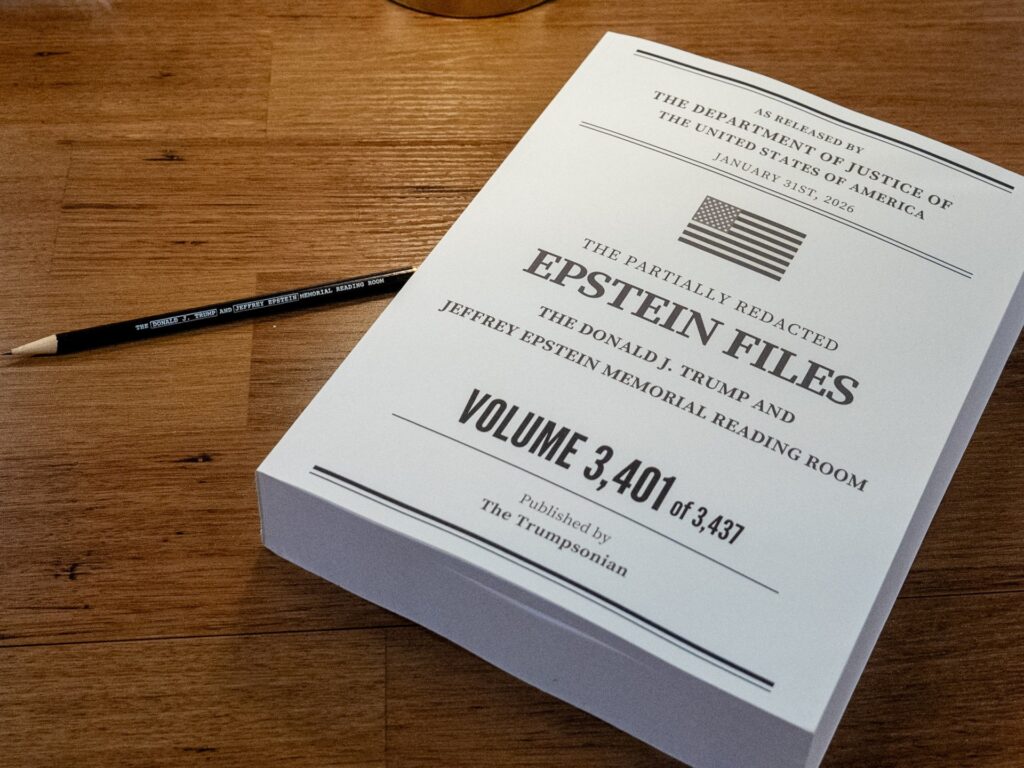
In a surprising turn of events during the recent political season, a mock Republican convention website was found to automatically redirect users to sensitive materials referred to as the “Epstein Files.” This unexpected redirect has stirred significant reactions from both sides of the American political spectrum, highlighting the tense and often combative nature of current political discourse.
The website, designed to mimic an official Republican convention platform, was part of a prank orchestrated to draw attention and perhaps ridicule during a highly polarized time in U.S. politics. When users attempted to access the site, instead of the expected content related to the Republican convention, they were redirected to documents and files associated with Jeffrey Epstein, whose controversial and criminal activities have long been a topic of public and media scrutiny.
Democratic lawmakers responded with a mix of humor and criticism, using the incident to highlight what they perceive as failures or hypocrisies within the Republican Party. Many Democrats shared the experience on social media, often with jokes and sarcastic comments aimed at undermining the credibility of the Republicans during the convention season.
On the other hand, Republican officials were quick to denounce the website as “fake news,” emphasizing that the site was not an authorized platform and distancing themselves from the prank. To counteract the redirect, many Republicans directed their supporters to the legitimate Republican convention website, reinforcing the legitimacy and official status of their political events.
This event underscores the increasing use of digital platforms for partisan strategies, including misinformation and political pranks, which complicate the information landscape during critical democratic processes such as national conventions. It reflects broader challenges faced by political parties in the digital age, where controlling the narrative on the internet becomes as crucial as the messages delivered at the conventions themselves.
The incident has prompted discussions about cybersecurity, the responsibility of website hosts, and the impact of digital pranks on public trust in political institutions. Experts suggest this might not be an isolated case but rather part of a growing trend where digital disruptions intersect with political messaging, potentially influencing voter perceptions and election outcomes.
As the political season progresses, both parties are likely to tighten controls over their digital domains while also preparing to counteract any further attempts to manipulate or mock their platforms through similar online stunts. This episode serves as a reminder of the volatile and innovative ways in which political discourse is evolving in the 21st century, reflecting deeper societal divisions and the perpetual battle over public opinion and credibility.