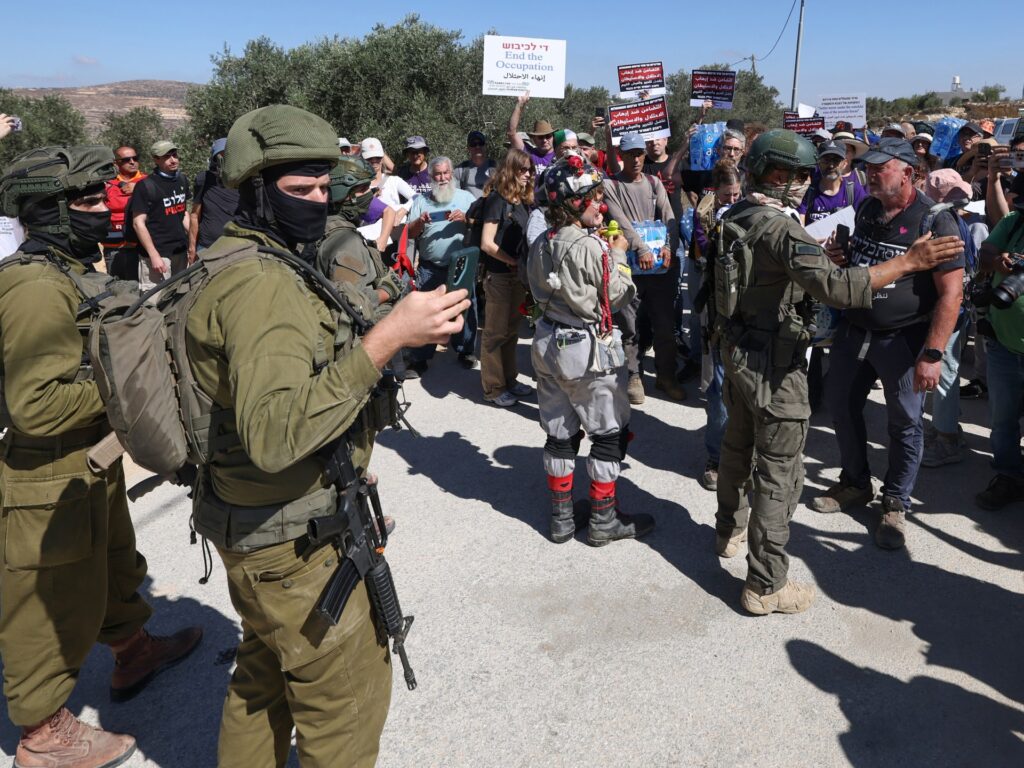
Tensions have escalated in Jerusalem as Israeli police fatally shot a Palestinian individual, marking another grim chapter in the ongoing conflict in the region. This incident comes amidst a broader crackdown whereby the Israeli army has imposed a blockade, preventing both Israeli and Palestinian activists from delivering essential aid—including food and medicine—to homes in the village of Qusra, which are reportedly under siege by settlers.
Jerusalem remains a flashpoint in the Israeli-Palestinian conflict, with frequent confrontations often resulting in casualties and heightened unrest. The recent killing adds to a growing list of violent encounters, further deepening the divisions and hostilities between the communities.
Meanwhile, in the village of Qusra, situated in the West Bank, residents have been enduring increased attacks and harassment from settler groups. The blockade enforced by the Israeli military has effectively cut off vital supply routes, exacerbating the humanitarian situation for many families in the besieged area.
Activists from various Israeli and Palestinian organizations have attempted to reach the affected homes to provide much-needed support and relief. However, their efforts have been met with stringent restrictions and outright denial by military forces, citing security concerns and operational orders.
Human rights groups have condemned these measures, arguing that obstructing the delivery of humanitarian aid violates international laws and further endangers vulnerable populations living under siege conditions. They emphasize the need for safe passage to ensure that civilians receive adequate assistance without fearing violence or retaliation.
The Israeli authorities maintain that their actions are part of security protocols aimed at preventing further violence and protecting civilians, though critics remain unconvinced and call for increased transparency and accountability.
This latest development highlights the complex and volatile nature of the Israeli-Palestinian conflict, where issues of security, sovereignty, and human rights intersect and clash frequently. It underscores the urgent necessity for renewed dialogue, peacebuilding efforts, and international mediation to address the root causes of the conflict and to prevent further loss of life.
As the situation in Jerusalem and Qusra continues to unfold, both local communities and the international community watch closely, concerned about the implications for regional stability and the prospects for peace in the area.
In conclusion, the killing of a Palestinian in Jerusalem by Israeli police, coupled with the military’s blockade of humanitarian aid to Qusra, is a stark reminder of the ongoing strife. It calls for concerted efforts from all stakeholders to prioritize human dignity, security, and peace as the path forward amid enduring challenges.