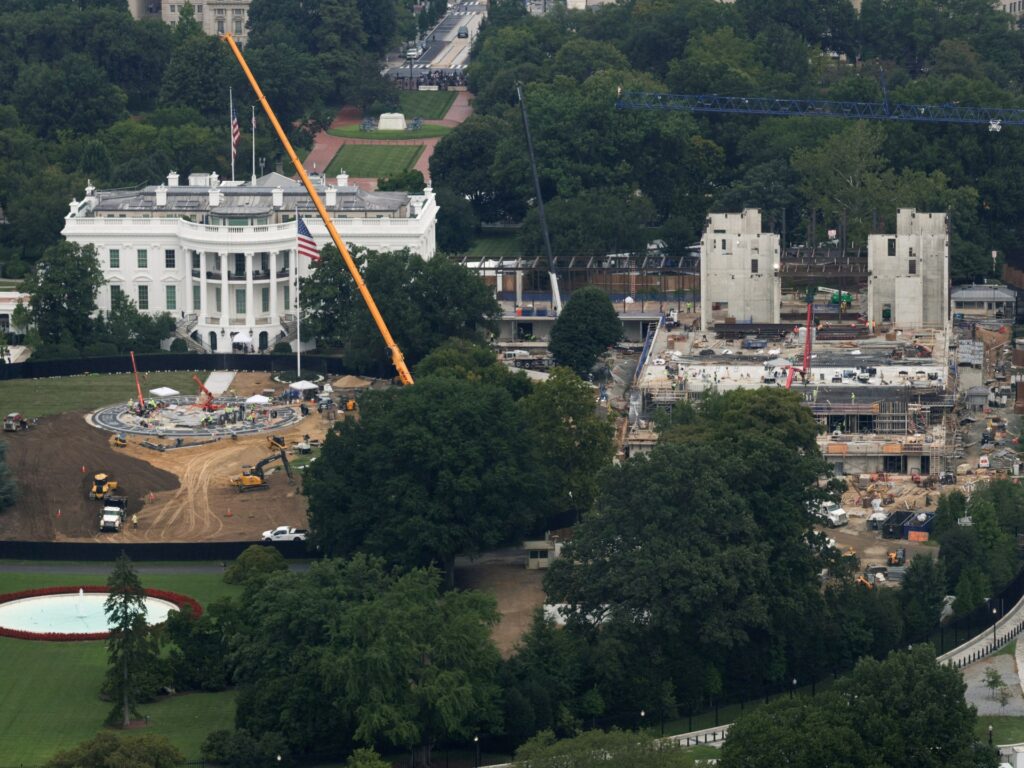
The US Supreme Court has ruled that construction of a $400 million ballroom at the White House can proceed, effectively replacing a previous temporary order that had halted the project earlier this month. This decision marks a significant development in the ongoing debate over the expansion of facilities at the presidential residence.
The ballroom, envisaged to be a state-of-the-art facility, is intended to serve various official functions and events hosted at the White House. Supporters of the construction argue that the new space will enhance the capacity for hosting diplomatic and cultural events, reflecting the stature and needs of the presidency.
Opponents, however, have raised concerns regarding the project’s substantial cost and the impact of construction on the historic integrity of the White House grounds. The $400 million price tag has sparked debate about government spending and priorities, with critics urging for more transparency and justification for the expenses involved.
Earlier this month, a temporary restraining order was issued, effectively halting construction pending further judicial review. This was prompted by lawsuits and public outcry focusing on environmental, procedural, and heritage-related concerns.
The Supreme Court’s reversal of this temporary order signals confidence in the procedural legitimacy of the project or a decision to allow construction to continue while any remaining legal challenges are resolved.
According to court documents, the justices found sufficient grounds to permit the work to proceed, emphasizing the importance of balancing developmental needs against preservation efforts. This ruling underscores the judiciary’s role in shaping how governmental projects align with regulatory frameworks and public interest.
Construction officials have indicated that work is set to resume imminently following the ruling. They have reassured the public that efforts will be made to minimize disruption and maintain the security and appearance of the White House premises.
This decision could set a precedent for how future expansions and renovations at historic government sites are handled, especially those involving substantial financial investment and public scrutiny.
As construction moves forward, attention will likely continue to focus on the project’s cost, timeline, and eventual impact on the White House’s function and historic character. Stakeholders on all sides remain engaged in ongoing discussions about the best path forward for the nation’s iconic presidential residence.
In summary, the Supreme Court’s ruling to allow the $400 million White House ballroom construction to proceed highlights the complex interplay between modernization, heritage preservation, and political considerations. This development closes the chapter on the temporary order while opening the door to the long-debated project moving into its next phase.