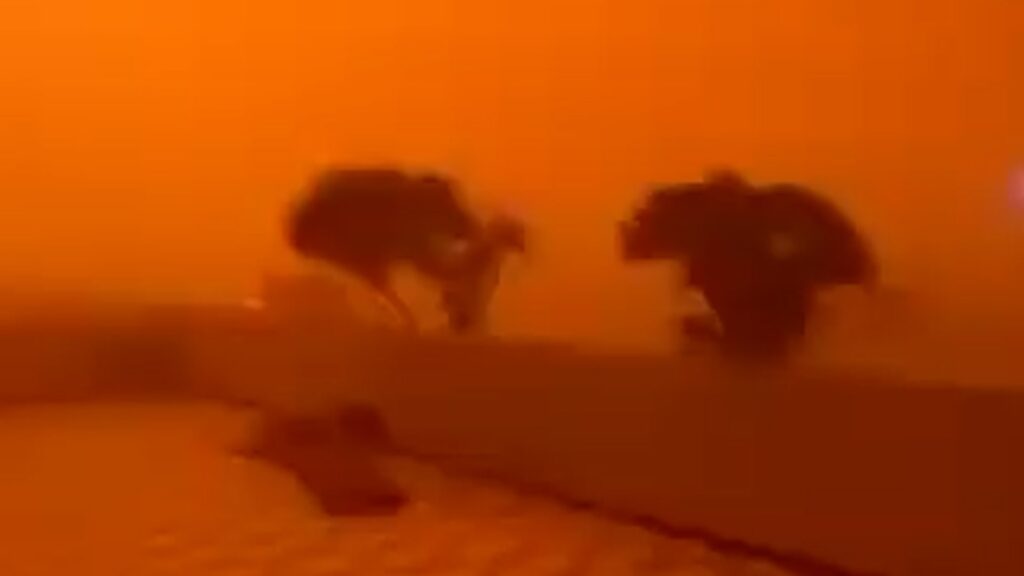
A powerful sandstorm has recently engulfed the city of Homs in Syria, creating an eerie orange haze that has significantly reduced visibility and disrupted daily life. This natural event, characterized by swirling dust and sand particles, has transformed the cityscape into a surreal atmosphere reminiscent of a dystopian film scene.
The sandstorm arrived unexpectedly, driven by strong winds sweeping across the arid regions surrounding Homs. Residents reported that the sky took on an unusual orange glow, and the air felt thick and gritty. The storm has caused transportation delays, with many roads becoming hazardous to navigate due to poor visibility and sand accumulation.
Health officials have warned the public, especially those with respiratory conditions such as asthma or chronic bronchitis, to stay indoors and limit exposure to the dust-laden air. The fine sand particles can exacerbate breathing difficulties and cause irritation to the eyes, nose, and throat.
Local authorities have activated emergency protocols to assist vulnerable populations and ensure that health facilities are prepared for potential increases in respiratory complaints. Additionally, schools and outdoor activities have been suspended temporarily to protect children and the broader community.
Meteorologists have explained that sandstorms of this scale are common in the region during certain seasons, as dry conditions and high winds create ideal circumstances for sand and dust to become airborne. Climate experts, however, note that changes in weather patterns could be influencing the frequency and intensity of such storms.
Residents of Homs have adapted to the harsh environmental conditions, but events like this sandstorm serve as a stark reminder of the challenges posed by the natural landscape and climate in Syria. As the storm moves on, clean-up efforts will be necessary to remove sand deposits from streets, buildings, and vehicles.
The sandstorm in Homs is part of a larger pattern affecting parts of the Middle East, where increased desertification and climate variability are impacting daily life and economic activities. Environmentalists urge better land management and sustainable practices to reduce the long-term effects of dust storms.
In the aftermath, the city will likely face disrupted transportation schedules, increased health advisories, and a community effort in recovery and restoration. The eerie orange haze that enveloped Homs stands as a visual testament to both the beauty and the harshness of nature in the region.