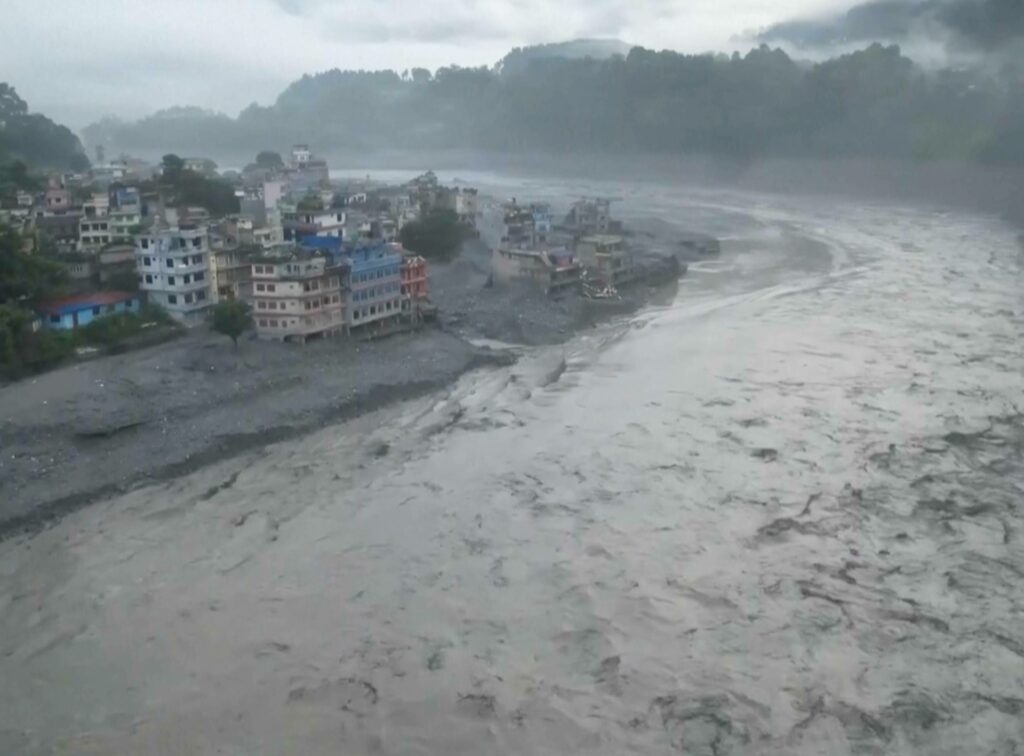
Recent aerial footage has unveiled the widespread destruction caused by severe flooding in Nepal. The floods, triggered by heavy monsoon rains, have resulted in significant damage to infrastructure, homes, and agricultural lands across multiple regions of the country.
The aerial video captures vast swathes of submerged villages and washed-out roads, highlighting the scale of the disaster that ground-based images often cannot fully convey. Entire communities have been displaced, with rescue and relief operations becoming a critical priority for the Nepalese government and international aid organizations.
Heavy rains have led to swollen rivers overflowing their banks, causing flash floods and landslides in hilly areas, which is a frequent hazard in Nepal’s mountainous terrain during the monsoon season. These landslides have blocked transportation routes, isolating affected communities and complicating relief efforts.
The floodwaters have damaged rice paddies, the country’s staple crop, threatening food security for many rural families. In addition to homes and farmland, essential infrastructure such as bridges, schools, and health centers have suffered severe damage, further impacting the affected populations.
Local authorities have reported casualties and numerous injuries, with several people still missing in some of the hardest-hit districts. Emergency shelters and medical camps have been set up to accommodate displaced residents and provide necessary care.
International aid agencies have responded promptly, delivering food, clean water, and medical supplies. However, ongoing rains and unstable weather conditions continue to pose challenges for rescue teams working to reach remote areas.
The Nepalese government has called for increased support from the global community to assist in recovery and rebuilding efforts. Experts warn that climate change may be increasing the frequency and intensity of such natural disasters in the Himalayan region.
Community leaders and environmentalists stress the importance of sustainable development and improved disaster preparedness to mitigate the impact of future floods. Investments in early warning systems, resilient infrastructure, and community education are seen as vital steps toward safeguarding vulnerable populations.
As the waters slowly recede, the focus shifts toward long-term rehabilitation and rebuilding. The aerial videos serve as a stark reminder of the urgent need for coordinated response and resilience-building in Nepal, underscoring the human and economic toll of climate-related disasters in the region.