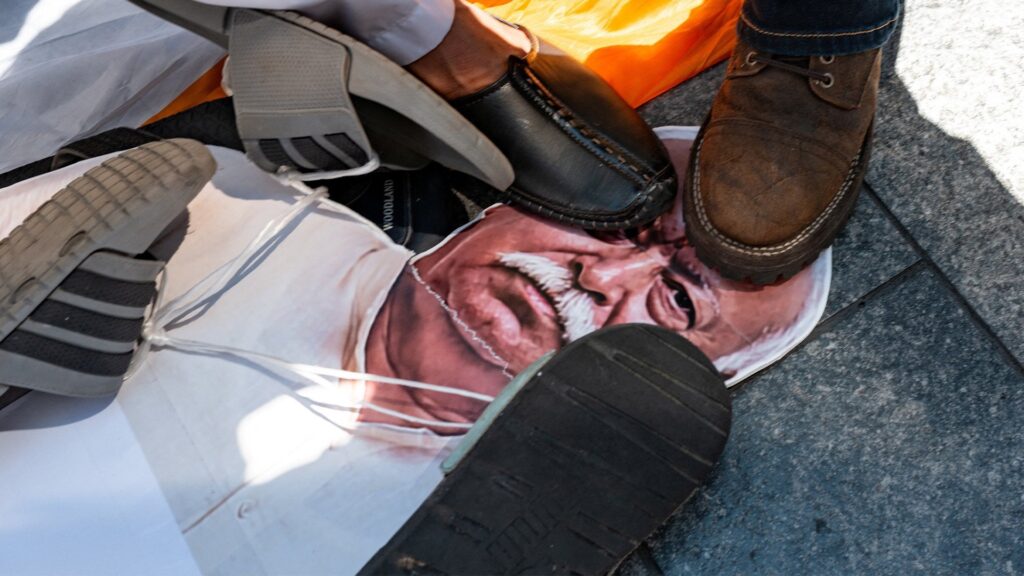
In recent events in New York City, a significant protest erupted in response to a celebration hosting Mohan Bhagwat, the chief of Rashtriya Swayamsevak Sangh (RSS), India’s prominent Hindu nationalist organization. The demonstration drew attention from multiple communities and activists opposed to the ideologies represented by Bhagwat and the RSS.
The celebration, intended as a cultural and political event for the Indian diaspora, became a focal point of contention due to the controversial nature of the RSS’s political and social views. Opponents argue that the RSS promotes a Hindu nationalist agenda that marginalizes minority groups within India and incites religious polarization.
Protesters gathered in large numbers outside the venue, holding signs and chanting slogans denouncing what they describe as divisive politics. They voiced concerns about the impact of Hindu nationalism on social harmony both within India and internationally. The rally included members from diverse backgrounds, including human rights activists, students, and members of the Indian diaspora who object to the RSS’s policies and philosophy.
Mohan Bhagwat, as head of the RSS, is a polarizing figure internationally. Supporters see him as a defender of Hindu culture and values, while critics accuse him of fostering intolerance and undermining secular democratic principles in India. The RSS itself has been linked to various political and social movements that have influenced India’s policies and political landscape significantly.
The New York event aimed to celebrate the RSS’s contributions to Indian society and culture but instead highlighted the sharp divisions within the Indian community abroad. This clash reflects broader global tensions around nationalism, identity politics, and the role of diasporas in transnational political debates.
Human rights organizations and advocacy groups have called for peaceful dialogue and emphasized the importance of respecting diversity and opposing hate speech. The protests in New York serve as a reminder of the complex and often contentious nature of nationalist movements worldwide, especially when they intersect with vibrant multicultural communities in global cities.
As the political landscape in India continues to evolve, the international presence of such figures and movements will likely remain a topic of debate, drawing varied reactions from supporters and critics alike. The New York protests underscore the significance of diaspora voices in shaping perceptions and influencing political discourse both at home and abroad.