The Palestinian community has come together to mourn the loss of Sliman Mansour, a prominent artist deeply revered for his profound contributions to Palestinian art and culture. Mansour, affectionately known as the ‘Camel of Hardship,’ passed away, leaving behind a legacy that resonates powerfully across the occupied West Bank and beyond.
A public funeral held in the West Bank witnessed an outpouring of grief and respect as Palestinians paid tribute to Mansour’s life and work. The artist’s unique ability to depict the struggles and resilience of the Palestinian people earned him widespread admiration both locally and internationally.
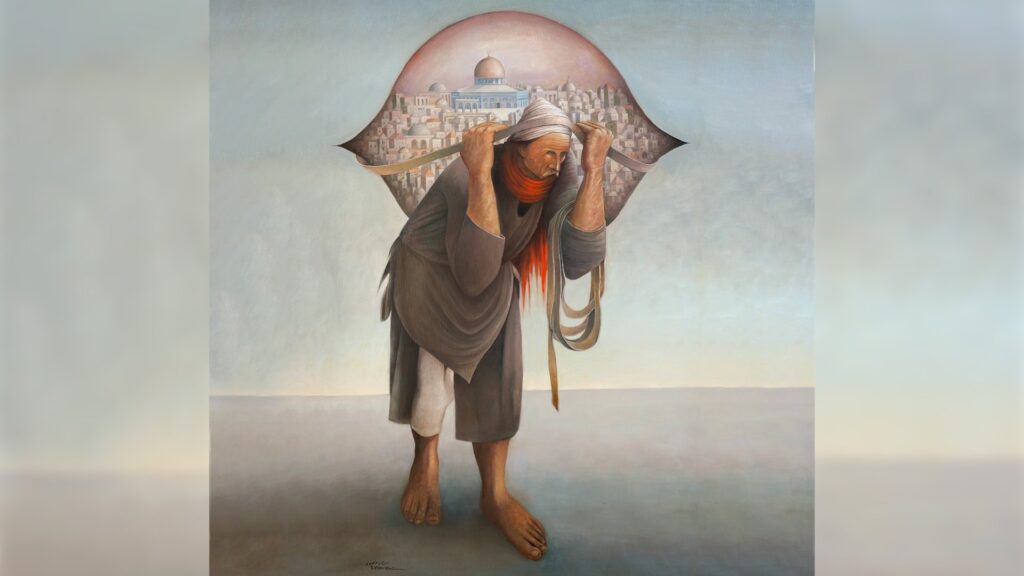
Sliman Mansour’s art was notably characterized by his vivid portrayal of Palestinian hardship and resistance. Through his paintings, he captured the everyday realities and the enduring spirit of his people under occupation. His works often incorporated symbolism tied to Palestinian heritage and identity, making them powerful visual narratives of a collective struggle.
Born in the mid-20th century, Mansour emerged as a key figure in the Palestinian art scene, blending traditional themes with contemporary styles to create compelling and thought-provoking imagery. His artwork became a voice for the voiceless, articulating the pain and hope of a nation yearning for freedom and dignity.
Over the years, Mansour’s exhibitions attracted attention worldwide, bringing greater visibility to Palestinian culture and the socio-political issues faced by its people. He was celebrated not only for his artistic talent but also for his unwavering commitment to using art as a medium for social commentary and political activism.
The nickname ‘Camel of Hardship’ reflected Mansour’s resilience and endurance, much like the camel’s ability to survive harsh desert conditions. This metaphor encapsulated the themes frequently explored in his work—struggle, survival, and steadfastness in the face of adversity.
Community leaders, fellow artists, and ordinary citizens expressed their sorrow at his passing, emphasizing the void left by his absence. Many highlighted how Mansour’s art inspired new generations of Palestinian artists to pursue creative expression as a form of resistance and cultural preservation.
The funeral proceedings were marked by heartfelt eulogies, traditional Palestinian music, and displays of the artist’s most iconic works. These moments served as both a celebration of his contributions and a reaffirmation of the enduring spirit he so masterfully depicted.
In remembering Sliman Mansour, Palestinians not only mourn a beloved artist but also acknowledge a vital guardian of their cultural heritage. His legacy is a testament to the power of art in shaping identity and sustaining hope amid the hardships of occupation.
As the Palestinian community continues to face significant challenges, Sliman Mansour’s life and work remain a beacon of resilience and inspiration. His artistic vision and commitment to justice have left an indelible mark on the collective memory and cultural fabric of Palestine.
The mourning of Sliman Mansour serves as a poignant reminder of the enduring impact one individual can have through art, transcending borders and speaking to universal themes of humanity and resistance. His legacy will continue to inspire and mobilize future generations in the ongoing quest for peace and dignity.