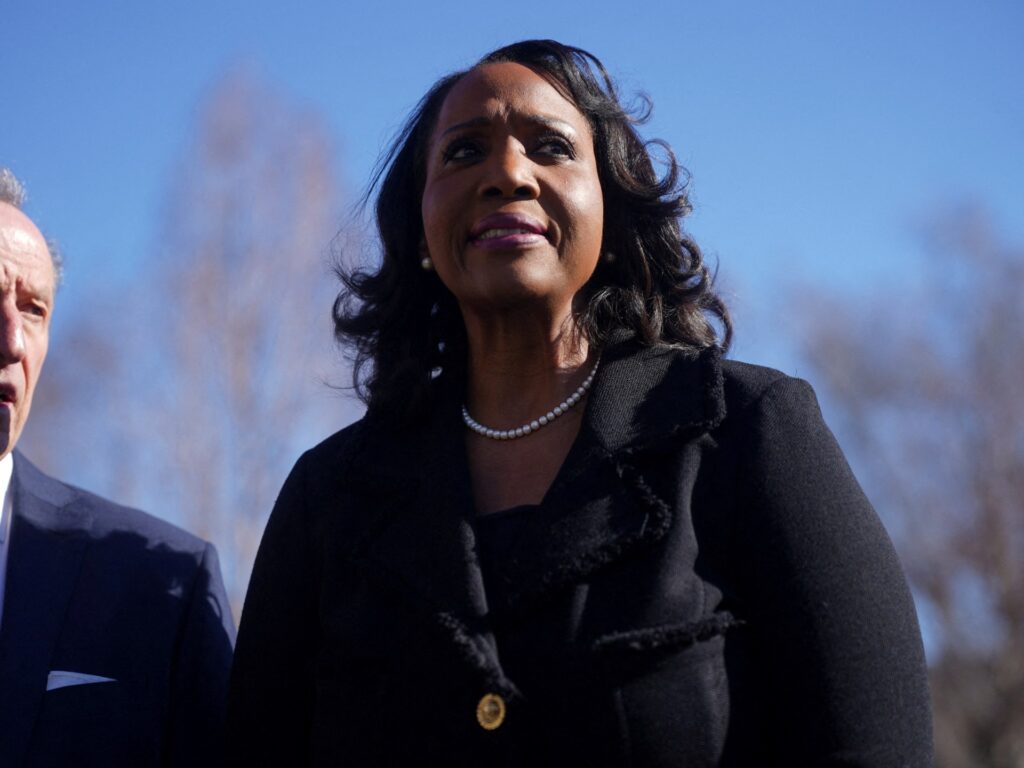
Federal Reserve Governor Lisa Cook has vehemently denied recent mortgage fraud allegations leveled against her by the Trump administration, a controversy that has persisted despite a favorable Supreme Court ruling in her favor. This clash highlights the intensified political tensions surrounding Cook, a prominent economic policymaker.
Lisa Cook, known for her expertise in economic policy and contributions to the Federal Reserve, found herself embroiled in a highly publicized dispute after the Trump administration accused her of involvement in mortgage fraud. These allegations surfaced in the context of broader political conflicts and were met with strong rebuttals from Cook and her legal team.
The Supreme Court’s decisive ruling affirmed Cook’s innocence, rejecting the claims as baseless and lacking evidence. The court’s judgment was seen by many legal analysts as a clear vindication of Cook’s reputation and professional integrity. However, the Trump administration has since persisted in renewing its accusations, keeping the controversy alive in the public eye.
This continued denouncement by the Trump administration despite judicial dismissal has sparked debates regarding the use of legal allegations as political weapons. Critics argue that such tactics undermine the credibility of judicial processes and damage the reputations of individuals without substantial proof.
Cook’s supporters emphasize her significant contributions to economic policy, highlighting her academic background and service at the Federal Reserve. They argue that the unfounded allegations compromise not only her personal standing but also the integrity of influential economic institutions.
The Federal Reserve has not formally commented on the controversy, maintaining a position of neutrality amid the political turmoil. Industry observers and political commentators watch closely how this dispute might impact perceptions of governance and the independence of economic regulators.
Legal experts suggest that the persistence of such allegations, despite legal defeat, points to a broader issue of politicization of legal claims in current political environments. They call for a return to evidence-based discourse and respect for judicial outcomes.
As the situation evolves, Governor Lisa Cook continues to serve in her role at the Federal Reserve, committed to contributing sound economic policy advice. The controversy serves as a pertinent case study of the intersection between politics, law, and economic governance in contemporary America.
In conclusion, the Federal Reserve Governor’s firm stand against these accusations reinforces the importance of judicial processes in safeguarding individual reputations against politically motivated claims. The ongoing dispute underscores broader challenges in maintaining political decorum and institutional integrity in turbulent times.