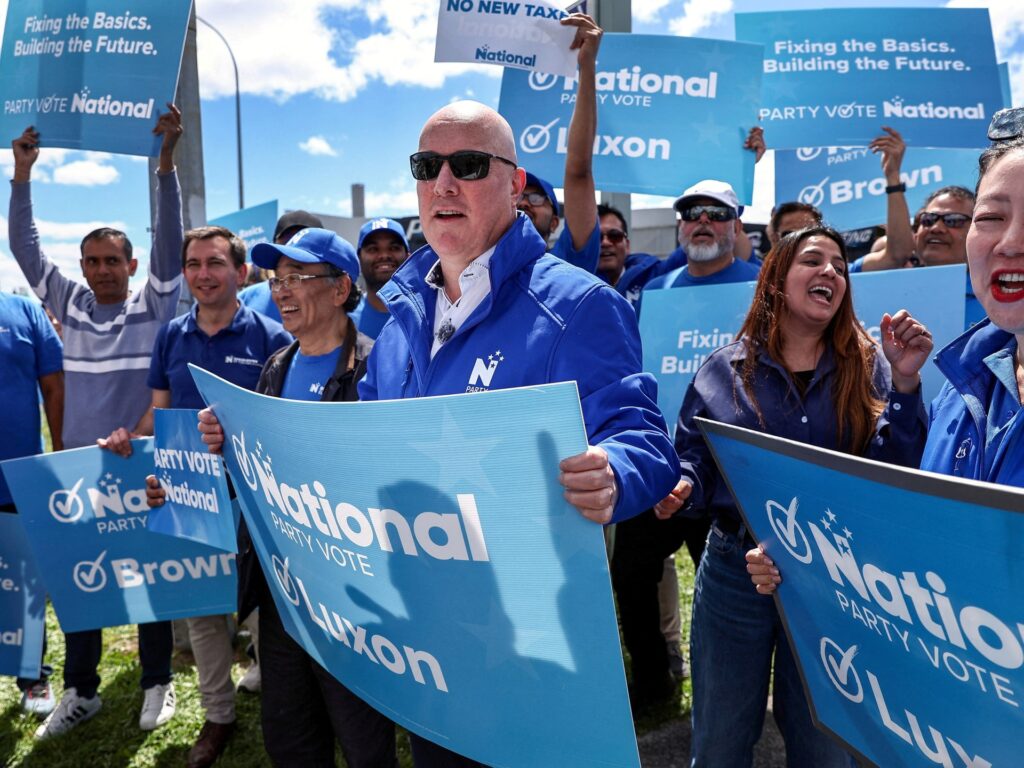
New Zealand is gearing up for a closely contested election, with recent polls and political analysis suggesting that neither of the major political contenders is likely to secure an outright majority. This scenario sets the stage for an intense and strategic post-election period, where smaller parties will hold the key to forming the next government.
The political landscape in New Zealand has long been characterized by a multi-party system, but recent elections have underscored the growing influence of minor parties. With major parties expected to fall short of the 61 seats required to govern alone in the 120-seat Parliament, coalition-building will be critical.
The main contenders in this election are the center-left Labour Party and the center-right National Party. Both have campaigned vigorously on issues such as economic recovery post-pandemic, healthcare improvements, housing affordability, and climate change policies. Despite strong efforts, neither side appears poised to dominate the political scene fully.
Smaller parties like the Green Party, ACT New Zealand, and the Māori Party are likely to play kingmaker roles. The Green Party, which advocates for environmental sustainability and social justice, may naturally align with Labour, enhancing a progressive coalition. Meanwhile, ACT New Zealand, a classical liberal party focused on free-market policies and individual freedoms, could bolster National’s tally.
The Māori Party, representing the interests of indigenous Māori citizens, brings a unique dynamic. They have emphasized issues of treaty rights and social equity, and their support could prove pivotal depending on how negotiations unfold.
Analysts highlight that the negotiations post-election will not be straightforward. Compromises on policy priorities and leadership roles will be central to any coalition agreement. This complexity was evident in the previous election, where weeks of negotiations were required to establish a functioning government.
Voters appear keenly aware of the stakes. The election campaign has seen increased voter engagement and turnout projections, reflecting the public’s understanding of the power smaller parties hold in shaping New Zealand’s future.
International observers view New Zealand’s political process as a robust example of democratic practice, where coalition governance ensures diverse viewpoints are represented in policy-making. The coming days will be crucial as votes are counted and coalition talks commence.
In summary, New Zealand’s upcoming election is shaping up to be one of the most finely balanced in recent history, with smaller parties likely to determine who governs. Citizens and political watchers alike await the outcome with keen interest, understanding that the results will have significant implications for the country’s direction over the next term.