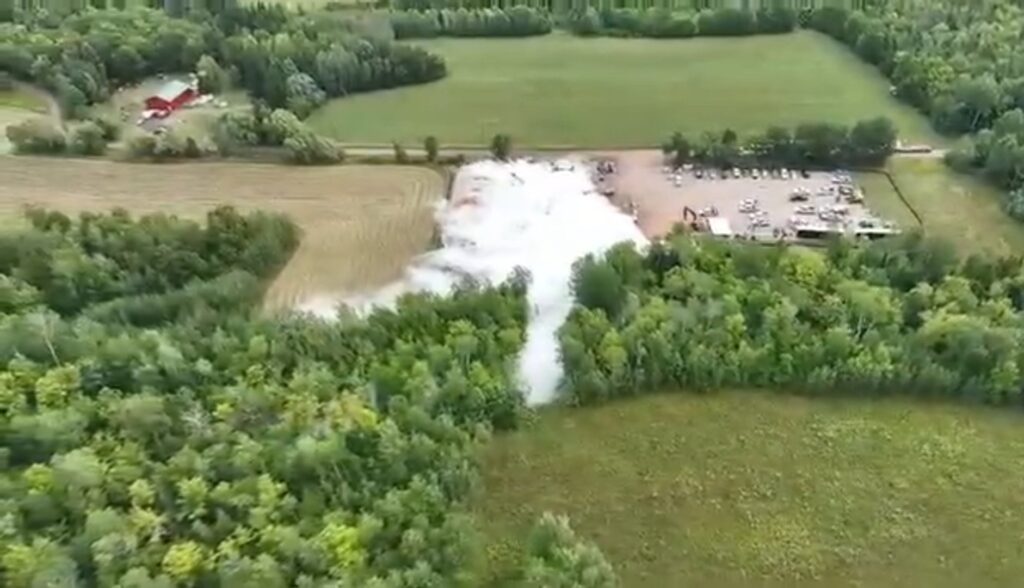
A significant natural gas leak occurred near Saxon, Wisconsin, after a truck accidentally struck a natural gas pipeline. The incident prompted immediate concern for the safety of the local community, leading to the evacuation of nearby residents as a precautionary measure.
The accident unfolded when the truck collided with the pipeline, causing a substantial release of natural gas into the surrounding environment. Emergency services were rapidly deployed to the scene to manage the leak and ensure public safety. Authorities coordinated evacuation efforts, urging residents in the affected area to leave their homes until the situation was under control.
Natural gas leaks pose serious risks, including explosions and health hazards due to the release of combustible gases. As a result, swift action was critical to mitigate potential dangers. Utility crews worked diligently to shut off the gas flow and repair the damaged infrastructure.
State and local officials kept the public informed through regular updates, emphasizing the importance of following evacuation orders and safety instructions. The collaboration between emergency responders, gas company personnel, and community members was vital in managing this emergency effectively.
This incident highlights the vulnerability of energy infrastructure to accidents and the necessity for robust safety measures and rapid response protocols. It also serves as a reminder for individuals to remain vigilant and report any signs of gas leaks, such as the smell of sulfur or hissing noises.
While the immediate threat appears to be contained, investigations into the cause of the accident are underway to prevent future occurrences. Meanwhile, residents are advised to stay alert for further announcements and to comply with directives from local authorities to ensure their safety.
In conclusion, the natural gas pipeline accident near Saxon, Wisconsin, was met with swift emergency response that prioritized the safety of the community. The incident underscores the critical importance of infrastructure safety, preparedness, and community cooperation during emergencies.