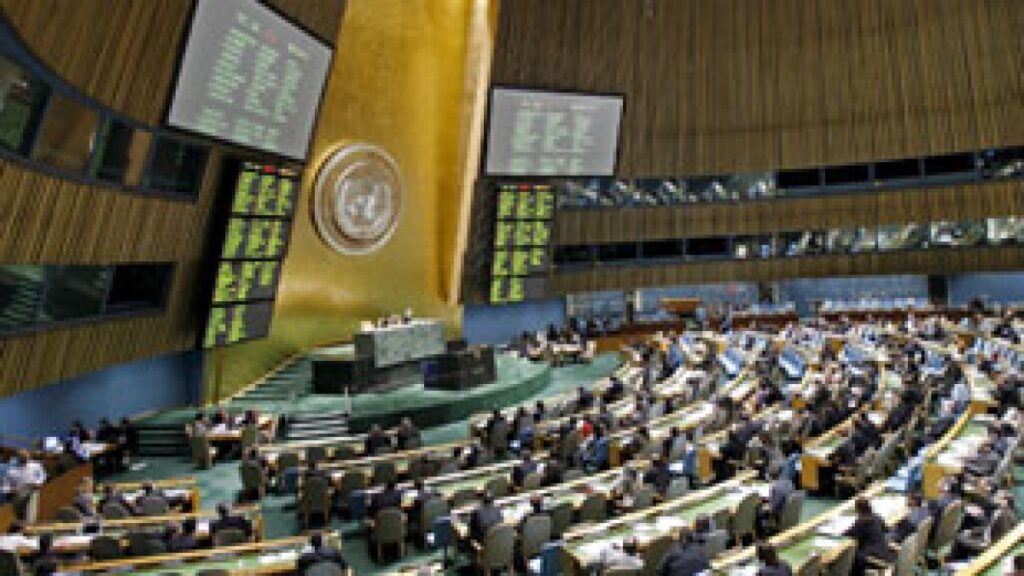
In a recent session of the United Nations General Assembly, member states overwhelmingly voted to condemn the long-standing US embargo on Cuba. The vote, which reaffirms decades of international opposition to the economic sanctions imposed by the United States, highlights continuing global discontent with the embargo’s impact on Cuba’s economy and people.
The United States, which has maintained a strict embargo on Cuba since the early 1960s, intensified its lobbying efforts ahead of the vote in an attempt to sway member states. Despite these efforts, the majority of countries chose to support the resolution condemning the embargo. This vote reflects a consistent trend in the General Assembly where the embargo has been condemned almost unanimously almost every year since it was first introduced.
However, US officials have pointed to an increase in the number of abstentions in the assembly as evidence that their campaign to isolate Cuba is gradually gaining ground. Indeed, while the resolution was still approved by a large majority, the number of abstentions—countries that chose neither to vote for nor against the resolution—rose compared to previous years.
The embargo is known to have caused significant hardships for the Cuban population, limiting their access to essential goods, technology, and international financial systems. The UN resolution calls for the end of these restrictions, urging the US to lift the embargo and normalize relations with Cuba.
The vote also comes at a time of evolving international relations as some countries reconsider their stance on Cuba in light of geopolitical shifts. Many member states argued that continuing the embargo only harms Cuban civilians and hinders the potential for constructive diplomatic dialogue.
Cuba’s representatives welcomed the vote as a reaffirmation of international support against what they describe as an unjust policy. They also emphasized the need for the US to change its approach, highlighting the resilience of the Cuban people in the face of decades of economic hardship.
Critics of the embargo within the United States also see the General Assembly vote as an important step toward rethinking the policy. They argue that engagement rather than isolation could pave the way for better outcomes for both the US and Cuba.
In summary, the UN General Assembly’s condemnation of the embargo underscores a broad international consensus against the sanctions. Despite US efforts to counteract this stance, the increasing number of abstentions may signal subtle shifts in global perspectives. The continuing debate over the embargo is likely to be a significant aspect of US-Cuba relations moving forward, influencing diplomatic strategies and international policy discussions.