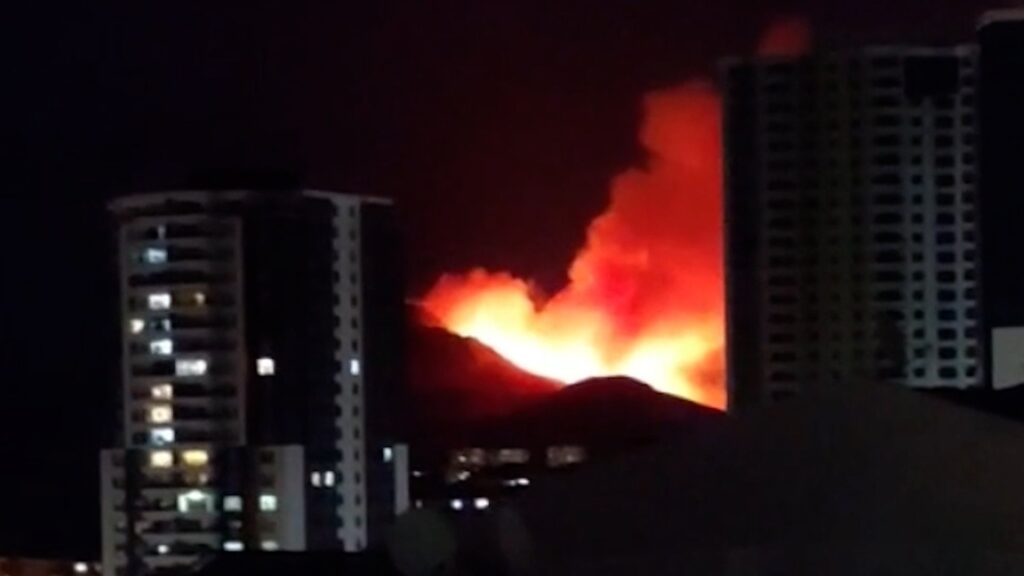
A large forest fire has broken out near the residential areas of Mamak, on the outskirts of Ankara, the capital city of Turkey. The fire poses a significant threat to homes and properties as it continues to burn intensively. Firefighters and emergency response teams have been deployed to the scene in an effort to contain the blaze and prevent it from spreading into the densely populated neighborhoods.
The exact cause of the fire is still under investigation, with officials exploring both natural and accidental origins. The hot and dry weather conditions common in the region during this time of year have likely contributed to the rapid spread of the flames.
Local authorities have urged residents to stay alert and adhere to safety instructions. Evacuations may be necessary if the fire moves closer to inhabited zones. In the meantime, firefighting aircraft and ground crews are working tirelessly to suppress the fire.
Forests around Ankara are an essential part of the local ecosystem and provide recreational spaces for citizens. The loss of forested areas in this fire represents a blow to the environment, impacting wildlife habitats and air quality.
Emergency services are coordinating with local government units to provide support to affected families and to set up temporary shelters if evacuations become mandatory. The government has also mobilized resources for the restoration and recovery phases once the fire is contained.
This incident highlights the growing risk of forest fires in Turkey, particularly in urban-adjacent forested areas, where human activity and climatic factors combine to create hazardous conditions. Awareness campaigns and preventive measures are being emphasized to reduce the likelihood of future fires.
As of now, there have been no reported casualties, but the situation remains critical. Residents are being advised to keep windows and doors closed to reduce smoke inhalation and avoid unnecessary travel in the affected zones.
This fire is a stark reminder of the need for vigilant forest management and the importance of rapid response capabilities to protect both natural and human environments from wildfire threats.