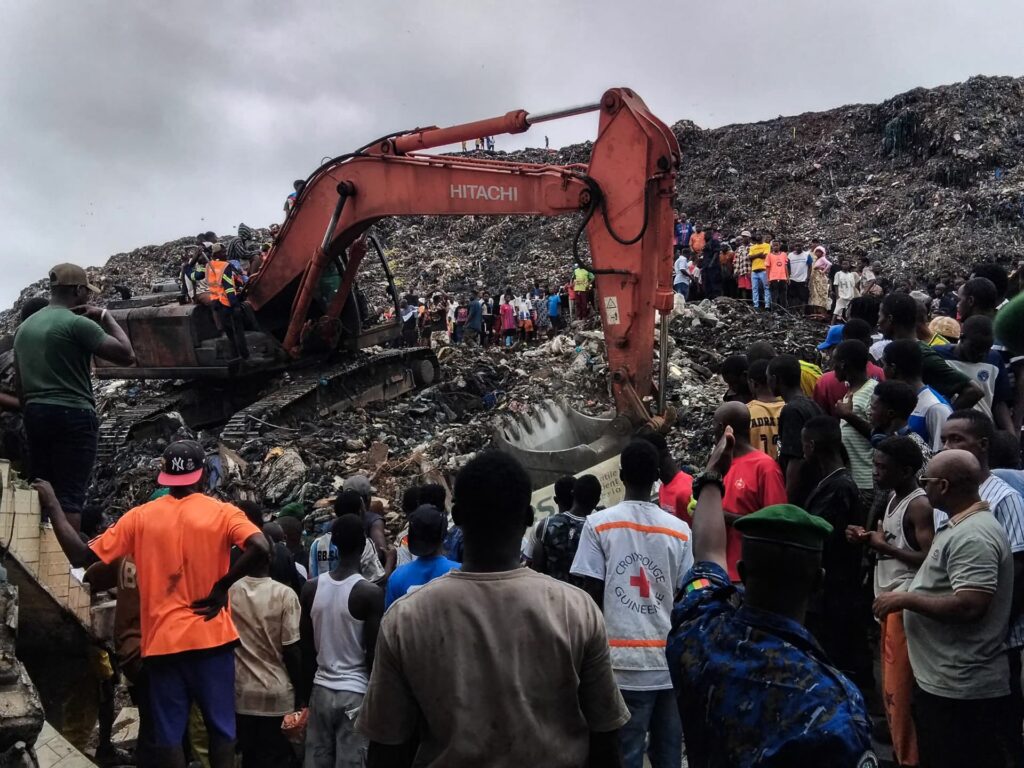
A tragic incident unfolded in Guinea as a landfill collapse resulted in the death of at least 22 people. The catastrophe was triggered by heavy rains that swept over the area, causing a devastating landslide at the landfill site. Several shacks, which were presumably homes or makeshift shelters for local residents or waste pickers, were buried under the debris.
The heavy rains, a common occurrence in the region, intensified the instability of the landfill, ultimately causing the ground to give way. This sudden landslide trapped many individuals under the piled-up waste and debris, leading to a high casualty rate.
Emergency services and rescue teams rushed to the scene in the aftermath of the collapse. Efforts were focused on searching for survivors trapped beneath the rubble, retrieving bodies of the deceased, and providing urgent medical care to the injured. Local authorities have expressed their condolences to the families affected and pledged to investigate the circumstances that led to this disaster.
This tragedy sheds light on the precarious living and working conditions of many who reside near or make a living from landfill sites in Guinea. Such areas are often unregulated and vulnerable to natural disasters, posing significant risks to those nearby.
Officials are expected to review safety measures and disaster preparedness protocols to prevent similar incidents in the future. There is also a growing call for improved infrastructure and support for communities living in vulnerable conditions around waste disposal sites.
The incident has sparked outrage and concern both locally and internationally, highlighting the need for urgent action to address waste management and environmental hazards in developing regions. As the investigation continues, humanitarian organizations are mobilizing resources to assist those displaced and affected by the landslide.
This heartbreaking event underscores the importance of sustainable and safe environmental practices to protect human lives and communities from such calamities. The hope remains that through increased awareness and preventive measures, future tragedies of this nature can be averted.