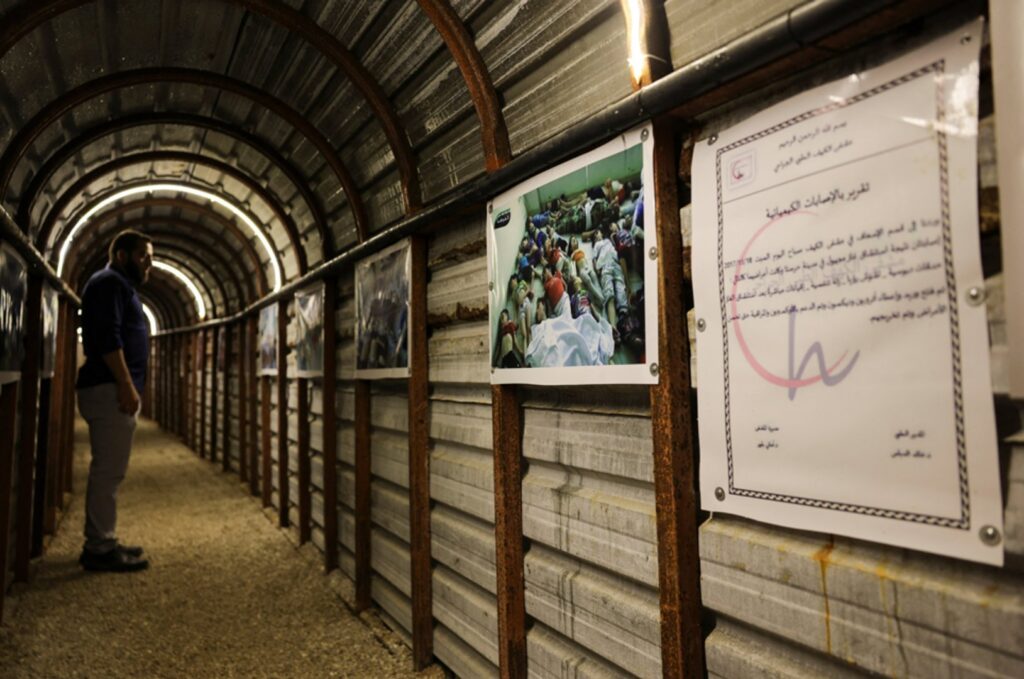
A secret tunnel in Ghouta, Syria, which played a crucial role during the brutal siege enforced by the Assad regime, has been converted into a museum. This transformation comes 13 years after the devastating sarin gas attack that claimed numerous lives and highlighted the horrors endured by the residents of Ghouta.
Ghouta, a suburban region near Damascus, witnessed one of the most harrowing chapters of the Syrian conflict. The area was subjected to a relentless siege, cutting off essential supplies like food, medicine, and electricity. Government forces aimed to reclaim control from opposition groups, employing severe tactics that resulted in widespread suffering among civilians.
The tunnel, once a lifeline for those trapped inside the besieged enclave, allowed residents to move undetected beneath enemy lines. It was used to smuggle food, medical supplies, and messages, and sometimes served as an escape route during government offensives. The existence of these tunnels underscored the resilience and resourcefulness of Ghouta’s inhabitants amid relentless oppression.
On August 21, 2013, the Syrian government forces launched a sarin gas attack on the area, resulting in a tragic massacre. Hundreds of people, including many children, died instantly due to the lethal chemical agents. This assault shocked the international community and intensified calls for intervention, though the conflict dragged on for years afterward.
In a bid to preserve the memory of the siege and the chemical attack victims, activists and survivors have worked to convert one of these tunnels into a museum. The museum serves as a poignant reminder of the atrocities committed and as a symbol of resistance against tyranny. Exhibits include photographs, personal belongings, and detailed accounts of life during the siege, along with information about the chemical attack’s devastating impact.
The project aims not only to honor the victims but also to educate future generations about the consequences of war and the importance of human rights and international law. It is hoped that this museum will inspire dialogue on conflict resolution and humanitarian protection in Syria and beyond.
Visitors can gain a profound understanding of the harsh realities faced by civilians caught in conflict zones, especially when chemical weapons are involved. The museum underscores the resilience of the Syrian people and their enduring hope for peace despite enduring immense suffering.
This effort also marks a step toward healing and reconciliation for survivors, many of whom lost family members and homes during the siege. By sharing their stories in a dedicated space, they confront past traumas and assert their right to be remembered.
The transformation of the Ghouta tunnel into a museum is a powerful testament to the human spirit’s determination to document history accurately. It ensures that the tragic events of the Syrian civil war—especially the use of chemical weapons—are neither forgotten nor repeated.
As the Syrian conflict continues to evolve, places like this museum remain crucial in preserving memory, fostering accountability, and supporting the global call for justice against war crimes. It is a solemn tribute to those who suffered and a beacon of hope for a more peaceful future.