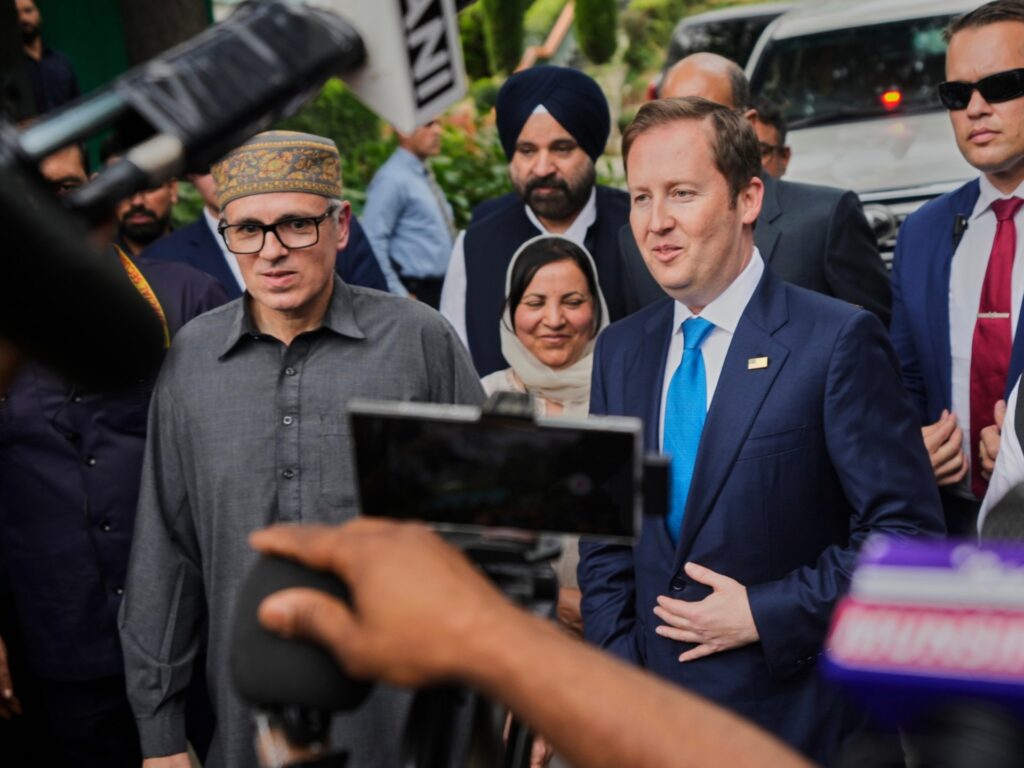
The recent visit by a Trump administration envoy to Kashmir has sparked a diplomatic dispute between the United States and Pakistan. The envoy’s visit and subsequent comments were perceived by Pakistan as contradicting Washington’s official position on the Kashmir issue, leading to a rare public disagreement between the two nations.
Kashmir has long been a contentious area between India and Pakistan, with each country claiming sovereignty over the region. The U.S. has traditionally maintained a careful neutral stance, urging dialogue and peaceful resolution. However, the envoy’s statements during the visit seemed to deviate from this neutral position, causing discomfort in Islamabad.
Pakistan responded by asserting that the envoy’s remarks did not reflect the official policy of the United States government. Pakistani officials criticized the comments as a diplomatic misstep that undermined trust between the two countries. They stressed the importance of consistency in Washington’s approach to Kashmir to preserve the U.S.-Pakistan relationship.
Experts view this incident not only as a diplomatic blunder but also as an example of the complexities involved in U.S. foreign policy in South Asia. The envoy’s visit was presumably intended to bolster peace efforts, but the lack of coordination with Pakistani authorities and the divergence in messaging exposed underlying tensions.
This episode highlights the fragile nature of U.S.-Pakistan relations, especially amid ongoing regional dynamics. It underscores the need for clearer communication and greater sensitivity when political envoys engage in areas of geopolitical sensitivity.
Despite the spat, both countries continue to emphasize their commitment to dialogue and cooperation on various strategic fronts. Washington and Islamabad remain important partners in addressing broader issues like counterterrorism, regional stability, and economic development.
Moving forward, it is crucial for the U.S. to manage its diplomatic engagements carefully to avoid exacerbating existing conflicts. The Kashmir dispute remains a highly charged issue, and any perceived shifts in foreign policy can have significant ramifications not only for bilateral relations but also for regional peace.
This situation serves as a reminder that diplomacy requires delicate handling, especially in regions marked by longstanding disputes. The Trump envoy’s visit has thus become a case study in how even well-intentioned efforts can backfire without proper coordination and understanding of the local political landscape.
In conclusion, the US-Pakistan spat triggered by the Kashmir visit sheds light on the intricate and sensitive nature of international diplomacy in South Asia. It calls for renewed efforts to uphold constructive dialogue, respect for established policies, and enhanced cooperation to navigate the complex challenges this region faces.