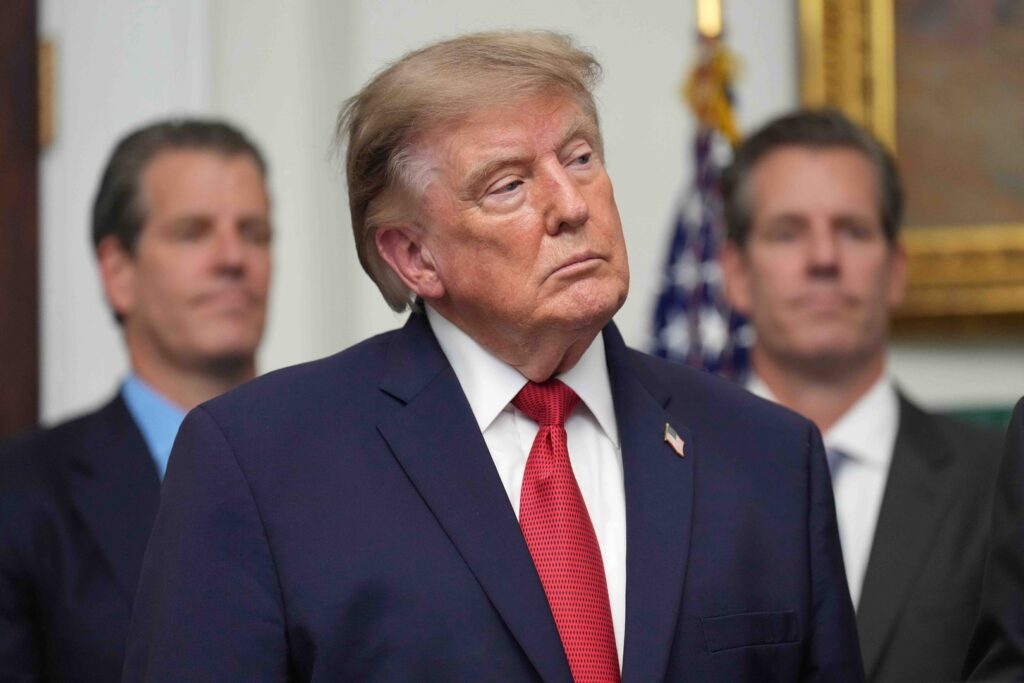
In a bold declaration that has sent ripples through the international community, US President Donald Trump has vowed to initiate what he describes as an ‘economic warfare’ against any nation that aids or engages in business with Iran. This stern warning marks a significant escalation in the US stance towards Iran, reflecting the administration’s uncompromising approach to its foreign policy and economic strategy.
President Trump’s statement came amidst growing tensions over Iran’s nuclear program and its influence in the Middle East. By labeling the imminent actions as an ‘economic D-Day,’ Trump draws a parallel to the decisive and overwhelming nature of the historic World War II military operation, signaling the severity and scale of the sanctions and economic measures the US plans to deploy.
The term ‘economic warfare’ refers to a strategy of using financial and trade tools to isolate and pressure a nation to change its policies or behavior without resorting to military conflict. In this context, the US intends to impose stringent economic sanctions that would severely limit Iran’s ability to conduct international trade, particularly targeting its oil exports and access to global financial systems.
This aggressive posture is aimed not only at Iran but also at any countries or companies that might defy US mandates by engaging economically with Iran. Trump’s administration has made it clear that such entities risk severe penalties, including exclusion from US markets and financial restrictions. The message is unequivocal: economic cooperation with Iran will come at a high cost.
The international reaction to Trump’s proclamation has been mixed. Supporters of the US stance argue that these measures are necessary to curb Iran’s contentious activities and to safeguard global security. They believe economic pressure is a powerful tool to force Iran into negotiations and compliance with international norms.
Conversely, critics warn that such an uncompromising approach could isolate the US from important allies and trading partners who might disagree with the sanctions policy. There are concerns about the potential for increased tensions in the Middle East and the risk of unintended economic consequences globally.
Several countries, especially those with significant trade relations with Iran, face a dilemma. They must balance the benefits of economic cooperation with Iran against the risks of American sanctions which could disrupt their own economies and international relations.
The Trump administration’s strategy thus represents a high-stakes gamble, aiming to leverage US economic power to achieve geopolitical goals. This approach also underscores a broader trend in international relations where economic tools are increasingly employed as instruments of statecraft.
As the situation unfolds, the world watches closely to see how countries will respond to this ‘economic D-Day’ and what the long-term impacts will be on global diplomacy, trade, and security. The coming months will be critical in determining whether this bold strategy achieves its objectives or leads to greater conflict and division on the world stage.