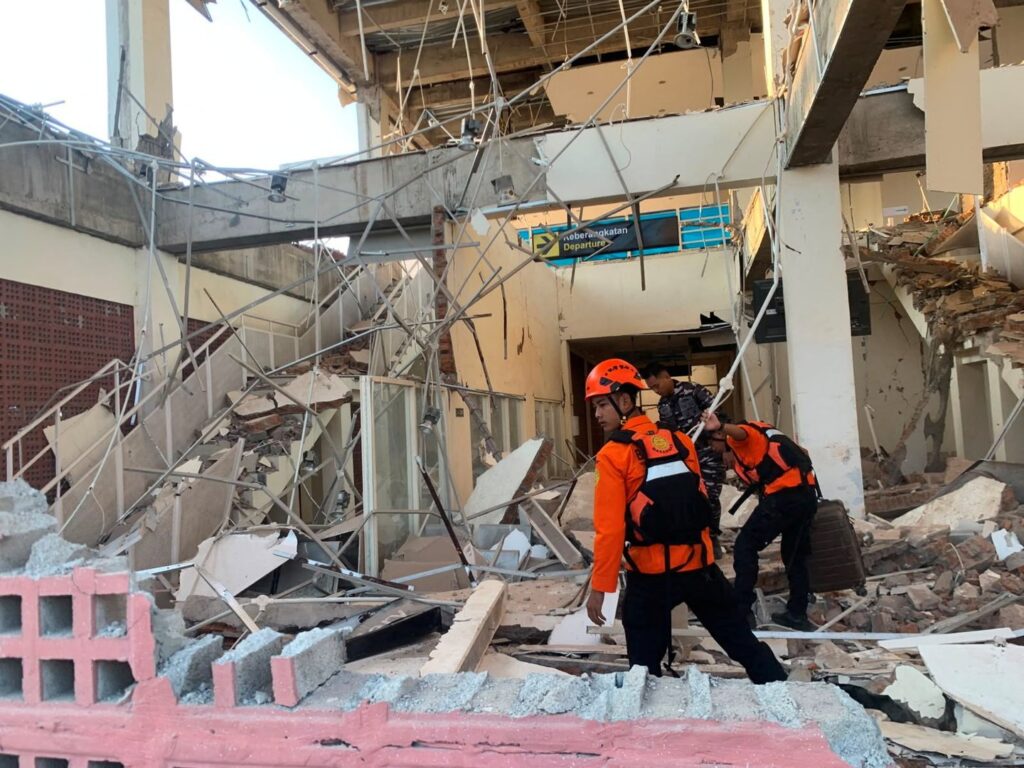
A powerful 7.7-magnitude earthquake struck off the coast of Flores Island in Indonesia, resulting in a tragic loss of dozens of lives. The earthquake’s impact was felt across the region, causing significant damage to infrastructure, homes, and triggering widespread panic among residents.
The tremor, one of the strongest recorded in recent years in the area, struck late at night, catching many people off guard as they were in their homes. Emergency services have been mobilized quickly, but the scale of the disaster has posed challenges to rescue and relief efforts.
Indonesia, situated on the Pacific Ring of Fire, is no stranger to seismic activity. The country’s complex geology makes it vulnerable to earthquakes and volcanic eruptions, often leading to devastating consequences for its population.
Following the earthquake, several aftershocks were reported, further complicating rescue operations and increasing fears among the affected communities. Authorities issued tsunami warnings which were later lifted after no significant wave activity was detected.
In the immediate aftermath, damaged roads and disrupted communication networks hampered the delivery of aid and access to remote areas most severely affected.
Government officials have announced plans to deploy additional resources and emergency personnel to assist with search and rescue operations. Aid agencies, both local and international, are coordinating efforts to provide medical care, shelter, and supplies to displaced residents.
Hospitals in the vicinity are overwhelmed with the injured, and there is a pressing need for medical supplies and blood donations.
The affected population faces not only the physical damages but also psychological trauma. Relief groups are working to provide counseling and support to victims and their families.
The disaster highlights the need for enhanced disaster preparedness and resilient infrastructure in earthquake-prone regions such as Indonesia.
Authorities are also conducting assessments to evaluate the structural integrity of buildings, bridges, and critical infrastructure to prevent further casualties in potential future quakes.
International condolences have poured in, along with offers of assistance from neighboring countries and global organizations.
The economic impact of the earthquake is expected to be significant, affecting tourism, local businesses, and agriculture.
Efforts are underway to restore essential services such as electricity, water, and telecommunications to stabilize the situation.
Community leaders have appealed for calm and solidarity as Indonesia embarks on the long road to recovery and rebuilding.
The earthquake serves as a somber reminder of nature’s power and the importance of preparedness in safeguarding lives and livelihoods.
As investigations continue, experts analyze seismic data to better understand the quake’s characteristics and improve early warning systems.
The international community watches closely, offering support and solidarity to Indonesia in the face of this tragic natural disaster.