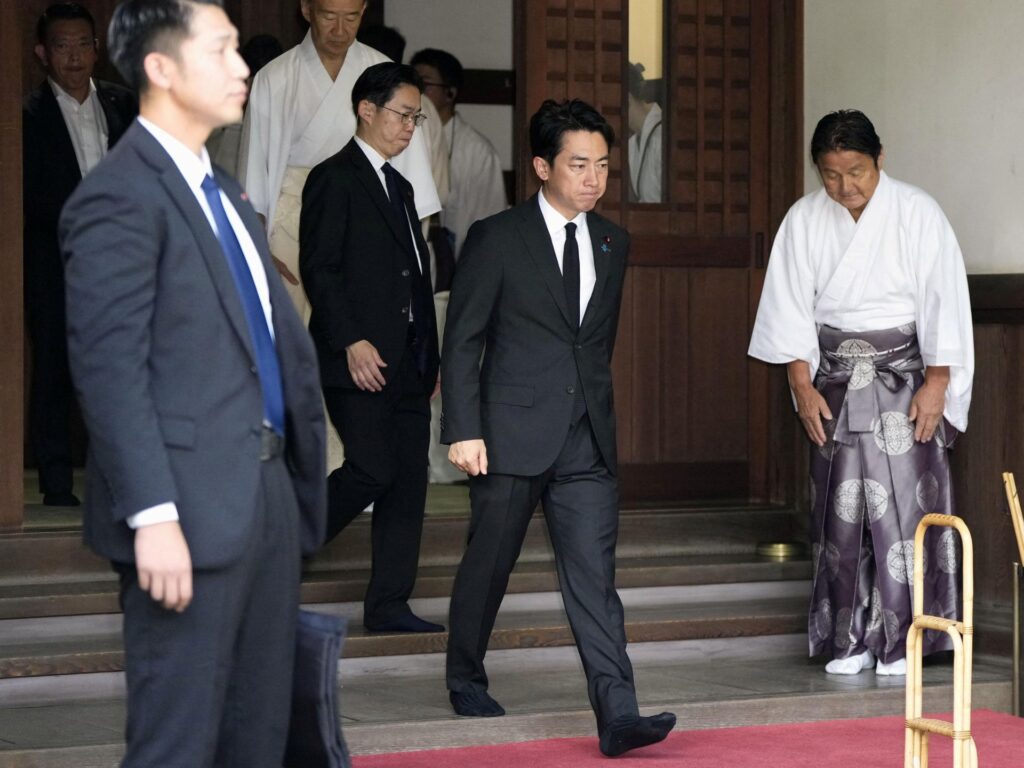
On the 81st anniversary of Japan’s surrender in World War II, Defence Minister Koizumi paid a visit to the Yasukuni Shrine, igniting diplomatic tensions with China and South Korea. The Yasukuni Shrine in Tokyo is a Shinto site dedicated to Japanese war dead, including 14 Class-A war criminals from World War II, which has made visits by Japanese officials a continual source of controversy in East Asia.
Koizumi’s visit comes at a time when Japan is reflecting on its wartime history, yet it continues to stir emotional reactions from neighboring countries that suffered under Japanese military aggression during the 1930s and 1940s.
China and South Korea have strongly condemned the visit, calling it an insensitive move that disregards the painful memories of wartime atrocities. Both countries view the shrine not only as a memorial for war dead but as a symbol that glorifies Japan’s militaristic past.
For Japan, however, visits to Yasukuni Shrine by government officials are often viewed domestically as paying respect to those who lost their lives in service of the nation. The shrine has become a focal point of nationalist sentiments and debates about Japan’s historical responsibility.
The timing of the visit on the day marking the end of World War II—when Japan formally surrendered to the Allied Powers—adds further significance. It reopens unresolved historical grievances and challenges ongoing efforts toward reconciliation and regional peace.
Diplomatic responses have included official protests from Beijing and Seoul, urging Japan to acknowledge its wartime aggression sincerely and avoid actions that could exacerbate historical tensions. Some international observers have expressed concern that such visits may undermine mutual trust and cooperation in East Asia.
This incident highlights the complex legacy of Japan’s wartime past and the difficulty of achieving a shared historical narrative in the region. It underscores how acts of remembrance can become flashpoints for diplomatic strife when historical wounds remain unhealed.
The Japanese government faces the ongoing challenge of balancing respect for its history and veterans with the need to maintain harmony with its neighbors. The visit by Defence Minister Koizumi serves as a reminder of the deep-rooted issues that continue to influence East Asian geopolitics decades after the war’s end.