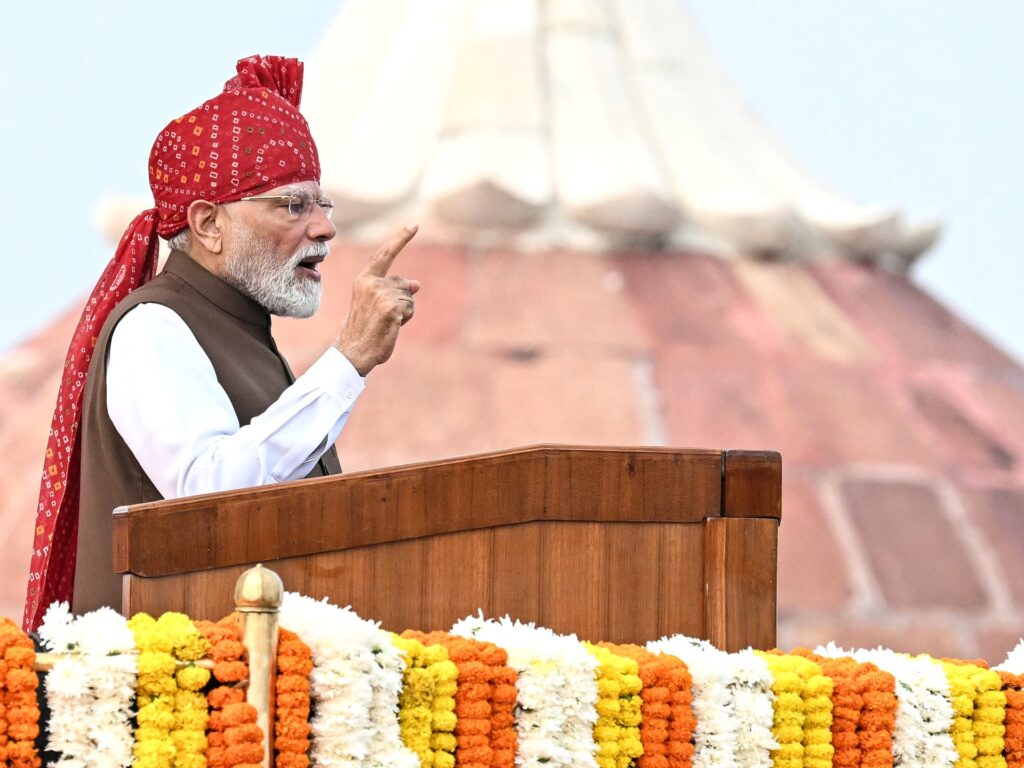
In a significant address delivered on Independence Day, Indian Prime Minister Narendra Modi highlighted the ongoing threat posed by what he termed “intellectual Naxals.” While he acknowledged that the physical Maoist-influenced Naxalite rebellion had largely been suppressed over the years, he warned that the ideological backers of this movement continue to pose a serious challenge to national security and stability.
The Naxalite movement, rooted in Maoist ideology, has been a persistent issue in parts of India for decades. Historically, it involved armed rebellion, primarily in rural and tribal areas, with an agenda against the Indian state, focusing on issues such as land reform and social justice for marginalized communities. Despite considerable efforts by the government to quell the insurgency, the ideological influence of the movement has endured.
Prime Minister Modi’s speech emphasized that the threat is no longer just from armed groups known as Naxals, but from intellectuals who propagate Naxalite ideology through various platforms. These include universities, social campaigns, and some political fronts. According to Modi, such “intellectual Naxals” attempt to undermine India’s progress and security by fueling dissent and cultivating sympathy for anti-national causes.
The Prime Minister’s remarks underscore the government’s intent to tackle not only the physical manifestations of insurgency but also the underlying ideological narratives that sustain them. This approach reflects a broader strategy to strengthen internal security and foster national unity by challenging the ideas that inspire violent dissent.
Critics of this viewpoint caution against overly broad definitions of what constitutes intellectual dissent, warning that it could lead to suppression of legitimate academic freedom and political debate. However, Modi’s supporters argue that confronting these ideological backers is essential to maintain peace and order.
Modi’s speech comes amid ongoing efforts to boost economic development and social reforms in areas previously affected by Naxalite violence. The government has undertaken infrastructure projects, improved connectivity, and implemented welfare schemes aimed at integrating affected regions more closely with the national mainstream.
The Prime Minister’s strong language on “intellectual Naxals” might signal heightened surveillance and stricter laws against individuals and groups accused of promoting ideologies that threaten India’s sovereignty. This could lead to intensified scrutiny of academic and activist circles, which some perceive as harboring sympathies with left-wing extremism.
This development adds a nuanced layer to the broader security landscape in India, where the challenge is not only to eliminate armed insurgency but also to counter radical narratives in the public discourse.
Overall, Modi’s Independence Day speech serves as both a warning and a call to action to address the complex challenges posed by ideological extremism, reiterating his government’s commitment to safeguarding India’s democratic and developmental trajectory.