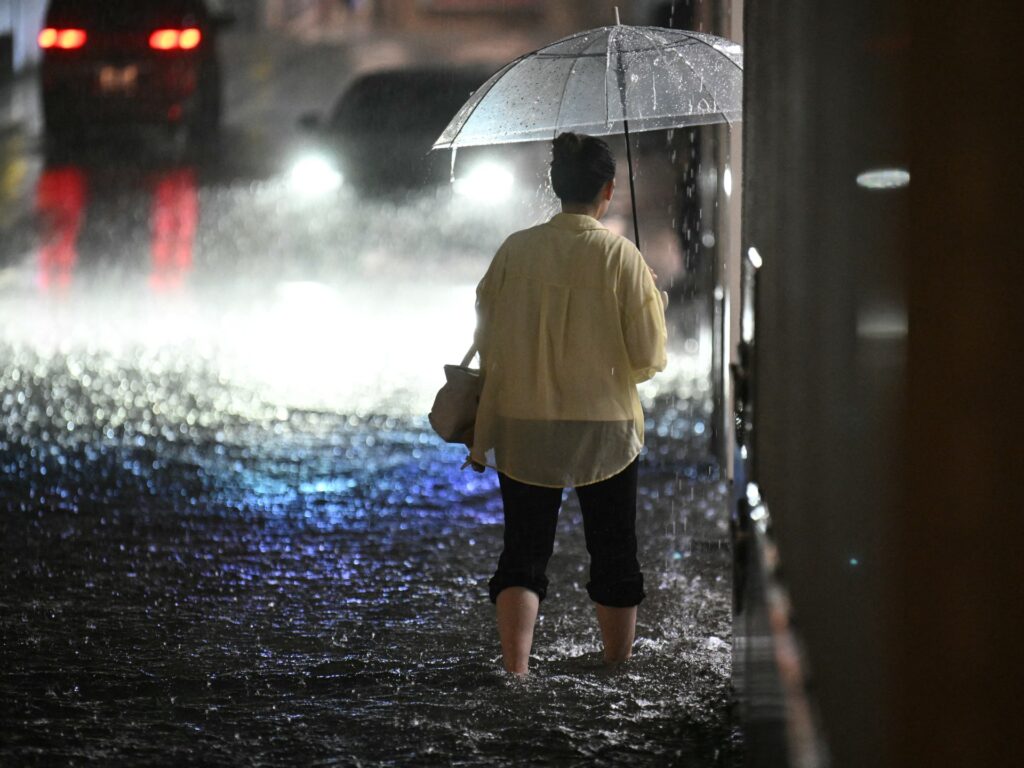
Japan is grappling with the aftermath of record-breaking rainfall that has led to significant casualties and disruptions, particularly in the Chiba Prefecture. The torrential downpour during the busy Bon Buddhist holiday week has resulted in four confirmed deaths and has stranded thousands of people, raising concerns about the safety and preparedness of flood-prone areas.
The intense rainfall caused severe flooding and landslides, leading to the evacuation of residents and the closure of key transportation routes. Emergency services have been working tirelessly to rescue those trapped by rising waters and mudslides. The Chiba region has been particularly hard hit, with more than 22,000 households reported to be without power, complicating relief efforts and communication.
Local authorities have issued numerous warnings and advisories, urging people to stay indoors and avoid traveling unless absolutely necessary. The government has mobilized disaster response teams and deployed resources to assist affected communities with shelter, food, and medical care.
The timing of this natural disaster coincided with the Bon holiday, a period when many Japanese travel to visit family and ancestral graves. This has led to unprecedented disruptions in travel plans and heightened the emergency response challenges, as many roads and railways have been rendered impassable.
Meteorologists have attributed the extreme rainfall to a combination of atmospheric conditions exacerbated by climate change, which has increased the frequency and intensity of such weather events in Japan. Experts warn that these climatic shifts underscore the urgent need for enhanced infrastructure and disaster management strategies.
In the meantime, rescue teams continue to work around the clock to secure affected areas and to restore essential services. Community support networks have also been activated, with local volunteers helping in relief efforts and providing assistance to those displaced by the floods.
Residents are being advised to monitor weather updates closely and to follow instructions from local officials to ensure their safety. Discussions are already underway about improving flood defenses and emergency evacuation plans to prevent similar tragedies in the future.
This devastating event highlights the critical importance of preparedness and resilience in the face of natural disasters. As Japan recovers from this significant weather event, it is clear that addressing the challenges posed by climate change is essential to safeguard communities and reduce the risk of future catastrophes.