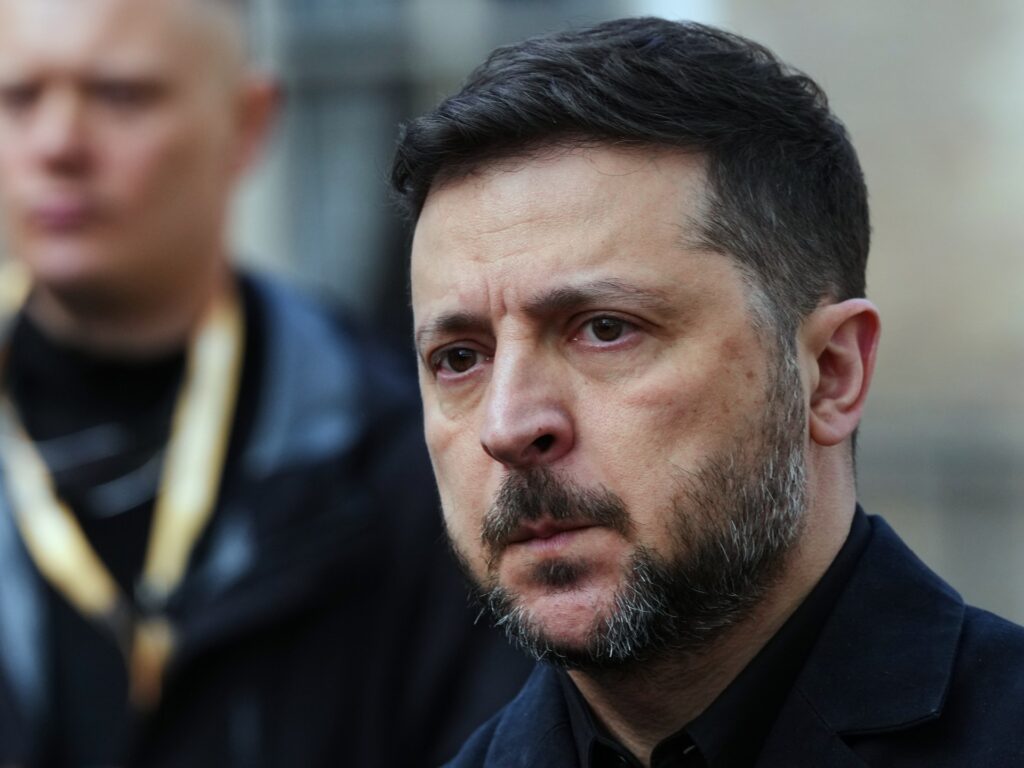
In a significant development amidst the ongoing conflict between Ukraine and Russia, Ukrainian President Volodymyr Zelenskyy has revealed that Ukraine has forwarded proposals to the United States aimed at ending the war with Russia. This move marks an important step in the efforts to seek a peaceful resolution to the devastating conflict that has deeply affected the region and global dynamics.
President Zelenskyy emphasized the urgency and importance of the peace proposals, highlighting Ukraine’s desire to stop the hostilities and restore stability and security. The proposals, though details remain undisclosed, likely involve terms that Ukraine considers crucial for sovereignty, territorial integrity, and the safety of its citizens.
Concurrently, Zelenskyy warned that Russia intends to use its upcoming election next month as a pretext to declare a new mobilisation. This anticipated action by Moscow is expected to escalate the conflict by increasing Russian military personnel, thereby intensifying the war efforts against Ukraine.
The warning about a fresh mobilisation underlines the complex and volatile nature of the conflict, where political events in Russia have direct and immediate consequences on the battlefield. Zelenskyy’s statement serves as both a caution to the international community and a call for increased support to Ukraine.
The international community, particularly Western allies including the United States, has been closely monitoring the situation. The US has been a key partner and supporter of Ukraine, providing military aid, economic assistance, and diplomatic backing since the onset of hostilities.
Ukraine’s submission of peace proposals to the US indicates a strategic move to engage global powers in mediation and conflict resolution. It also reflects Ukraine’s readiness to negotiate an end to the war, contingent upon fair and just conditions that respect its sovereignty.
However, the prospect of Russia initiating new mobilisation adds to the uncertainty, potentially prolonging violence and complicating diplomatic efforts. This development could trigger heightened tensions and further destabilize the region.
Analysts suggest that the timing of the Russian election could be used to consolidate power internally by the Kremlin while simultaneously intensifying military campaigns abroad. The mobilisation could be intended to rally domestic support amid political challenges, using nationalism and military action as unifying tools.
The conflict, which began in 2014 and escalated in 2022 with Russia’s full-scale invasion, has resulted in significant loss of life, displacement, and economic disruption. Peace initiatives have faced numerous setbacks and challenges, underscoring the complexities involved in overcoming deep-seated geopolitical divisions.
Zelenskyy’s announcement is a call to action for both allies and adversaries to consider diplomatic solutions seriously. The proposals sent to the US may open pathways for negotiations if met with willingness from all parties involved.
The international community continues to advocate for ceasefire and dialogue, emphasizing the need to protect civilians and uphold international law. The potential new mobilisation by Russia threatens to reverse progress and intensify human suffering.
In summary, Ukraine’s submission of peace proposals to the US represents a hopeful yet cautious attempt to resolve the war, while the anticipated Russian mobilisation linked to the upcoming election highlights ongoing risks and challenges. The coming weeks will be critical in determining the direction of the conflict and the prospects for peace in the region.