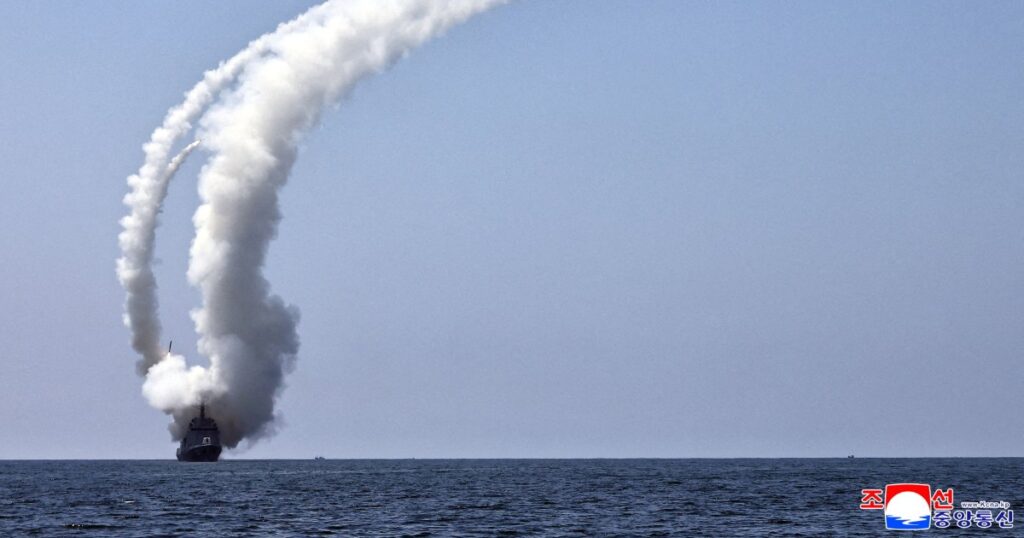
In a move that has heightened tensions on the Korean Peninsula, North Korea has fired a missile just days before scheduled military drills between the United States and South Korea. Pyongyang has long condemned these joint exercises, labeling them a ‘rehearsal for invasion’ and a direct threat to its sovereignty and security.
The missile launch is seen as a demonstration of North Korea’s military capabilities and a warning against what it perceives as provocative actions by South Korea and its ally, the United States. This act of defiance underscores the ongoing volatility in the region and the challenges faced in diplomatic efforts to denuclearize the Korean Peninsula.
The US-South Korea military drills are routine and intended to enhance readiness and ensure the defense of South Korea in the event of aggression. However, North Korea consistently interprets these exercises as rehearsals for an actual invasion, leading to frequent displays of military strength, including missile tests.
Analysts suggest that the timing of the missile launch is strategic, aimed at exerting pressure on the US and South Korea ahead of the drills to gain leverage in any future negotiations. Pyongyang’s rhetoric and actions often serve to rally domestic support and signal defiance to the international community.
The international community has expressed concern over the missile launch, urging all parties to exercise restraint and return to diplomatic dialogues aimed at peace and stability in the region. However, the persistent cycle of military provocations and retaliatory exercises continues to pose a significant risk of escalation.
In summary, North Korea’s missile launch ahead of the US-South Korea drills is a manifestation of its longstanding opposition to these joint military exercises, which it views as threatening. The move reflects the precarious security situation on the Korean Peninsula and highlights the complex interplay of military preparedness, political signaling, and diplomatic negotiations in maintaining regional peace.