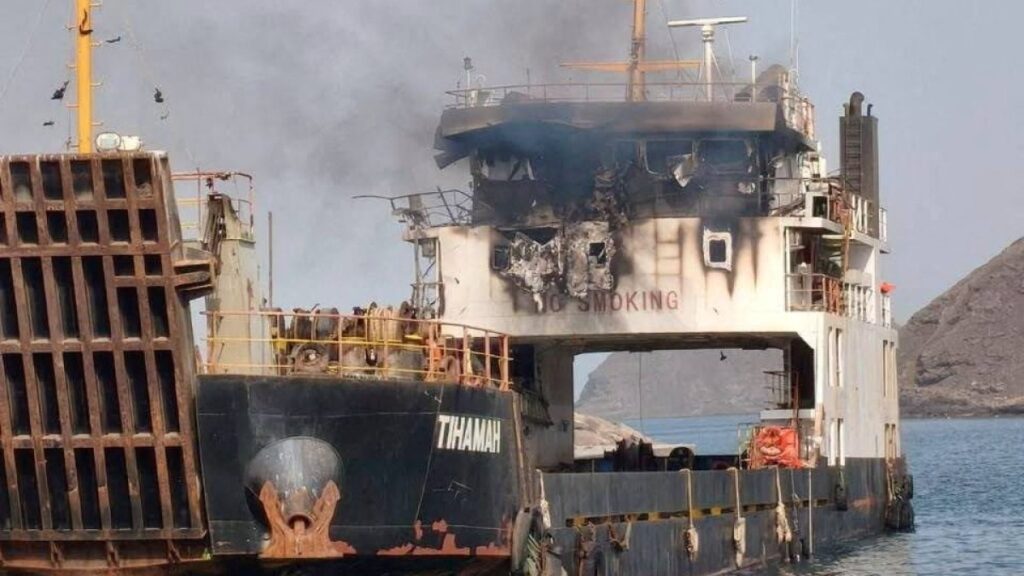
In a recent development in the ongoing tensions in the Persian Gulf region, the United States military fired missiles at a cargo ship attempting to breach the Iran blockade. The incident occurred when a Panama-flagged vessel tried to sail towards an Iranian port, violating the restrictions imposed by the blockade.
The blockade, enforced by the US and its allies, aims to restrict maritime traffic to and from Iranian ports as part of efforts to curb Iran’s military and nuclear ambitions. This blockade has been a focal point of contention between Iran and the US, with numerous confrontations occurring over the past years.
According to official reports, US forces detected the cargo ship’s unauthorized attempt to enter Iranian waters. After warnings were allegedly ignored, US military units launched missile strikes that successfully disabled the vessel, preventing its advance.
This action marks a significant escalation in the enforcement of the blockade and underscores the US commitment to preventing any shipments deemed undesirable from reaching Iran. Details on casualties, the specific location of the incident, and the cargo aboard the ship have yet to be disclosed by the authorities.
The Panama-flagged cargo ship incident is expected to heighten diplomatic tensions in the region, as Iran has historically condemned the blockade and similar US operations as illegal and aggressive. Iran’s government has warned that it will respond decisively to any further violations of its territorial waters.
Experts warn that such confrontations risk sparking broader conflict in an already volatile region, with critical shipping lanes at stake. The Persian Gulf remains a strategic area for global energy supplies, making any disruption a matter of international concern.
International reactions have been varied, with some allies supporting the US stance on maintaining the blockade and others calling for restraint and dialogue to avoid further escalation.
As the situation unfolds, there is growing pressure on all parties involved to seek diplomatic solutions to prevent further military engagements that could endanger regional stability and global economic interests.
This latest incident highlights the ongoing complexity and high stakes of the geopolitical struggles in the Middle East, where maritime security and enforcement actions play a critical role in the broader conflict dynamics.
Authorities continue to monitor the situation closely, ready to respond to any new developments that may arise in the tense maritime corridor between Iran and its neighbors.