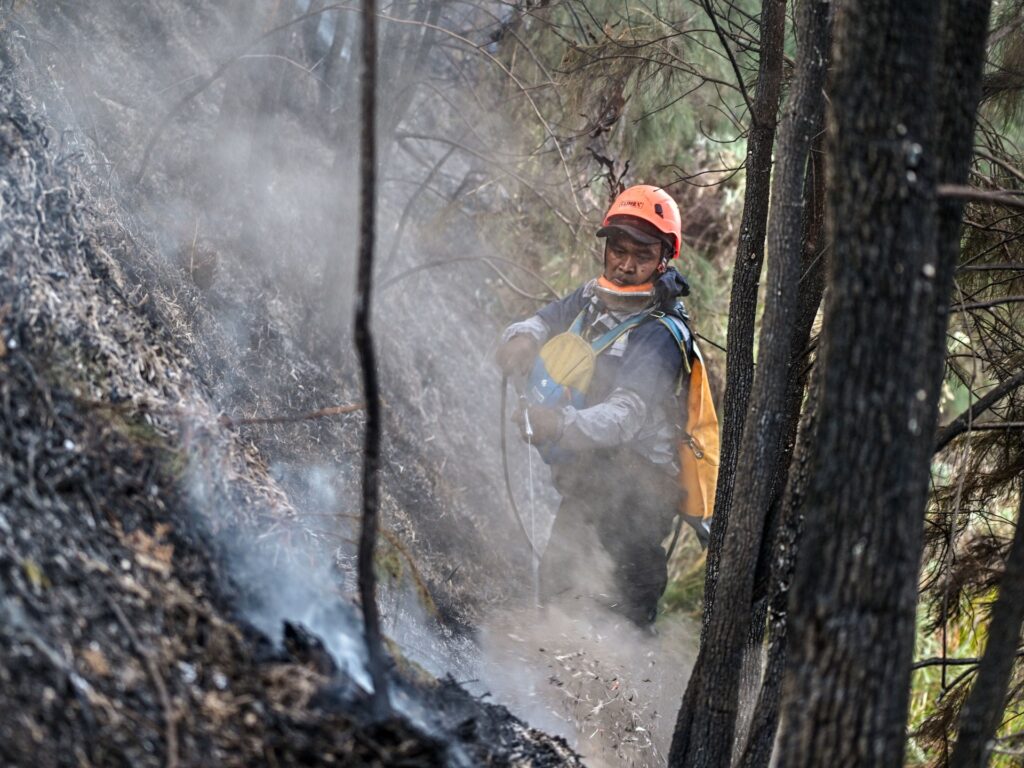
Indonesia is currently grappling with widespread wildfires fueled by dry conditions linked to the El Niño phenomenon. Thousands of firefighters, supported by dozens of helicopters, are actively battling these growing blazes throughout the country. The wildfires have rapidly spread due to a combination of prolonged drought, high temperatures, and strong winds exacerbated by climate factors associated with El Niño.
Officials from Indonesia’s disaster management agencies have identified El Niño as a significant factor contributing to this year’s unusually severe fire season. El Niño typically alters weather patterns, leading to drier and hotter conditions in Southeast Asia, which increases the risk of forest fires, especially in peatland areas and forests that are already vulnerable due to deforestation and land-use changes.
The fires have consumed vast stretches of forest and agricultural land, producing thick smoke and haze that have affected air quality across Indonesia and neighboring countries. The toxic haze has led to health concerns, particularly respiratory problems among local populations, and has disrupted daily life, schools, and aviation schedules.
Efforts to contain the wildfires involve coordinated operations between the government, local authorities, and community groups. Firefighters are employing water bombers, helicopters, and ground crews to extinguish flames and create firebreaks. Despite these efforts, the challenging terrain and continued dry weather have complicated containment efforts.
Indonesia’s peatlands, known for their high carbon storage capability, are particularly at risk. When peat soils burn, they release significant amounts of carbon dioxide, contributing to global greenhouse gas emissions and climate change.
Experts warn that recurring El Niño events combined with ongoing land management issues may increase the frequency and intensity of such wildfire outbreaks. Conservationists call for stronger policies to protect forests and peatlands and enhance fire prevention measures, including monitoring illegal land clearing and improving firefighting infrastructure.
As the fire season continues, Indonesian officials urge residents to stay alert, comply with safety measures, and assist in prevention efforts to minimize the impact of this environmental disaster. Regional cooperation with neighboring countries is also emphasized to address the transboundary haze pollution problem in a coordinated manner.
The Indonesian government is reviewing current forest management practices and disaster response systems to better adapt and prepare for future wildfire episodes intensified by changing climate patterns. Public awareness campaigns are being rolled out to educate communities on fire risks and precautionary steps.
In summary, Indonesia’s battle against widespread wildfires amid El Niño’s dry weather highlights the urgent need for comprehensive and collaborative approaches to forest conservation, climate resilience, and disaster management to protect both people and the environment from increasingly frequent natural crises.