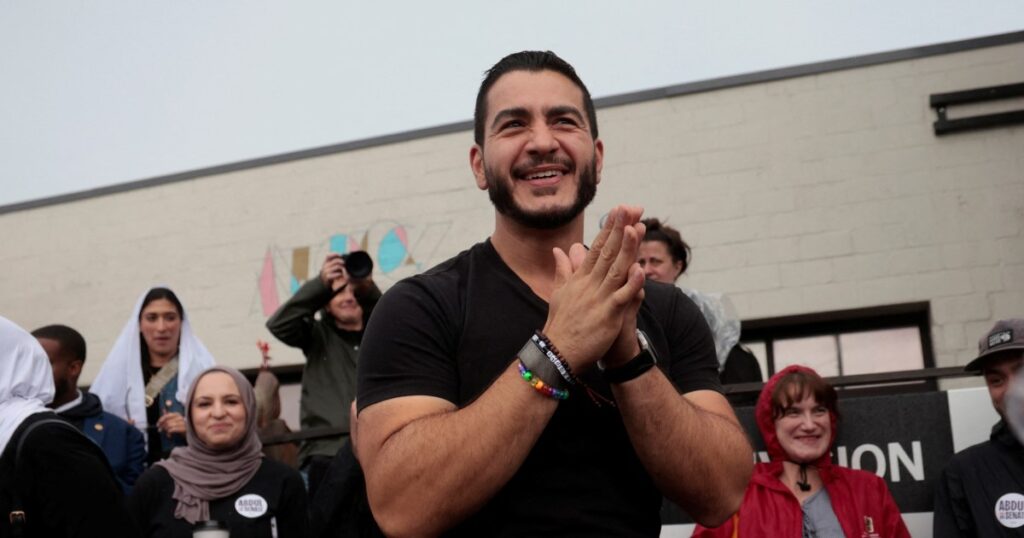
In the aftermath of his significant Senate primary win in Michigan, Egyptian American doctor Abdul El-Sayed became the target of a coordinated digital smear campaign by elements of the US far-right, who weaponized his use of the phrase “inshallah” (meaning “God willing”) to malign him. This incident highlights how cultural and religious expressions can be distorted for political purposes, particularly against candidates from minority backgrounds.
Abdul El-Sayed, a progressive politician and public health expert, attracted attention not only for his policy stances but also for his identity as an Egyptian American Muslim. After the primary win, far-right groups seized upon his use of the Arabic phrase “inshallah” as part of campaign speeches and social media posts. Normally a common expression among Arabic speakers and Muslims to signify hope or reliance on God’s will, these groups recast it as a sinister sign of allegiance to foreign or extremist ideologies.
The smear campaign included the spreading of misinformation and online harassment designed to sow distrust among voters. Memes, misleading headlines, and coordinated hashtag attacks circulated widely, portraying El-Sayed as un-American or secretive about his beliefs and intentions. These tactics tapped into existing Islamophobic and xenophobic sentiments in parts of the US political landscape.
Experts note that this form of targeted messaging exemplifies how language and religious markers can be weaponized in politicized cultural wars. The phrase “inshallah,” which El-Sayed used sincerely and contextually, was twisted to foster suspicion rather than understanding.
El-Sayed’s campaign team responded by emphasizing transparency and focusing on his platform’s policies addressing healthcare, education, and economic justice. They condemned the attacks as divisive and detrimental to healthy democratic discourse.
The case reveals broader challenges faced by Muslim American candidates in predominantly non-Muslim political arenas, where cultural differences can be exploited for political gain by opposition forces.
As the campaign progresses, attention remains on how digital media and far-right factions continue to shape narratives that impact electoral outcomes through targeted cultural and religious dog-whistles.
This event underscores the need for greater awareness and education to combat misinformation and promote inclusivity in political representation and public dialogue across the United States.