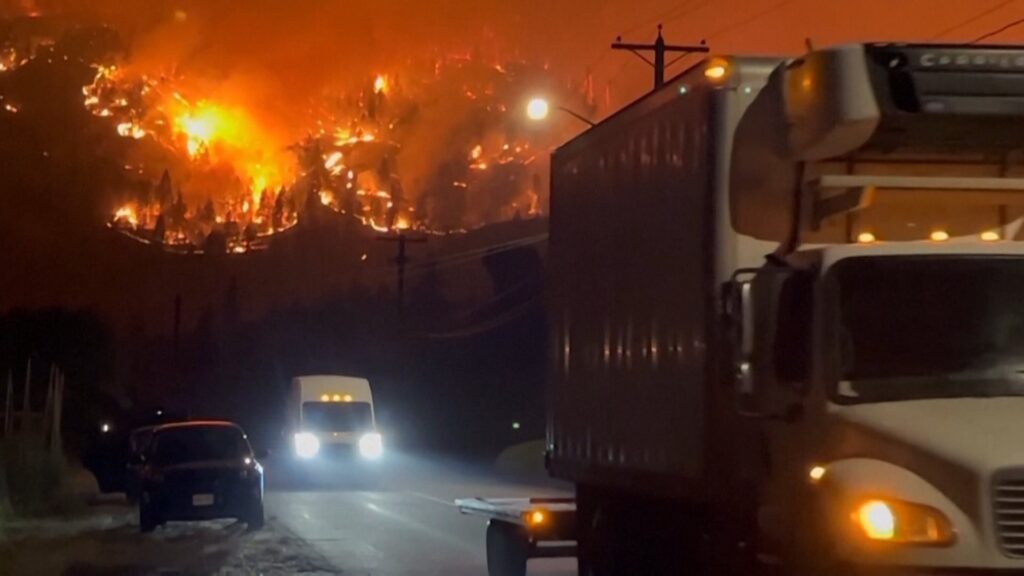
A rapidly advancing wildfire has compelled more than 20,000 residents to evacuate parts of British Columbia’s Okanagan region, marking one of the most significant wildfire emergencies in the area this season. The fire, driven by dry weather conditions and strong winds, has spread quickly, threatening homes, communities, and critical infrastructure.
Authorities in the region have issued mandatory evacuation orders and established emergency shelters to accommodate displaced residents. Firefighters from across the province, along with additional crews brought in from neighboring regions, are actively combating the blaze in efforts to contain its spread.
The Okanagan region, known for its scenic vineyards, lakes, and outdoor recreational areas, has faced increasing wildfire threats in recent years due to prolonged hot and dry weather conditions attributed to climate change. This particular fire outbreak is a stark reminder of the growing challenges posed by wildfires in Western Canada.
Officials continue to monitor the situation closely, providing regular updates to the public and coordinating with emergency response teams to manage evacuation logistics and safeguard critical infrastructure.
Evacuation centers have been set up in nearby towns offering temporary shelter, food, and medical assistance to those affected. Emergency management teams are working round-the-clock to ensure the safety and well-being of evacuees.
Residents in the evacuation zones are reminded to follow official guidance and stay informed through local news and emergency channels. Authorities emphasize the importance of readiness and cooperation during this emergency to minimize risk and ensure a swift response.
This wildfire incident also highlights the urgent need for comprehensive wildfire management strategies, including enhanced forest management, community preparedness, and climate adaptation measures to reduce future wildfire risks in the region.
Officials have acknowledged the emotional and psychological toll such disasters impose on affected communities and are coordinating with support services to provide counseling and assistance.
As firefighting efforts continue, the focus remains on protecting lives, property, and the natural environment while ensuring that evacuation processes run smoothly.
The government has pledged additional resources and funding to support recovery efforts and to bolster wildfire prevention and response capabilities in the coming years.
This wildfire event underscores the critical importance of community awareness, emergency preparedness, and coordinated response to address the growing threat of wildfires in Western Canada and beyond.