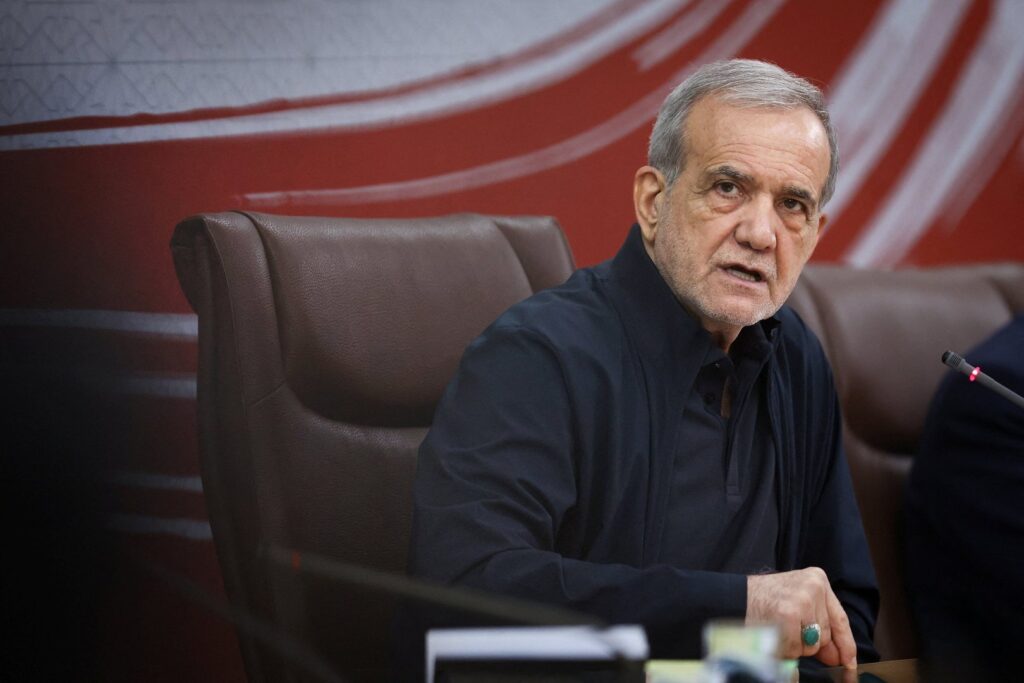
Iran President Pezeshkian recently expressed a hopeful outlook on the country’s diplomatic relations with the United States. He indicated that Iran is actively seeking a way out of the prolonged stalemate that has characterized their interactions, describing the current state as “neither war nor peace.” This phrase underscores the tension-filled yet non-combative nature of their relationship, which has persisted over several years.
In efforts to address this deadlock, President Pezeshkian highlighted ongoing talks with Oman as a potential breakthrough mechanism. Oman has historically maintained a neutral and mediatory position in the region, facilitating dialogue between Iran and Western powers, including the United States. These new conversations, therefore, carry significant hope for easing tensions and possibly paving the way for more stable and constructive engagement.
The stalemate, often described as a limbo, impacts multiple dimensions including political dialogue, economic sanctions, and regional security. Iran’s leadership acknowledges that the current status does not benefit either party and is seeking alternatives to move forward. The hope is that by engaging Oman in these discussions, both Iran and the US can find common ground to shift away from hostility and towards a framework of coexistence and cooperation.
President Pezeshkian’s statements signal a strategic approach to international relations that prioritizes dialogue through trusted intermediaries. The initiative marks a significant moment, given the complexities and decades-long challenges that have impeded direct US-Iran talks. Analysts view this as a pragmatic step for Iran, aiming to break the cycle of sanctions, military posturing, and mutual distrust.
As the situation develops, global observers will watch closely how the talks with Oman unfold and whether they can facilitate a substantive thaw in US-Iran relations. A resolution to the “neither war nor peace” condition could have wide-reaching implications for regional stability in the Middle East, global energy markets, and international diplomatic ties.
The international community broadly supports efforts to replace adversarial stances with dialogue and peaceful negotiation frameworks. Success in this arena could set a precedent for resolving similarly fraught conflicts worldwide, highlighting the importance of patient diplomacy and trust-building.
In summary, Iran’s engagement with Oman-led talks represents a hopeful and strategic attempt to resolve a deeply entrenched diplomatic impasse with the United States. Moving beyond the stagnant state of “neither war nor peace” is envisioned as a critical priority for Iran’s leadership, marking a potential turning point in one of the most complex geopolitical relationships of our time.