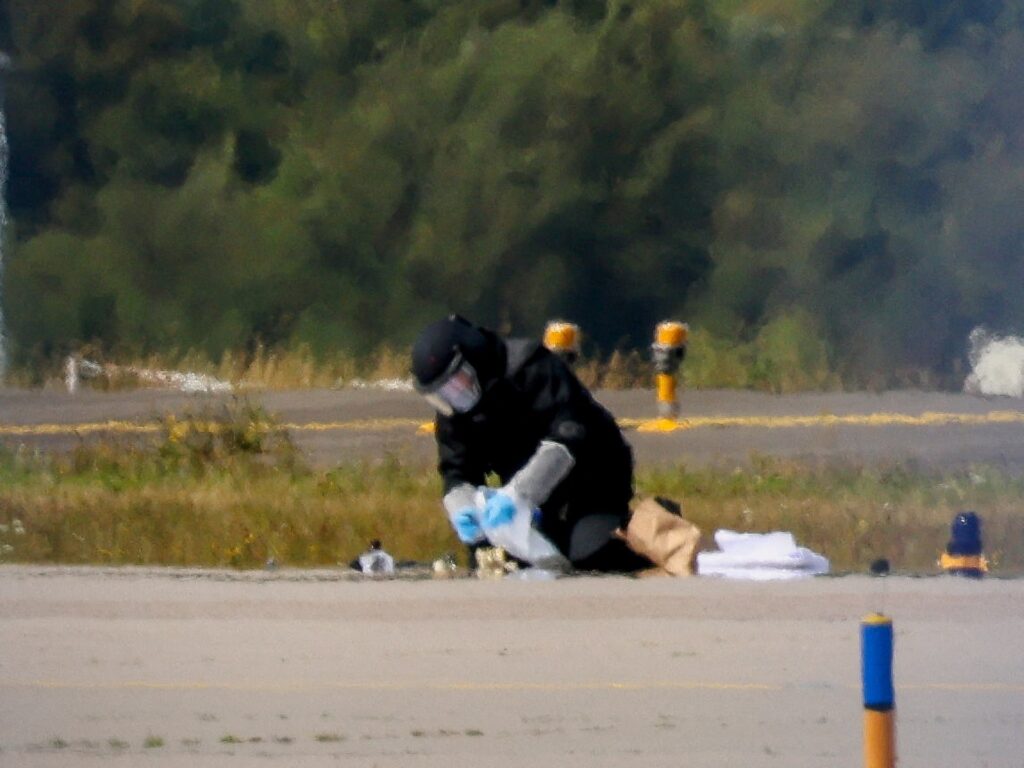
Germany’s interior minister has issued a stark warning about the increasing prevalence of what he describes as ‘daily hybrid warfare.’ This term encompasses a range of hostile activities including espionage, sabotage, cyberattacks, and covert operations targeting the nation’s security and stability. The alert follows the recent discovery of a drone equipped with explosives, underscoring the evolving and sophisticated nature of threats faced by the country.
The ministry highlighted that these activities are no longer isolated incidents but represent a constant reality that German authorities must contend with. Hybrid warfare blurs the traditional lines of conflict, combining conventional military force with unconventional tactics to destabilize societies and governments quietly and persistently.
In recent years, Germany has seen a rise in cyber espionage aimed at political, economic, and critical infrastructure sectors. Sabotage attempts have targeted energy supplies and transportation systems, while covert operations often involve misinformation campaigns designed to influence public opinion and political processes.
The interception of the explosive-laden drone has raised alarm bells within security agencies, marking a significant escalation in the types of threats that could be employed. Experts warn that such drones, equipped with improvised explosive devices, have the potential to cause substantial damage and casualties.
Government officials have called for enhanced surveillance, intelligence sharing among allies, and more robust cybersecurity measures to counteract these multifaceted threats. Cooperation with European and NATO partners is considered vital to maintaining the integrity of national security.
The German public has been urged to remain vigilant and report any suspicious activities to authorities. The interior minister emphasized that public cooperation is crucial in the fight against hybrid warfare.
The warning comes amid a broader global context where hybrid warfare tactics have been increasingly utilized by state and non-state actors alike. This new normal requires adaptive defense strategies that combine technological innovation, intelligence prowess, and societal resilience.
In conclusion, Germany’s acknowledgment of the daily threat posed by hybrid warfare highlights the complex, dynamic, and evolving nature of modern conflicts. The discovery of the explosive drone serves as a poignant reminder of the urgent need for comprehensive security strategies to protect against an array of covert and overt threats.