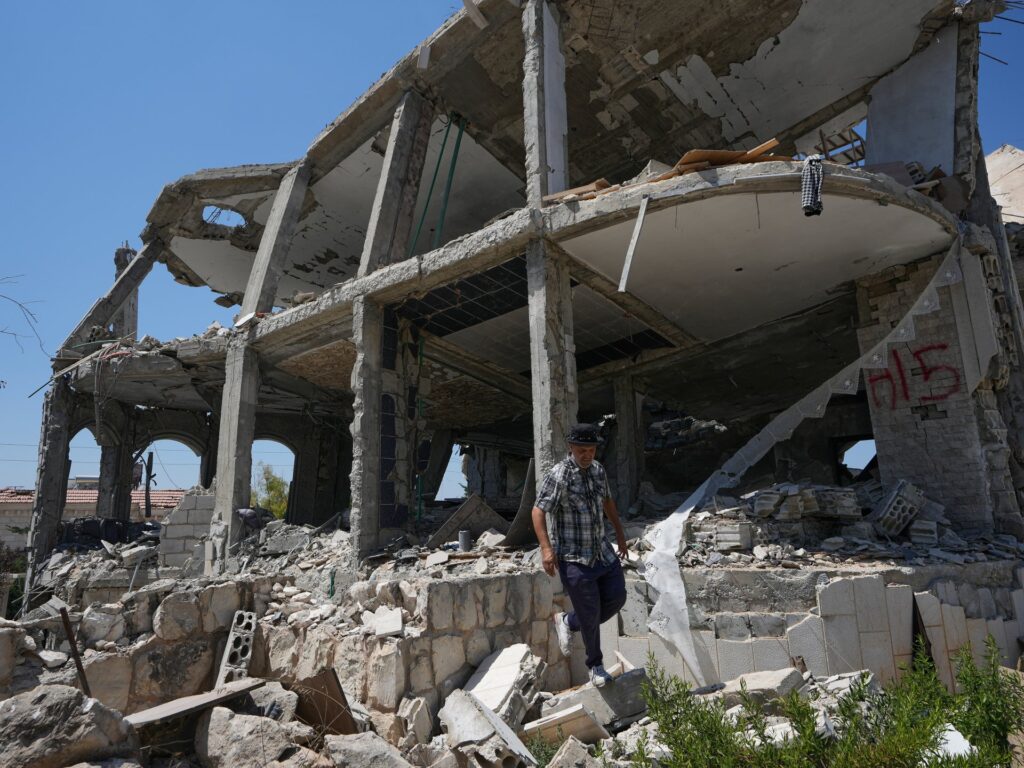
In a recent escalation along the Lebanon-Israel border, Lebanese soldiers suffered injuries amid an intrusion by Israeli troops into a southern Lebanese town. The incident took place in Zawtar al-Gharbiyah, a location of increased tension due to ongoing territorial disputes and military activities.
According to reports, Israeli forces crossed into Lebanese territory near Zawtar al-Gharbiyah, a town situated near the contentious border area. This move was accompanied by the construction of an earth barrier, presumably intended to fortify positions or demarcate control lines. The presence of the earth barrier has heightened tensions further, exacerbating the already fragile situation in the region.
During the incident, Lebanese soldiers were actively engaged in disarming unexploded ordnance (UXO), which poses a continual threat to military personnel and civilians alike. Unexploded ordnance in conflict zones typically includes bombs, shells, grenades, land mines, and other munitions that failed to detonate when originally deployed, remaining hazardous over extended periods.
The act of disarming these ordnances is perilous and requires specialized training and equipment to prevent accidental detonations. It is during such operations that the soldiers sustained injuries, underscoring the dangers faced by military personnel in managing the aftermath of conflict.
The Lebanese military has condemned the intrusion by Israeli troops, voicing concerns about violations of sovereignty and the destabilizing effects of such actions on regional security. Officials have called for adherence to international laws and respect for recognized borders to prevent further escalations.
The incident adds to a series of confrontations and disputes between Lebanon and Israel, both nations with a history of conflicts and a complex relationship influenced by geopolitical and sectarian dynamics. The southern Lebanese border, often referred to as the Blue Line, has been a focal point of military tension since the withdrawal of Israeli forces from southern Lebanon in 2000.
International observers and peacekeeping forces in the area have also expressed concern about recent developments. They emphasize the importance of dialogue and conflict resolution mechanisms to ensure stability and prevent violent outbreaks.
Local residents of Zawtar al-Gharbiyah and surrounding areas have expressed fear and uncertainty due to the military presence and incidents of violence. The disruption affects daily life and undermines the prospects for peace and normalcy in a region already scarred by decades of conflict.
Humanitarian organizations monitoring the situation call attention to the lasting dangers of unexploded ordnance in conflict zones, urging for increased efforts in mine clearance and victim assistance. They stress that the safety and recovery of affected communities depend on sustained international support and cooperation.
The Lebanese government’s response includes plans for enhanced border security and diplomatic initiatives aimed at de-escalating tensions. The priority remains to safeguard the lives of soldiers and civilians while asserting sovereignty.
As this situation develops, the international community watches closely, hoping for restraint from all parties and a recommitment to peaceful resolution. The delicate balance along the Lebanon-Israel frontier requires careful management to prevent future casualties and foster long-term peace.