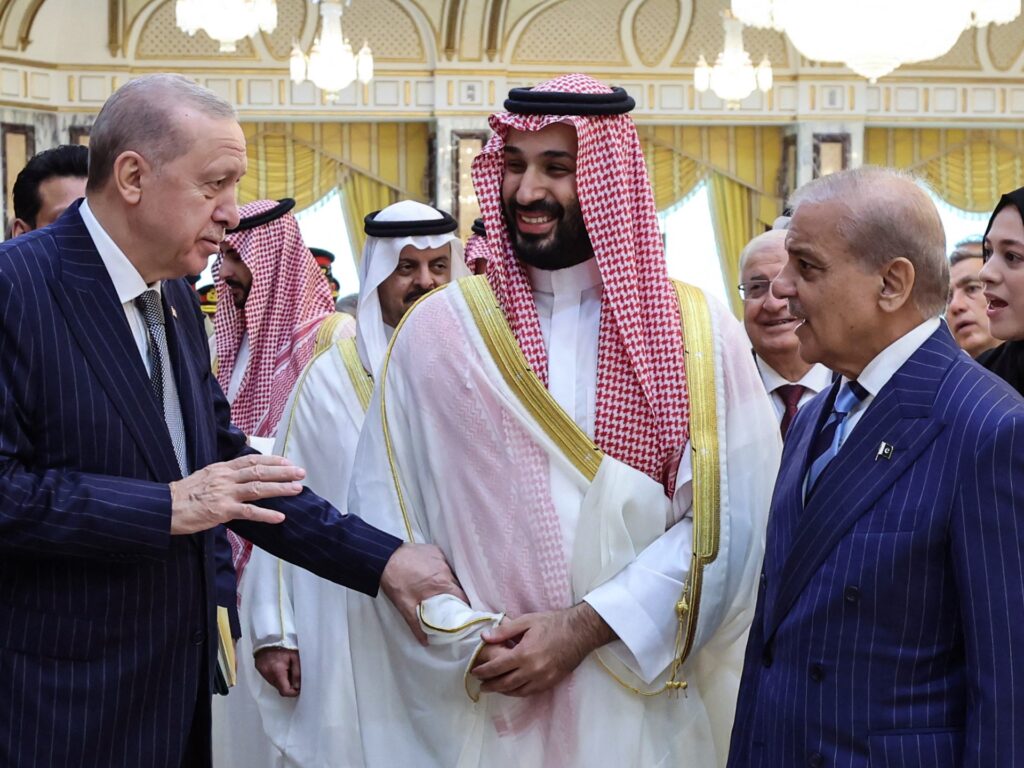
In a significant geopolitical development that could reshape regional dynamics, Saudi Arabia, Turkiye, and Pakistan have reportedly come together to form a new defense pact. This alliance marks a noteworthy consolidation of military and strategic cooperation among these influential Muslim-majority countries, with potential wide-reaching implications for the Middle East and South Asia.
The emergence of this pact is particularly timely, coinciding with the approaching elections in Israel, where national security and foreign relations remain pivotal campaign issues. Israeli political leaders are currently deliberating on how to respond diplomatically and strategically to this new alliance, though detailed official statements have yet to be released.
Saudi Arabia’s involvement signals its continuing effort to strengthen defense ties beyond its immediate neighborhood, possibly aiming to counterbalance growing influences in the region and secure its interests amid ongoing conflicts and shifting alliances.
Turkiye, with its historical and cultural links to both the Middle East and South Asia, appears to be expanding its strategic footprint, leveraging this cooperation to enhance its geopolitical standing and military readiness.
Pakistan’s participation underscores its intent to deepen defense collaboration with neighboring and regional partners, potentially seeking to bolster its security posture amid internal and external challenges.
For Israel, the formation of this pact presents a complex challenge. The nation’s strategic calculus must now account for a new axis of cooperation among countries that historically have had fraught or limited relations with it. This development could affect Israel’s security environment, intelligence assessments, and diplomatic engagements.
Experts suggest that Israel’s response will likely be multifaceted, involving diplomatic outreach to counterbalance the pact’s influence, enhancing its own defense alliances, and possibly reconsidering its strategic priorities in the region.
The pact also raises questions about future alignments and the potential for increased military cooperation or tension along various fronts, including issues related to counterterrorism, naval security, and missile defense systems.
As election fever intensifies in Israel, political parties across the spectrum are expected to debate the implications of the Saudi-Turkiye-Pakistan defense pact extensively, with some advocating for stronger defense initiatives and others calling for renewed efforts in diplomacy and conflict resolution.
This development is being closely monitored by international actors as well, given its potential to influence broader security architectures and peace efforts in the Middle East and beyond.
In summary, the formation of the Saudi Arabia, Turkiye, and Pakistan defense pact introduces a new strategic variable that Israel must navigate carefully amidst its electoral and security landscapes. How Israel ultimately responds will likely have lasting implications for regional stability and international relations moving forward.