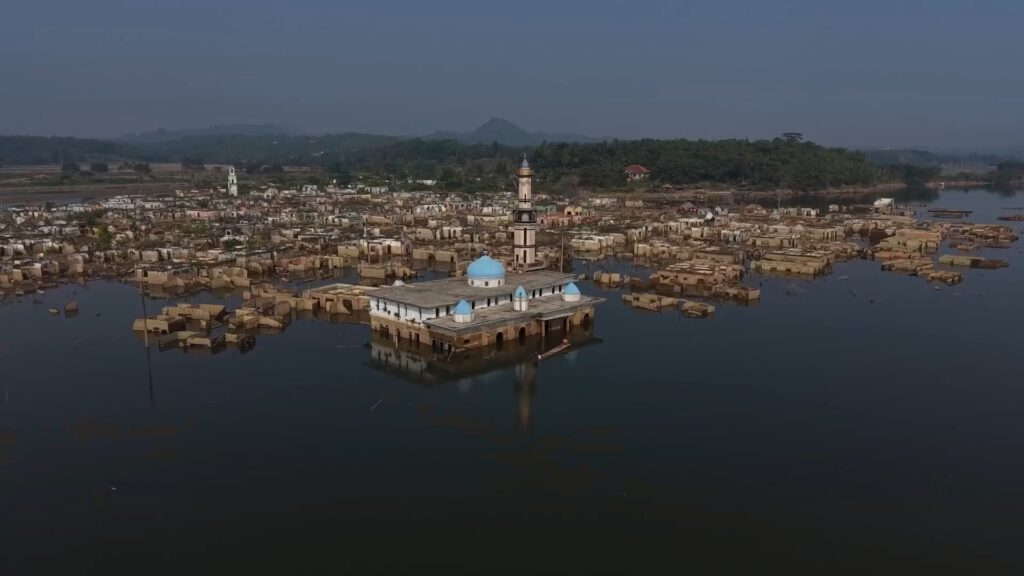
In an astonishing natural phenomenon, a submerged village in Indonesia has resurfaced as drought conditions drastically lowered water levels in the Karian Reservoir. Drone footage captured this rare event, revealing the long-forgotten remains of the village that had been underwater for years.
The Karian Reservoir, a crucial water source for the region, has experienced severe drought, causing water levels to drop significantly. As the reservoir receded, it exposed remnants of the village that was submerged decades ago as part of a development project.
Local residents and historians have expressed a mixture of surprise and nostalgia upon witnessing the village’s reappearance. The village’s structures, streets, and even household items have emerged from beneath the water, offering a glimpse into the past and sparking curiosity about the lives once lived there.
Experts note that this phenomenon, while rare, serves as a stark reminder of the impacts of climate change and water management challenges. Droughts have become more frequent and severe in the region, affecting water supplies, agriculture, and ecosystems.
The re-emergence of the submerged village is not just a visual spectacle but a poignant symbol of environmental changes and human history intertwined. It also raises questions about the future of water resource management in Indonesia amid changing climate patterns.
Local authorities are monitoring the situation closely, assessing the structural and environmental consequences of the drought and the exposure of the submerged village site. Discussions about preserving any significant cultural heritage found there have already begun.
The drone footage circulating online has captured widespread attention, drawing tourists, researchers, and media to the area. Many are eager to document and study the village’s remains before they possibly disappear again with the return of normal water levels.
This resurfacing event reminds us of the complex relationship between human activity, environmental shifts, and the legacies left beneath our waters. It highlights the importance of sustainable practices and adaptive strategies in managing natural resources and protecting vulnerable communities.
As the drought continues to challenge the region, the story of the submerged village provides a powerful narrative about resilience, memory, and the urgent need for action against climate change. The Karian Reservoir’s fluctuating levels remain a living record of these ongoing shifts.
In coming months, scientists plan to conduct detailed surveys of the site, exploring archaeological and environmental data to understand better the village’s history and the broader impacts of water crises. The community’s engagement with this phenomenon also underscores how local knowledge and collective memory play vital roles in environmental stewardship.
In summary, the re-emergence of the submerged Indonesian village is a unique event that combines natural spectacle with profound lessons about history, environment, and the future challenges facing the region and the world at large.
This striking occurrence not only captivates with its visual and historical significance but also calls attention to the pressing environmental issues of drought, climate change, and water security, which require coordinated efforts to address effectively.