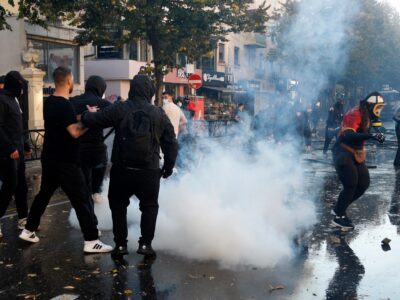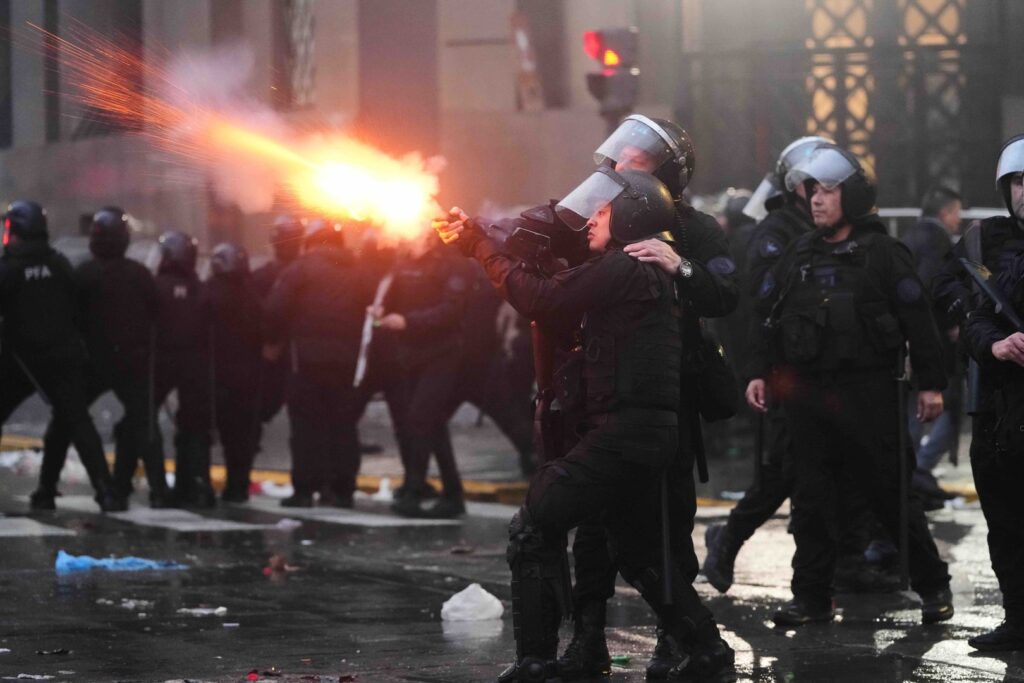
In a tense and chaotic scene in Buenos Aires, Argentina, police deployed tear gas to disperse thousands of protesters who had gathered to express their grievances. The protest, which brought together a diverse crowd, quickly escalated as law enforcement officers sought to control the large assembly.
According to eyewitnesses and reports from Al Jazeera’s correspondent Teresa Bo, the use of tear gas marked a significant moment in the confrontation. The protesters, whose demands ranged from social justice issues to economic concerns, were met with force as the police attempted to prevent the situation from spiraling out of control.
The demonstration drew wide attention in the city, with streets filling with chanting and determined citizens. Authorities initially managed the assembly peacefully, but conditions deteriorated leading to the decision to employ tear gas. Many protesters fled the area coughing and rubbing their eyes, while some engaged with the police in heated exchanges.
The reasons behind the protest are rooted in Argentina’s ongoing economic challenges, along with calls for government accountability and improvements in public services. The government has faced increasing pressure in recent months due to inflation, unemployment, and austerity measures that have affected large segments of the population.
Local residents shared mixed feelings about the unrest. Some supported the protesters’ right to demonstrate, while others expressed concern over public safety and disruptions caused by the clash. The police maintained that they acted to uphold order and prevent violence as the situation escalated.
This incident underscores the fragile social climate in Argentina, where economic hardship often fuels public dissent. The protest and police response have sparked debates about the balance between security and civil liberties in democratic societies.
Political leaders and activists alike have called for dialogue and peaceful resolution following the day’s events. Meanwhile, human rights groups have urged for restraint and respect for the rights of protesters to assemble peacefully.
The international community watches closely as Argentina navigates these challenges, a situation reflective of broader regional struggles involving governance, economic reform, and social justice. Further demonstrations are anticipated as citizens demand change and transparent governance.
Authorities have promised to investigate the use of force during the protest and to engage with community leaders to address the underlying concerns driving the unrest. For now, Buenos Aires grapples with the immediate fallout of the confrontation and the long-term implications for governance and social cohesion in Argentina.